







Schedule a Call Back


Exports doubled from Rs 61 to Rs 124 billion: Yash J Munot
 Articles
- Oct 29,26
Exports doubled from Rs 61 to Rs 124 billion: Yash J Munot
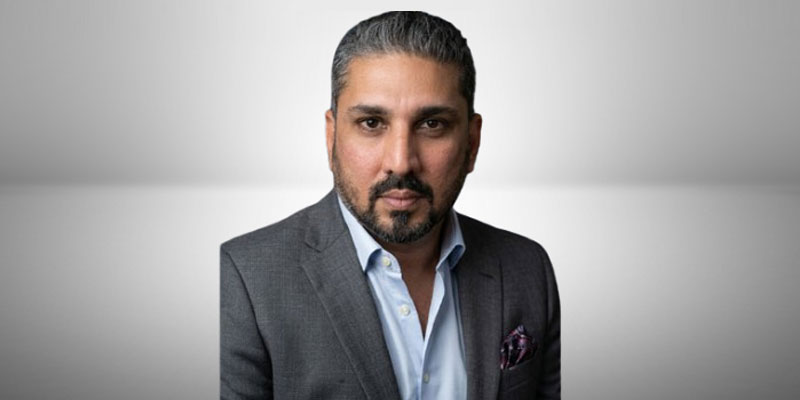
How has India’s forging industry evolved since 2014 in terms of production, turnover, exports, investment and technology? What do the figures reveal about its achievements and areas where progress has fallen short?
Forging goes into nearly everything that moves or carries a load: vehicles, tractors, railways, defence equipment, power plants and industrial machinery. Over the last decade, Indian forgers have built real depth in engineering, quality systems and process control. That is why we can serve demanding customers at home and abroad.
For the organised sector, the numbers since FY2014-15 tell the story: installed capacity increased from 3.76 million tonnes to 4.73 million tonnes in FY25; production rose from 2.25 million tonnes to 2.9 million tonnes; turnover increased from Rs 278.35 billion to Rs 443 billion; and exports grew from Rs 61 billion to Rs 124 billion.
India is now the world’s second-largest forging producer after China. Total investment in the sector exceeds US$3.8 billion, and the industry supports more than 300,000 direct and indirect jobs.
The biggest achievement is on exports, which have doubled. They have grown faster than the industry as a whole, rising from about 22 per cent of turnover to nearly 30 per cent. Global customers now trust Indian forgings for critical parts, and that trust is hard-earned. The industry has also moved decisively from labour-intensive to capital-intensive operations.
However, given the growth we could have achieved, the industry should have grown by at least 100 to 120 per cent over the past 12 years. One area where we have fallen short is capacity utilisation. It was about 60 per cent in FY15 and is still around 60 per cent today. We have built capacity faster than we have built demand, and technology upgradation among smaller units has been slower than it should be.
Demand is strong. Automotive accounts for around 65 per cent of our output. Vehicle retail touched a record 29.6 million units in FY26, vehicle exports grew 24 per cent, and tractor sales crossed 1 million units for the first time. Construction equipment, defence, aerospace, railways, oil and gas, and power provide steady non-automotive demand. That diversification matters more every year.
How far has the industry moved from volume-driven production towards higher-value, precision-engineered components? What has helped it make this shift, and what barriers remain?
The shift is real, but I will be honest: the industry does not yet track precision forgings or R&D spending as separate data series, and the unorganised segment is not captured at all. That is a gap I want AIFI to close, because you cannot manage what you do not measure.
The industry’s direction has clearly changed. A decade ago, most Indian forgers were build-to-print suppliers. Today, more companies machine, heat-treat and assemble in-house, and take part in design discussions with customers. A raw forging, particularly for export, was often viewed as a commodity. Indian companies are increasingly seen as partners that can provide solutions and finished components.
“China Plus One” has helped. Global OEMs no longer want only a low-cost supplier; they want partners who can contribute to engineering and product development. Companies have developed their own engineering and R&D capabilities, and some now provide complete solutions based on customers’ designs.
Europe is looking to India for internal combustion engine manufacturing, including trucks, buses and larger equipment. If India becomes a hub for these products, sourcing is likely to become more localised. We have demonstrated that we can do more than supply raw components; we can manufacture a product in its entirety.
Indian forging has continued to grow through the pandemic, supply shocks and volatile markets. That resilience has earned us the right to aim higher. The barriers are well known: technology gaps among smaller units, rising input and energy costs, a shortage of skilled people, low-cost imports and dependence on imported equipment for high-end processes.
How has Make in India strengthened domestic capabilities in forging processes, materials and tooling? Where does the industry remain dependent on imported machinery or specialised inputs?
Our members work across the full range of processes: hot closed-die, open-die, cold closed-die, warm forging, and precision and forming operations. The right process depends on the part’s geometry, the material, the volumes, the accuracy required and where the part will finally be used. Make in India has pushed more companies to master processes they once avoided, and domestic tooling and die-making capability has improved considerably.
The industry is also moving towards aluminium forging, and capacity has been built for it. Aluminium is increasingly used in electric vehicles because lighter materials can help extend vehicle range. Stainless steel has been used in forging for a long time.
Imported machinery is now the real dependency. For many categories, imports are stable or declining. For high-tonnage crank presses, imports are actually rising. That is the clearest signal of where indigenous capability still needs to be built.
Some companies in Ludhiana refurbish older equipment, particularly hammers, and there are good machine-reconditioning businesses. However, much of the forging equipment is imported from Russia, Germany and Italy. India does not yet have a manufacturer of high-capacity forging presses with automation. In machining, Indian companies such as Ace and Micromatic are making excellent machines.
Domestic steel requirements for forging are not being met. The industry has been pushing for restrictions on steel exports because local demand remains unmet, while imported steel has become more expensive. Electricity costs are another major challenge for an industry that uses heavy machinery. Changes in solar power regulations also affect costs.
How has the contribution of SMEs to forging production, employment and exports changed? Are smaller manufacturers advancing alongside larger players, or is the competitiveness gap widening?
SMEs are the heart of this industry. About 83 per cent of forging units are small or very small, and only around 8 per cent are large. SMEs have come a long way, and many now supply export customers directly or through larger partners.
SMEs in the forging industry contribute around Rs 30 billion in turnover, compared with about Rs 10 billion earlier. As larger companies grow, they may change their machinery or move away from producing parts that are not suited to their larger operations. This creates opportunities for SMEs, sometimes as Tier 2 or Tier 3 suppliers. When larger companies expand their order books, business flows to smaller suppliers as well. SMEs can also be more cost-effective in certain parts because they manage labour and other overheads differently.
But I will not pretend the gap is not widening. Large companies can fund automation, simulation and R&D. A small unit facing higher steel and power costs, a shortage of skilled operators and cheap imports often has no money left for upgrading.
This is why AIFI set up the Forging Simulation Centre in Pune. Simulation and virtual die try-out used to be available only to large players. The centre makes them accessible to MSMEs, so a smaller unit can get the die right before cutting steel. That improves productivity and yield, and reduces waste and energy use.
How is the shift towards electric mobility reshaping demand for traditional automotive forgings? What opportunities are emerging in EVs and other sectors, and are smaller manufacturers equipped to adapt?
The EV shift is real, but it is uneven, and that unevenness is important.
In three-wheelers, EVs already account for about 61 per cent of retail sales in FY26. In two-wheelers, the EV share has crossed 11 per cent. In passenger vehicles, CNG, hybrid and electric vehicles together have now overtaken petrol in monthly retail registrations. Parts such as crankshafts, camshafts and connecting rods will see demand fall in these segments over time, and companies heavily dependent on them must plan now.
Tractors and heavy commercial vehicles, however, are still almost entirely diesel. In September 2026, 99.95 per cent of tractor retail was diesel. These are among the forging industry’s most important customers, and they will remain on internal combustion engines for years.
The number of forgings used in an electric vehicle may be lower, but there is an opportunity to diversify into other products, including aluminium parts. EV platforms also need forgings in drivetrains, suspension and structural parts. Demand for critical forgings will remain, while aerospace, defence, railways and industrial machinery are growing fast in India. Government infrastructure spending adds to that demand. Growth in these sectors is currently outpacing the year-on-year growth in electric vehicles, helping to balance demand and capacity utilisation.
For SMEs to compete in aluminium forging, they would need to make larger investments in raw materials and equipment. Many are equipped mainly for hammer forging, which is not suitable for aluminium. However, as companies move into the EV business, there will still be opportunities for MSMEs and larger manufacturers to take on standard forgings that become available in the supply chain. Demand will also continue for commercial vehicles, SUVs and railway products.
The message to our members is simple: diversify your customers, your products and your markets.
How have India’s forging exports and global market position evolved since 2014? What advantages and trade challenges affect the industry’s international growth?
Exports have doubled, from Rs 61 billion in FY15 to Rs 124 billion in FY25, and now account for nearly 30 per cent of what we produce. They go mainly to Europe, North America and Asia. Our advantage is a combination of engineering capability, consistent quality and competitive cost, built on the move from labour-intensive to capital-intensive manufacturing.
The past year has tested that. US tariffs hit exporters hard through most of FY26, and several companies saw North American revenue fall sharply. The interim India–US trade framework announced in February 2026 brought the general tariff on Indian goods down to 18 per cent. Auto parts covered under the US Section 232 regime still carry 25 per cent, and the preferential quota promised to India is yet to be fully worked out. Clarity on that quota will matter a great deal to our members.
The larger lesson is to reduce dependence on any single geography. ASEAN, Latin America, the Middle East and Africa all offer room to grow, and “China Plus One” remains a genuine opening if we pursue it actively.
What measurable targets should India’s forging industry pursue by 2035 to become a global leader in advanced and sustainable manufacturing?
My view on where we should aim by 2035 is: production of 5 million tonnes, up from 2.9 million today; exports of Rs 250 billion, double today’s level; capacity utilisation above 75 per cent, from around 60 per cent today; and automation and digital tools adopted by at least half of our MSMEs and SMEs.
Forging is already largely domestic in materials and skills. The real value-addition gap is in the machines we run and in automation with robotics. We need to become solution providers rather than commodity suppliers. That is where the 2035 effort should go.
If we get the fundamentals right, India is on track to become the world’s preferred partner for advanced, sustainable forgings.
What should the industry and government prioritise to meet these targets and help SMEs modernise?
It needs industry and government to work as partners. The issues we have raised with the government include raw material prices, energy costs, low-cost imports, skills, dependence on imported technology, MSME credit and a dedicated PLI scheme for forging.
Indian steel should be available at prices in line with global benchmarks so our exports stay competitive. Forging is energy-intensive. Many members are already investing in captive solar, and policy should make that easier. Low-cost imports can undercut domestic producers, while dependence on imported technology—especially heavy presses—needs to be reduced.
We need people who combine metallurgical know-how with digital, data-driven manufacturing. There are no courses in India’s education system specifically for castings or forgings—not even at diploma or polytechnic level. Through AIFI, we have worked on a couple of curricula that we are trying to introduce. We also need training and courses that attract people to the industry. In the south and west, much of the workforce comes from northern states, particularly Uttar Pradesh and Bihar. Workers returning to their home states has created difficulties for manufacturers.
The industry is often perceived as a “black industry” because of dust and smoke, which makes it harder to attract workers. Forging is labour-intensive, and although automation is increasing, the industry will continue to need people.
Smaller units also need faster and cheaper access to capital, especially when supplying to OEMs. Production-linked incentives, R&D incentives, support for projects and joint ventures, and help to sustain that business would make a difference. The specialty steel PLI 1.2, which includes alloy forgings with incentives of 4 to 15 per cent over five years, is a welcome start. Fifty-five companies have signed up for 85 projects under PLI 1.2, committing Rs 118.87 billion.
If we want to double exports in the next 10 years, the industry needs to become more cost-effective. Technology and machine-building capabilities will improve only if companies receive incentives to make large investments. Similar support could encourage investment in equipment manufacturing, which requires substantial investment and government subsidies.
Yash J Munot
AIFI
Ashlin Rajan
India forging industry
forging exports
Indian forging manufacturers
forging industry growth
forging SMEs
electric vehicle forgings
precision forging
Make in India manufacturing
Make in India
Related Stories
Machine Tools & Accessories

Imports make up 60% of India’s machine tool: Jibak Dasgupta
Despite fourfold growth since 2014, imports still supply 60% of India’s machine tool demand by value. Jibak Dasgupta, Director General & CEO, IMTMA, tells Ashlin Rajan how India can build global c..
Read moreMachine Tools & Accessories
Less than 1% of Indian SMEs export: R Srinivasan
In this interview R Srinivasan, Director, AIRA Consulting Private Limited, speaks with Ashlin Rajan about Make in India’s impact on SMEs, manufacturing challenges and the path to global competitiv..
Read moreAuto & Auto Components
Local cells and magnets can boost India’s EVs: Ayush Lohia
In this interview, Ayush Lohia, CEO, Youdha, speaks with Ashlin Rajan about the company’s electric three-wheeler manufacturing, production capacity and plans to expand EV adoption across India.
Read moreRelated Products
Computer And Laptop
ELECTRICAL & ELECTRONIC EQUIPMENT
SICCO Engineering Works offers a wide range of computer and laptop.
Read more
Test Terminal Block Utility Plus - Jttbu Plus
ELECTRICAL & ELECTRONIC EQUIPMENT
JVS Electronics Pvt Ltd offers a wide range of test terminal block utility plus - JTTBU plus.
Read more
Kusam-meco Handheld Thermal Camera Model- Km 300
ELECTRICAL & ELECTRONIC EQUIPMENT
KUSAM-MECO, the innovators of new products in the Test and Measurement field, have added a new Thermal Imager with Camera.
Read morelatest News
Subscribe to iNoW

For Industry News on WhatsApp, Give a Miss Call on: +91 84228 74016