









Schedule a Call Back


QualiZeal-HFS Study Exposes Major AI Testing Gaps Across Enterprises
 Industry News
- Nov 12,26
QualiZeal-HFS study finds 57 per cent of US enterprises deploy GenAI, but only 15 per cent have dedicated AI testing frameworks.
Mumbai
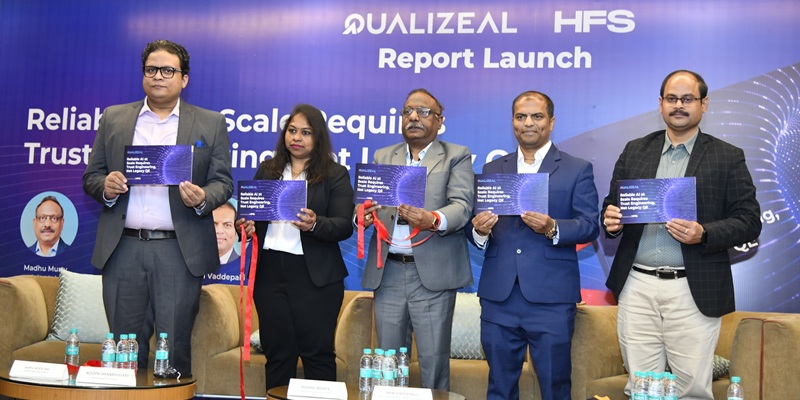
A new study by QualiZeal and HFS Research has revealed a significant gap between enterprise artificial intelligence (AI) adoption and quality assurance, with 57 per cent of organisations deploying generative AI (GenAI) in production but only 15 per cent implementing purpose-built AI testing frameworks.
The joint research, titled HFS Take 5 x QualiZeal, surveyed 101 enterprise quality and technology leaders across the United States to assess how organisations validate AI systems and whether existing quality engineering (QE) practices can address the growing complexity of AI-driven applications.
The findings highlight mounting concerns over AI reliability, governance and accountability as enterprises accelerate the deployment of generative and autonomous technologies. While 57 per cent of surveyed enterprises have GenAI systems operating in production and 36 per cent have deployed agentic AI solutions, formal validation frameworks have largely remained at the pilot stage.
More concerningly, 52 per cent of enterprises continue to test probabilistic AI systems using conventional software testing frameworks designed for deterministic applications. Unlike traditional software, which generally produces predictable outputs under defined conditions, AI models can generate varying responses, requiring more specialised evaluation and monitoring approaches.
The study also found that 37 per cent of enterprises operating AI systems in production have no designated function responsible for AI quality, exposing a governance gap as AI becomes increasingly embedded in business-critical operations.
Kalyan Konda, Co-Founder, Executive Director and CEO, QualiZeal, said: “Enterprises have moved AI into production much faster than they have developed the discipline to govern it. Through our work with HFS Research, we wanted to put hard numbers behind this gap and understand how organizations are addressing it. The larger issue is that ownership of AI quality is no longer just a testing question; it has become a boardroom question. The study shows that 37% of enterprises are running AI in production without a named function accountable for its quality. That is a significant gap, and it reinforces why organizations need clear accountability and fit-for-purpose validation as they scale their AI initiatives.”
Beyond accountability, the research identified substantial shortcomings in how organisations assess AI trustworthiness. Although 88 per cent of respondents measure model accuracy, only 47 per cent evaluate bias and fairness, while 37 per cent assess explainability. Just 35 per cent can provide evidence demonstrating regulatory compliance.
These findings suggest that enterprises remain heavily focused on whether AI systems produce accurate outputs, with comparatively limited attention to transparency, fairness and regulatory readiness. As AI applications expand into sensitive and highly regulated environments, such gaps could create operational, reputational and compliance risks.
The study points towards an emerging shift from conventional quality engineering to trust engineering, where testing responsibilities extend beyond software functionality to encompass the reliability, fairness, explainability and governance of AI-powered systems.
Madhu Murty, Co-Founder and Head of India Operations, QualiZeal, said: “Quality Engineering is going through a fundamental shift. Earlier, the focus was largely on assuring software. Now, with AI becoming integral to enterprise systems, we are being asked to assure intelligence itself. And quality engineers have a very important role to play in this transition. The study shows that 82% of enterprises expect the QE role to grow significantly. That is why we are investing in AI-skilled quality engineers and building roles that are relevant to this new environment. We don't see AI and automation replacing quality engineers. We see them elevating the role of quality engineers into that of trust engineers.”
The growing importance of AI assurance is also reshaping workforce expectations. According to the research, 82 per cent of enterprises anticipate a significant expansion in the responsibilities of quality engineering professionals as organisations adopt increasingly sophisticated AI technologies.
However, this broader mandate has not been matched by corresponding financial investment. Only 24 per cent of surveyed enterprises reported allocating resources proportionate to the expanded responsibilities of their quality engineering functions.
The mismatch between expectations and investment could constrain organisations' ability to establish comprehensive AI validation systems, particularly as autonomous AI applications introduce new challenges involving decision-making, unpredictability and continuous performance monitoring.
To address these requirements, QualiZeal is developing its AI-powered quality engineering ecosystem, including QMentisAI™ and ValidAIte™, designed to integrate AI assurance, testing and governance into enterprise development and delivery processes.
The company aims to help organisations transition from conventional testing practices towards more comprehensive frameworks capable of evaluating both the technical performance and trustworthiness of AI systems.
Hansa Iyengar, Practice Leader, HFS Research, said: “Most enterprises can prove their AI is accurate. Far fewer can prove it is fair, explainable, or compliant, and that is the test regulators, auditors, and customers will apply. Accuracy gets AI into production, but trust is what lets it scale. Closing that gap doesn’t require another tool. It requires a named owner for AI quality, testing AI as the probabilistic system it is rather than as conventional software, and giving QE a budget that matches its expanded mandate.”
The findings underline the need for organisations to establish clear ownership of AI quality, adopt validation methods suited to probabilistic systems and allocate sufficient resources to manage the risks associated with large-scale AI deployment.
As enterprises increasingly integrate GenAI and agentic systems into core business functions, the ability to demonstrate fairness, reliability, explainability and compliance is expected to become a critical factor in determining whether AI initiatives can scale successfully.
The QualiZeal-HFS Research study reinforces that while enterprise AI adoption is advancing rapidly, governance and assurance capabilities are struggling to keep pace. Bridging this gap will be essential for organisations seeking to move beyond experimental deployments towards reliable, accountable and production-grade AI systems.
QualiZeal
HFS Research
Kalyan Konda
Madhu Murty
Hansa Iyengar
Generative Artificial Intelligence
AI Quality Engineering
Enterprise AI Governance
Related Stories
Automation & Robotics
QualiZeal-HFS Study Exposes Major AI Testing Gaps Across Enterprises
QualiZeal-HFS study finds 57 per cent of US enterprises deploy GenAI, but only 15 per cent have dedicated AI testing frameworks.
Read moreConstruction Equipment

AI startup, Cognecto raised Rs 4 Cr in a seed round led by Inflection Point Ventures
Indian company, Cognecto raised investment in the seed round by Inflection Point Ventures. It aims to uniquely combine IoT, AI-driven operational analytics, and managed services to unlock a new leve..
Read moreRelated Products
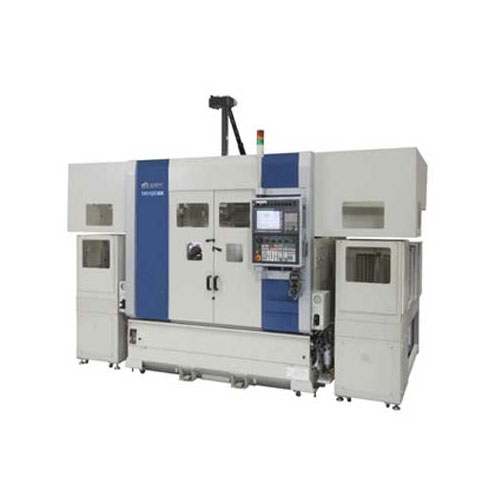
Compact Fmc - Motorum 3048tg With Fs2512
INDUSTRIAL AUTOMATION & TECHNOLOGY CONSULTANCY
Meiban Engineering Technologies Pvt Ltd offers a wide range of Compact FMC - Motorum 3048TG with FS2512.
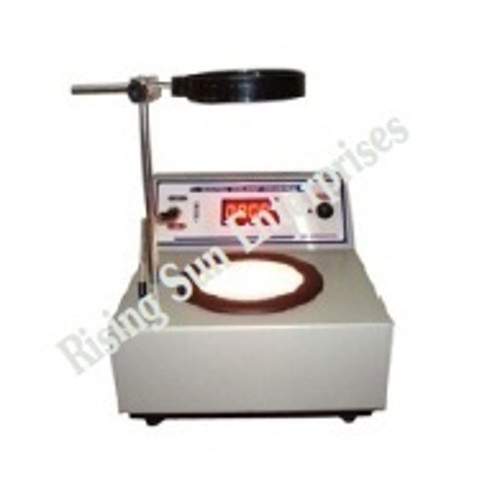
Digital Colony Counter
INDUSTRIAL AUTOMATION & TECHNOLOGY CONSULTANCY
Rising Sun Enterprises supplies digital colony counter.

Robotic Welding SPM
INDUSTRIAL AUTOMATION & TECHNOLOGY CONSULTANCY
Primo Automation Systems Pvt. Ltd. manufactures, supplies and exports robotic welding SPM.
latest News
Subscribe to iNoW

For Industry News on WhatsApp, Give a Miss Call on: +91 84228 74016