



Schedule a Call Back


Less than 1% of Indian SMEs export: R Srinivasan
 Articles
- Oct 30,26
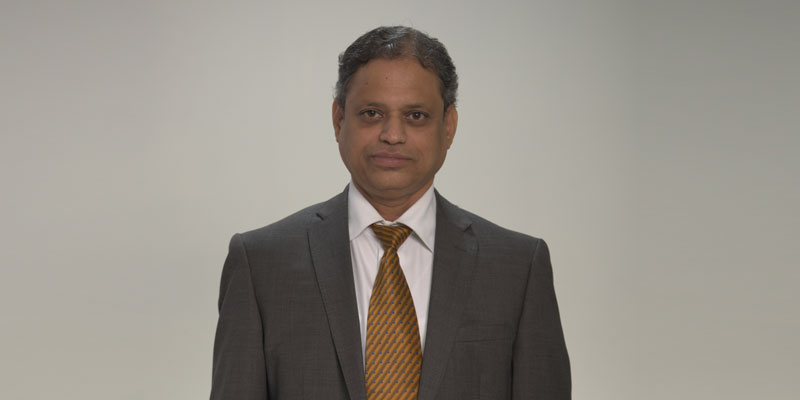
In this interview R Srinivasan, Director, AIRA Consulting Private Limited, speaks with Ashlin Rajan about Make in India’s impact on SMEs, manufacturing challenges and the path to global competitiveness.
How has Make in India changed access to capital for SMEs, and have they benefited proportionately from manufacturing growth?
Access to capital has definitely improved. Earlier, credit was largely asset-based; it is now increasingly cash-flow-based. Banks and non-banking financial companies are using data such as GST filings and the Account Aggregator framework to assess customers and extend credit. There has been considerable progress on this front.
During the Covid-19 pandemic and, more recently, because of the war, the government introduced emergency credit guarantee schemes, including CGTMSE. These schemes have worked for MSMEs in terms of access to credit. There is no doubt about that. However, there are still many significant challenges and things that have not been addressed.
Larger companies have benefited more than smaller ones. Some measures, such as labour-code provisions relating to companies with fewer than 300 employees, may be helpful for larger organisations. But we are also talking about businesses with 10 or 15 employees, for which the situation is different. The latest change, from 15,000 to 25,000 [please verify what this figure refers to], also increases delivery costs. These developments may work well for large organisations. As for whether SMEs have benefited proportionately, I have my reservations.
What are the main barriers preventing manufacturing SMEs from scaling, particularly in access to land and talent?
Manufacturing space in Mumbai is shrinking as industrial clusters in Thane, Thane-Belapur, Vasai, Taloja-Panvel, Dombivli and Ambarnath become residential or service areas. Buying land nearby is difficult, while moving to Rasayani makes it harder to find manpower. With real estate offering better returns, industrial land is repeatedly converted. A plot of land may generate more output as 50 offices, but manufacturing should not be judged by that measure. We need to protect industrial land and make it available at reasonable rates.
Talent is equally pressing. The traditional pipeline of ITI-trained workers, diploma-holding supervisors and graduates entering production management has weakened. Despite the announcement of investment in 1,000 ITIs, little has happened on the ground. Manufacturers struggle to find skilled workers, supervisors and production managers, as well as mechanical, electrical and electronics engineers.
What helps SMEs use Make in India to scale, move up the value chain and participate in supply chains?
The GeM portal has helped SMEs that work with the government access orders. The 45-day payment provision introduced in the Finance Bill about two years ago has also benefited some businesses. However, not every SME deals with the government, and large organisations and PSUs do not always pay on time, putting pressure on working capital. Overall, the impact is mixed. The National Apprenticeship Scheme has not significantly benefited either companies or employees.
About 97 per cent of SMEs are micro enterprises. While many develop innovative products, they often struggle to scale, internationalise and access export markets. Large organisations continue to rely on smaller businesses for supply-chain and outsourced work, but technology transfer remains a challenge. Sustainability is another concern: it requires investment, and large companies are not always willing to absorb the added cost. These issues need to be addressed across the value chain.
Has policy paid enough attention to strengthening domestic supplier ecosystems, or does it focus too heavily on attracting large investments?
States organise industrial fairs and investment initiatives such as Vibrant Gujarat, programmes in Uttar Pradesh, Invest Maharashtra, Tamil Nadu Guidance and initiatives in Andhra Pradesh. However, the focus remains largely on big businesses. Announcements highlight investments of Rs 500 billion or Rs 600 billion, along with the number of jobs expected.
An SME investing Rs 10 million may generate 10 jobs. That impact is significant, but do policymakers recognise it? We rarely hear of state governments signing agreements with 20 SMEs to generate 300 jobs from an investment of Rs 50 million. Such announcements may not attract as much media attention, but policymakers need to assess the SME sector more deliberately.
What practical changes would make manufacturing attractive and help SMEs become export-competitive?
First, we need to make manufacturing attractive. It creates value and gives people the satisfaction of making or delivering something, but society does not always see it that way. Few parents encourage their children to join an ITI; most aspire to an IIT. ITIs also face a vicious cycle: there are no students, so investment is limited, and without investment, they struggle to attract students.
Land must be available at reasonable rates. If a business has to pay Rs 1 crore per acre, it becomes difficult to make the investment viable. Access to talent is another challenge. Senior professionals are hard to find in production, quality, maintenance, stores and purchasing. Many people do not see manufacturing as a viable career, making recruitment difficult.
Access to capital remains a perennial problem. The fifth priority is to make SMEs export-competitive. Today, less than 1 per cent of SMEs export. Unless they can compete internationally and access export markets, the sector will struggle to grow. These are the five areas we need to address.
Has the China-plus-one shift benefited Indian SMEs, and what does India need to do to become more competitive?
China-plus-one may eventually benefit Indian SMEs if it strengthens domestic manufacturing. So far, however, countries such as Vietnam, the Philippines, Thailand and Taiwan appear to have gained more. India has not benefited disproportionately. Take pharmaceuticals: while India is a major producer of formulations, the interviewee says 100 per cent of the industry’s inputs come from China. He questions whether India is competitive in technology, productivity and capital structure.
Import duties are another concern. Anti-dumping duties on steel benefit large Indian manufacturers, but SMEs may be able to source steel more cheaply from other countries. If they are required to buy from a particular domestic supplier at a set price, they lose that advantage. China-plus-one has not benefited the country as a whole; if it strengthens even a few sectors, downstream SMEs could benefit.
India needs to lower import tariffs, improve workforce productivity and skills, and reduce initial capital costs. The country has the scale, population and deep business ecosystems to compete with the Philippines, Vietnam and Thailand, but that does not guarantee success.
Manufacturing’s contribution to GDP has plateaued at about 15 per cent, and is now slightly lower. The goal is 25 per cent, but India has not crossed the 16–17 per cent mark. The fact that 50 per cent of the workforce remains in agriculture also points to how unattractive manufacturing has become.
What should the next phase of Make in India do to make SMEs globally competitive?
Land, labour and capital remain the core issues. The solutions are known; what is needed is the political will and policy support to act on them. This is not new or complicated—the ecosystem already understands what needs to change.
SMEs are innovative and hardworking, and many are doing phenomenal work. They deserve greater recognition and attention, but their small size and wide reach make it difficult for them to attract it.
Make in India must enable “Make in India by Indians”. FDI remains important, and policy should also encourage partnerships between Indian and overseas SMEs. Large companies already benefit from collaboration and technology transfer; SMEs should have the same opportunity. For instance, a German SME with a turnover of €2 million could partner with a Rs 20-crore Indian company to provide technology and market access. The government could help enable such partnerships.
Make in India has benefited SMEs, but not to the extent expected. I remain optimistic that the focus will improve. There is no future for the country without SME growth. Monopolies and oligarchies cannot drive a country’s growth; India needs a broad base of SMEs.
Make in India
manufacturing SMEs
MSME finance
industrial land
skilled workforce
automation and digital manufacturing
export competitiveness
Ashlin Rajan
R Srinivasan
AIRA Consulting Private Limited
AIRA
Related Stories
Machine Tools & Accessories

Imports make up 60% of India’s machine tool: Jibak Dasgupta
Despite fourfold growth since 2014, imports still supply 60% of India’s machine tool demand by value. Jibak Dasgupta, Director General & CEO, IMTMA, tells Ashlin Rajan how India can build global c..
Read moreMachine Tools & Accessories
Less than 1% of Indian SMEs export: R Srinivasan
In this interview R Srinivasan, Director, AIRA Consulting Private Limited, speaks with Ashlin Rajan about Make in India’s impact on SMEs, manufacturing challenges and the path to global competitiv..
Read moreAuto & Auto Components
Local cells and magnets can boost India’s EVs: Ayush Lohia
In this interview, Ayush Lohia, CEO, Youdha, speaks with Ashlin Rajan about the company’s electric three-wheeler manufacturing, production capacity and plans to expand EV adoption across India.
Read moreRelated Products
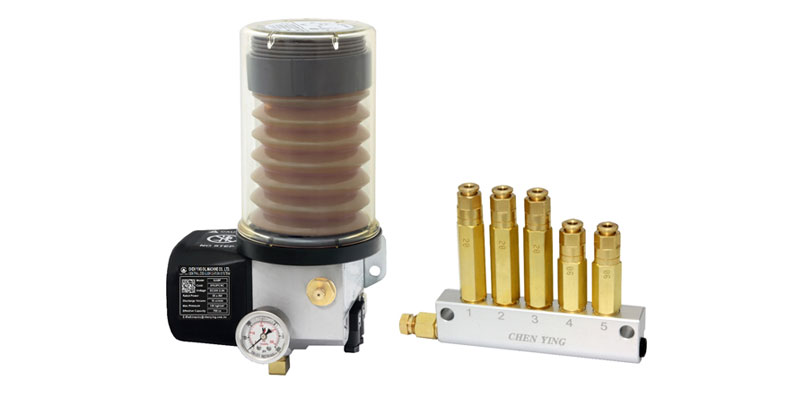
KABP-07 Electric Grease Lubricator
MACHINE TOOLS, POWER & HAND TOOLS
The KABP-07 features an efficient planetary gear motor and concealed safety switches. Paired with CFB Volumetric Distributors, it ensures consistent lubrication for industrial applications.
Read more
Hittco -SOLID Carbide Drills Engineered For Performance
MACHINE TOOLS, POWER & HAND TOOLS
Hittco Tools Ltd offers a wide range of hittco-solid carbide drills engineered for performance.
Read morelatest News
Subscribe to iNoW

For Industry News on WhatsApp, Give a Miss Call on: +91 84228 74016

Log In
To Contact this Supplier
Please Log In to your Account

INDUSTRIAL PRODUCTS FINDER (IPF) is India’s only industrial product portal. Referred to as the ‘Bible’ of the manufacturing sector in India,
SPECIAL OFFER

Hi There!
Now get regular updates from IPF Magazine on WhatsApp!
Click on link below, message us with a simple hi, and SAVE our number
You will have subscribed to our Industrial News on Whatsapp! Enjoy