






Schedule a Call Back


Local cells and magnets can boost India’s EVs: Ayush Lohia
 Articles
- Oct 30,26
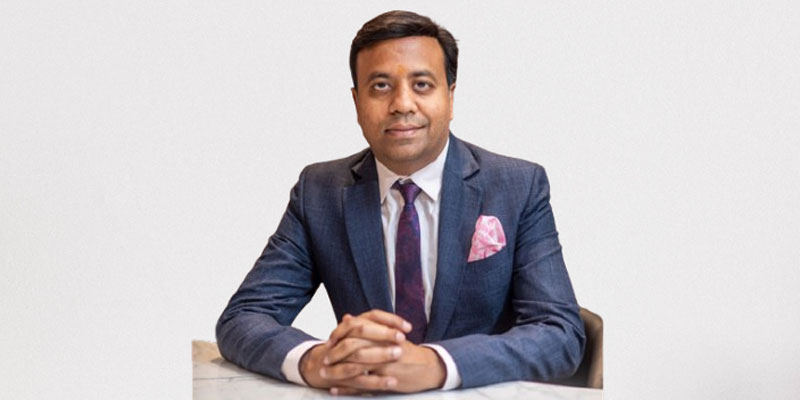
In this interview, Ayush Lohia, CEO, Youdha, speaks with Ashlin Rajan about the company’s electric three-wheeler manufacturing, production capacity and plans to expand EV adoption across India.
Could you introduce YOUDHA, explain its role in India’s electric three-wheeler industry, and outline its manufacturing capabilities and capacity?
We have been in the electric vehicle industry for the past 18 years. Our product portfolio includes electric three-wheelers for passenger and cargo applications, as well as electric cars. We manufacture these vehicles at an integrated facility that includes a machine shop, fabrication unit, weld shop and paint shop. We supply vehicles to more than 100 dealers across India.
We are a mid-sized organisation with a customer-centric approach, focused on expanding electric vehicle penetration across multiple states. The plant was a greenfield project when we started 18 years ago. The group was not previously in the automotive segment, so the facility was built from scratch in 2008–09. There was no automotive facility at the group level before this.
Our current capacity is 100,000 electric vehicles a year, comprising 40,000 three-wheelers and 60,000 two-wheelers. At present, we manufacture only three-wheelers at this plant. Last year, we produced around 8,000 electric vehicles, which means we are using about 7–8 per cent of our capacity. We look forward to growing the business substantially in the coming years.
Where can automation and digitalisation deliver the greatest gains in electric three-wheeler production?
Our plant is fully ERP-enabled. Production information, including markings, verifications and validations, is recorded online and uploaded to the ERP system. Once a vehicle is dispatched and in the field, we can retrieve its data from the system to check whether any challenges have been reported.
We record details such as the motor number, chassis number, controller and battery-pack information for future reference. This is a continuous activity for us. Cost improvement, quality enhancement and production-related actions are ongoing, as is on-field service support. These activities are part of vehicle manufacturing and servicing and help us provide a high level of customer service.
How much of your vehicle’s value is sourced domestically, and what challenges, if any, do you face in sourcing components from Indian suppliers?
The components we use are manufactured in India. However, some key components, such as battery cells, are not manufactured here and are imported by our suppliers. Motor magnets and other key materials are sourced from suppliers around the world by motor manufacturers. Apart from these components, the rest of the vehicle is manufactured in India. Key sheet-metal components and the body are also made at our facility.
The Indian automotive industry is quite mature, and component manufacturers are available across the board. We generally do not face challenges in sourcing components. For a few key components, such as motors, controllers and battery packs, we design the product according to our needs and requirements and share those specifications with our suppliers.
We specify the required quality and parameters, then verify the components before supply. We also conduct validation before actual production begins. The components are checked against the required parameters during incoming-material inspections before they are used in the vehicle.
How do testing, component traceability and feedback from vehicles and service teams influence your production processes and design decisions?
This is a very important part of our work. To compete in a quality-conscious market and offer cost-effective products, we need to continuously improve our products based on customer feedback. Our on-ground service team and dealer network provide a lot of input.
We also conduct joint customer and dealer visits. Our plant, service and sales teams participate in these visits to ensure that the right information reaches us and informs our decisions.
What are the biggest challenges to scaling electric three-wheeler manufacturing in India, and how do India’s costs and component capabilities compare with those of other manufacturing countries?
Some components are not manufactured in India and are largely controlled by China. We face challenges when prices fluctuate, because China’s supply and pricing can be influenced by its own needs and requirements. We need to be prepared for these challenges.
Raw-material prices are set in an open international market and depend on global demand and supply. We are currently facing challenges because of developments in the Middle East and Europe. We expect the situation to stabilise and are optimistic that, once the war situation is over, the industry will see growth and cost improvements over time.
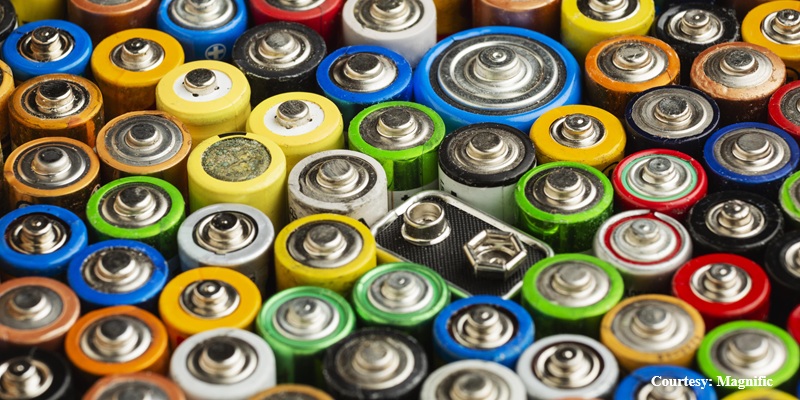
Battery cells and motor magnets are key areas of dependence. These costs cannot be addressed by one company alone because the industry depends on the international market. The gaps can be addressed only when India builds its own capabilities and manufacturing capacity for magnets and cells.
This is a long-term effort that the country needs to take forward. Building these capabilities can help reduce the cost gaps arising from China’s dominance.
How do you ensure consistent quality? What growth do you expect over the next three to five years, and what could constrain it?
We conduct multiple quality checks through our suppliers during battery-pack manufacturing and before the packs are assembled into the vehicle. Consistent quality reduces the chances of problems significantly, although it cannot eliminate them entirely.
We have grown substantially. More than 65 per cent of the vehicles sold in the UV segment in India are electric.
Around 65 per cent of vehicles sold in the UV segment are electric, leaving a gap of about 35 per cent to be converted from petrol to electric. Retail finance is a key constraint. Financing companies and banks fund vehicles and support sales, but we need greater financing support for vehicle purchases.
Another challenge is that India has not yet developed sufficient manufacturing capabilities for key components such as cells and magnets. If we build stronger capabilities in cell and magnet manufacturing, electric-vehicle penetration can increase. Government support could also help. The Delhi government, for instance, has already moved towards 100 per cent electrification. Such measures can support the transition from petrol to electric vehicles.
How do planned capacity additions and localisation align with product-development priorities, and what milestones will you use to measure progress?
We have the capacity to manufacture more than 1,000 vehicles a year and are currently using around 5–7 per cent of our total capacity. Our focus is on building the market, opening new markets and launching better products. We want to maintain consistency and quality as our electric-vehicle numbers grow.
Production numbers are one measure of progress. Another is the share of the industry we capture. Customer surveys and regular interactions to gather feedback on our products are also important. These are among the main criteria we assess continuously, year on year.
YOUDHA
electric three-wheelers
EV manufacturing
passenger and cargo EVs
ERP-enabled production
component localisation
battery cells and motor magnets
EV dealer network
Ayush Lohia
Ashlin Rajan
Related Stories
Machine Tools & Accessories
Imports make up 60% of India’s machine tool: Jibak Dasgupta
Despite fourfold growth since 2014, imports still supply 60% of India’s machine tool demand by value. Jibak Dasgupta, Director General & CEO, IMTMA, tells Ashlin Rajan how India can build global c..
Read moreMachine Tools & Accessories
Less than 1% of Indian SMEs export: R Srinivasan
In this interview R Srinivasan, Director, AIRA Consulting Private Limited, speaks with Ashlin Rajan about Make in India’s impact on SMEs, manufacturing challenges and the path to global competitiv..
Read moreAuto & Auto Components
Local cells and magnets can boost India’s EVs: Ayush Lohia
In this interview, Ayush Lohia, CEO, Youdha, speaks with Ashlin Rajan about the company’s electric three-wheeler manufacturing, production capacity and plans to expand EV adoption across India.
Read moreRelated Products

Automotive Oil Pump
AUTO COMPONENTS & ACCESSORIES
Kalpak Auto Pvt Ltd offers a wide range of
automotive oil pump.
Tata Motors unveils facilities for development of Hydrogen propulsion tech
AUTO COMPONENTS & ACCESSORIES
Tata Motors, India?s largest automobile company, unveiled two state-of-the-art & new-age R&D facilities for meeting its mission of offering sustainable mobility solutions. The unveilings constitute of Read more
Tata Motors plans petrol powertrain for Harrier and Safari SUVs
AUTO COMPONENTS & ACCESSORIES
Tata Motors is in the process of developing a new petrol powertrain for its premium sports utility vehicles, the Harrier and Safari, as confirmed by a senior company official. Currently, these models Read more
latest News
Subscribe to iNoW

For Industry News on WhatsApp, Give a Miss Call on: +91 84228 74016