







Schedule a Call Back


Are your structural adhesives ready for high-speed automation?
 Articles
- Nov 13,26
Structural adhesives are transforming automated manufacturing with lighter, stronger joints, faster assembly and advanced bond validation, writes Emily Newton.

Automated manufacturing and modular construction are moving away from welds and rivets toward high-strength adhesive bonding. Manufacturers must now assess whether their structural adhesives are ready for high-speed automation. Answering this question starts with understanding why the shift is happening and ends with knowing how engineers validate that a bond will hold.
The engineering case for bonded joints
Manufacturers switching from mechanical fasteners to structural adhesives are responding to three engineering drivers.
1. Preventing galvanic corrosion in joints: When a steel rivet is embedded in an aluminium panel, the dissimilar metals come into contact, and moisture can form a galvanic cell. The more active metal then corrodes faster and weakens the joint, a risk bolts and welds both often share. A nonconductive polymer layer separates the adherends and can remove the contact that corrosion needs. This suits assemblies combining aluminium, steel and composites. Currently, nanoparticle technology is also being explored as a safeguard alongside adhesive bonding, as nanoparticles may create anticorrosive coatings on iron or steel that limit oxidation damage.
2. Cutting weight without sacrificing strength: Mechanical joining stacks weight in layers. Rivets, bolts and weld metal each contribute mass. Because point fasteners concentrate stress at individual locations, adherends often need extra thickness or doubler plates to handle that load. Welding adds further mass, since heat-affected zones can soften neighbouring metal and may need local reinforcement. A bonded joint spreads the load across the entire overlap, allowing engineers to specify thinner, lighter base materials without sacrificing joint strength. Eliminating the fasteners also removes their mass. Market analysis from Custom Market Insights indicates 15-20 kilograms of adhesives and sealants can replace 100-150 kilograms of fasteners, spot welds and supporting structure in automotive applications.
3. Improved durability and fatigue resistance: Spot welds and rivets concentrate stress at discrete points, and repeated flex, vibration or load cycles can initiate microcracks at weld seams and rivet holes. Bonding the full overlap spreads load so no single location bears a disproportionate share. The research from Custom Market Insights also indicates that structural adhesives can improve torsional rigidity and fatigue performance by 30 per cent to 50 per cent and 30 per cent to 40 per cent, respectively, compared with spot welding. In high-cycle production, this durability can reduce the risk of warranty claims, rework and structural failure.
How adhesives are replacing mechanical fasteners
Adhesives are substituting mechanical fasteners across automated assembly lines and factory-built modular construction.
Faster, leaner automated assembly lines: Welding and riveting treat each joint as a separate operation. Drilling or punching holes comes first, then fastener insertion and setting, and then grinding, sanding or polishing to restore the surface finish. Each of those steps requires its own station or robot cycle, making the sequence difficult to compress into a continuous line.
Adhesive bonding replaces the sequence with a dispensing pass. A robot lays a bead along the joint line, the parts close and the assembly moves on with fewer stations, tooling changeovers and operator touchpoints. Commercial-vehicle fabricators that re-engineered assemblies around bonding have reported up to 65 per cent higher productivity and 80 per cent lower costs.
Scaling adhesive bonding across construction: Factory-built construction is scaling quickly. The US market reached $20.5 billion in 2025, and the modular building institute projects a 6.5 per cent compound annual growth rate through 2030. Each added module moves more joints off the jobsite and into a plant, where adhesive application can be standardised, automated and quality-checked before shipping.
This shift also sidesteps the limits of on-site welding, which needs certified welders and conditions that are harder to guarantee outdoors. It adds a requirement specific to modules, though, since every joint must withstand transport and crane lifts before the building enters service. Bonded joints distribute stress evenly along the bond line, which may help modules tolerate road vibration and lifting flex better than point-fastened assemblies.
Validating adhesive bond quality before it reaches the assembly line
Manufacturers may verify bond integrity through mechanical testing and provide engineers with a numerical basis for releasing parts for production.
Measuring peel, shear and tensile strength: A universal testing machine (UTM) clamps a bonded sample between a fixed crosshead and a moving one, then applies a steadily increasing force while a load cell records the resistance in real time. The test runs until the bond fails or reaches a defined force limit. Swapping grips and fixtures lets a single frame run several modes, and the UTM can be configured to meet different specifications. The peel, shear and tensile setups work as shown in the Table 1.

The next generation of adhesive bond validation: UTM-based peel, shear and tensile testing remains the standard method for evaluating bond strength, but federal research is now extending that same rigor into complementary capabilities. NASA Langley Research Center scientists, for example, are advancing ultrasonic phase-based inspection methods to detect variations in bond strength without destroying the sample.
Because ultrasonic inspection leaves a bonded part intact, engineers could revisit the same joint over time and read those results beside the load data a UTM records. Even though the Langley work targets aerospace structures, it points toward a growing validation toolkit for any industry that relies on bonded joints.
The bonded future of high-speed manufacturing
Adhesives are overtaking fasteners because they are faster to apply, lighter, more durable and now backed by validation. Manufacturers that benchmark their welds and rivets against bonded alternatives, using quantified peel, shear and tensile data, may uncover gains in throughput and joint life.
About the author:
Emily Newton is a tech and industrial journalist and the Editor-in-Chief of Revolutionized magazine. Subscribe to the Revolutionized newsletter for more content from Emily.
Image Courtesy: Magnific.com
Structural Adhesives
Adhesive Bonding
Manufacturing Automation
Modular Construction
Bond Strength Testing
Galvanic Corrosion
High-Speed Assembly
Non-Destructive Testing
Related Stories
Chemicals, Lubricants & Raw Material
Are your structural adhesives ready for high-speed automation?
Structural adhesives are transforming automated manufacturing with lighter, stronger joints, faster assembly and advanced bond validation, writes Emily Newton.
Read moreMaterial Handling Equipment
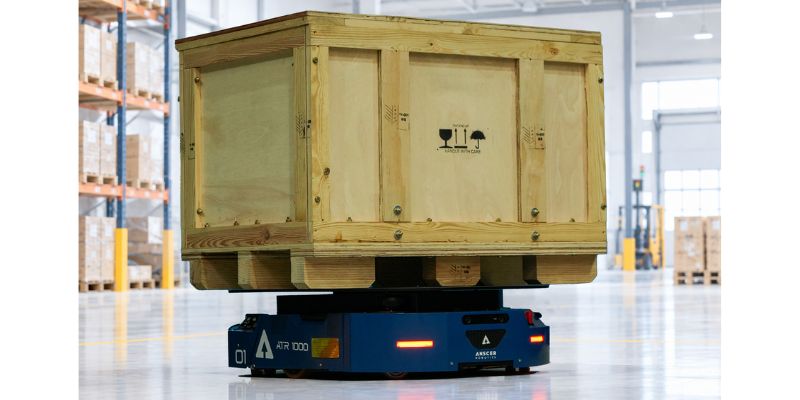
ANSCER Robotics Unveils ATR 1000 Autonomous Turntable Robot
The ATR 1000 combines a 1,000 kg payload capacity with a compact footprint to automate heavy-load movement in space-constrained manufacturing and warehousing environments.
Read moreSmart Manufacturing

Operational Optimisation: Automation – When And How Much?
As we put our efforts into optimising our operations, we journeyed from discussions on operational flow, including the “why”, “where”, “what” and “how”, before looking at data-based ..
Read moreRelated Products

Surface Protection Film
ADHESIVES & SEALANTS
Spark adhesives offers a wide range of surface protection
film.
Anaerobic Adhesives
ADHESIVES & SEALANTS
Parson Adhesives India Private Limited offers a wide range of anaerobic adhesives.

Speciality Adhesives & Emulsions
ADHESIVES & SEALANTS
Sonal Adhesives Limited offers a wide range of speciality adhesives & emulsions.
latest News
Subscribe to iNoW

For Industry News on WhatsApp, Give a Miss Call on: +91 84228 74016