






Schedule a Call Back


MiniMines Builds a Circular Supply of Battery Minerals
 Articles
- Oct 27,26
MiniMines recovers critical minerals from used batteries and manufacturing scrap, Ashlin Rajan explores its process and expansion plans.

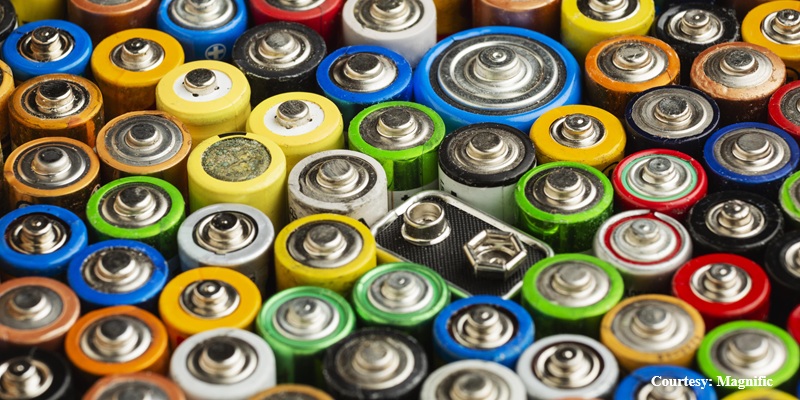
MiniMines Cleantech Solutions, founded in 2021, is focused on recovering lithium, nickel, cobalt, manganese and graphite from used batteries and battery manufacturing scrap. Its aim is to return these materials to Indian manufacturing, reducing waste and helping build a domestic supply of critical minerals.
Anupam Kumar, Co-founder and CEO, MiniMines Cleantech Solutions said the opportunity lies in addressing two linked challenges: India’s reliance on imported minerals and the growing volume of battery waste. At the time the company identified the opportunity, India was importing critical minerals worth close to $7 billion a year, he says. Meanwhile, batteries used in electric vehicles would eventually reach the end of their lives in India.
“India shouldn't have to keep digging for what it has already imported once,” says Kumar. The company’s goal is to recover materials from batteries that have completed their first use and process them to a purity suitable for reuse.
Recovering materials, not just black mass
Kumar says that some recycling operations separate batteries into black mass, a mixed powder containing lithium, nickel, cobalt and other metals, before selling it to another processor. That leaves the subsequent recovery and purification work to another company.
“That's not really recycling. You've broken the problem into pieces, not solved it,” he says.
MiniMines developed HHM?, its Hybrid Hydrometallurgy technology, to handle the process from dismantling batteries to purifying the recovered materials. The company uses a chemical process in water, controlling temperature, acidity and pressure to separate the different elements and convert them into metal salts.
Kumar says this allows MiniMines to supply battery manufacturers with refined materials that can go back into cell production, instead of selling them a mixed powder for further processing. The extracted materials can also be used as feedstock in other industries.
The process is designed to handle different battery chemistries, sizes and formats. Battery composition varies, with different proportions of lithium, nickel, cobalt and manganese. Kumar says a recycling process designed for only one chemistry can become less effective when the incoming material changes.
“Because we're working with how each element behaves in a liquid and adjusting temperature, acidity, and pressure at each stage, we can selectively pull out whichever elements are present, in whatever ratio they show up in,” he says.
This adaptability is intended to support the range of batteries used in two-wheelers, three-wheelers, cars, buses and energy storage systems, as well as manufacturing scrap from battery factories. Kumar says the company’s patent covers its ability to process different battery types, sizes and shapes.
Recovering graphite and proving the process
Graphite is another material MiniMines aims to recover. Kumar says it is often overlooked because it is harder to purify than metals and does not carry the same value as lithium or cobalt. Some processes burn it off during high-temperature treatment or leave it mixed with impurities.“We treat it as a real material to recover, not waste,” says Kumar.
MiniMines says its process can recover graphite at up to 99 per cent purity, while recovered metals can reach purity levels above 96 per cent. Kumar attributes these results to controlling the chemical steps so that each element is separated at a different stage. The company says HHM? is operating at its commercial plant near Bengaluru and that it has received an Indian patent for the process.
Building capacity and supply
Scaling the technology requires a steady supply of used batteries as well as processing capacity. Kumar says that, in the company’s early years, India did not have a reliable, organised flow of batteries for recycling. MiniMines built a collection network by working directly with two-wheeler, three-wheeler and four-wheeler manufacturers to bring used batteries to its facilities.
“Today we're moving several truckloads of scrap every month across the country,” he says. “Building that network was honestly as hard as building the chemistry itself.”
The company is moving to a larger plant near Bengaluru and aims to increase its total processing capacity to around 45,000 tonnes a year over the next couple of years. It also plans a critical minerals refining complex with support from the Karnataka government.
Kumar says the company is scaling its operations while focusing on the reliability of its process and the supply of used batteries. “The honest answer to how we're building capacity is steadily, with two things we refuse to compromise on even as we scale fast: a secure supply of used batteries and proof that the process holds up reliably.”
Based on the capacity it is building, MiniMines estimates that recycling could cover roughly a quarter to a third of India’s domestic lithium demand in the coming years. Kumar says recovered materials could also supply downstream industries, including battery manufacturing, pharmaceuticals and special greases.
Beyond battery recycling
MiniMines is developing capabilities to recover rare earth elements from permanent magnets and platinum group metals from vehicle catalytic converters. The company is also examining solar panels and spent catalysts from industrial processes such as oil refining.
Kumar says the company aims to become a multi-material critical minerals recovery business as India’s manufacturing base grows. Its five-year ambition is to supply a meaningful share of battery-grade lithium, nickel and cobalt from recovered materials.
For Kumar, the measure of progress is the amount of material returned to domestic manufacturing. “The number that actually matters to me is the tonnage recovered and put back into Indian manufacturing,” he says. “That loop, waste going in one door and battery-grade material coming out the other is what a real circular economy looks like in practice, not just as a slogan.”
Photo Quote:
“India shouldn't have to keep digging for what it has already imported once.”

- Anupam Kumar, Co-founder and CEO, MiniMines Cleantech Solutions
MiniMines Cleantech Solutions
Anupam Kumar
battery minerals
battery recycling
critical minerals recovery
hydrometallurgy
EV battery waste
lithium recovery
graphite recovery
circular economy
mineral security
Related Stories
Machine Tools & Accessories
How the electrical goods industry is driving sustainable manufacturing
Sustainable Miniature Circuit Breaker (MCB) design is helping the electrical goods industry reduce material use, improve manufacturing efficiency and deliver affordable safety, write R Jayaraman and..
Read moreAuto & Auto Components
MiniMines Builds a Circular Supply of Battery Minerals
MiniMines recovers critical minerals from used batteries and manufacturing scrap, Ashlin Rajan explores its process and expansion plans.
Read moreSmart Manufacturing
Runaya Achieves 55% Women Representation Across Workforce
Runaya, a Vedanta company, has achieved 55 per cent women representation, strengthening diversity and inclusion across its manufacturing operations and leadership functions.
Read moreRelated Products

Automotive Oil Pump
AUTO COMPONENTS & ACCESSORIES
Kalpak Auto Pvt Ltd offers a wide range of
automotive oil pump.
Tata Motors unveils facilities for development of Hydrogen propulsion tech
AUTO COMPONENTS & ACCESSORIES
Tata Motors, India?s largest automobile company, unveiled two state-of-the-art & new-age R&D facilities for meeting its mission of offering sustainable mobility solutions. The unveilings constitute of Read more
Tata Motors plans petrol powertrain for Harrier and Safari SUVs
AUTO COMPONENTS & ACCESSORIES
Tata Motors is in the process of developing a new petrol powertrain for its premium sports utility vehicles, the Harrier and Safari, as confirmed by a senior company official. Currently, these models Read more
latest News
Subscribe to iNoW

For Industry News on WhatsApp, Give a Miss Call on: +91 84228 74016