








Schedule a Call Back


The New Manufacturing Engine of Indian Aerospace
 Articles
- Sep 28,26
: India’s aerospace sector is moving beyond assembly, building indigenous capabilities in precision engineering, avionics and advanced manufacturing to compete globally, writes Ashlin Rajan.
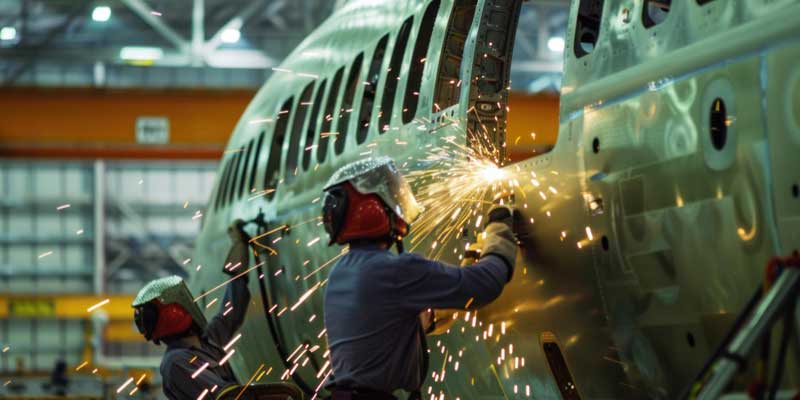
Every aircraft that takes to the sky is the visible outcome of an enormous invisible manufacturing system. Behind every reliable flight sits a chain of precision engineering, specialised components, advanced materials, avionics, software, testing, certification and quality control. As India’s aerospace ambitions expand across defence, unmanned systems, commercial aviation and space, that manufacturing chain is undergoing a fundamental transformation. The opportunity is no longer limited to assembling aircraft or supplying individual components. It is increasingly about designing, engineering, manufacturing and exporting the technologies that make modern flight possible.
Beyond assembly
For decades, aerospace manufacturing has been defined by exceptionally high barriers to entry. Tight tolerances, stringent quality requirements, long qualification cycles and demanding certification processes mean that a manufacturer cannot simply scale production and expect to enter the sector. Capability has to be built systematically, often across years of engineering development, testing and validation.
India’s aerospace ecosystem is now moving towards a deeper form of participation. The emphasis is shifting from import-dependent assembly towards indigenous design, subsystem development and advanced manufacturing. Defence modernisation, rising demand for unmanned systems, the expansion of commercial aviation and opportunities in the space sector are creating demand across the aerospace value chain.

The shift is not simply about producing more systems domestically. It is about controlling the technologies that sit beneath them. Gaurav Achha, Co-Founder & Co-CEO, BonV Aero said, “However, genuine self-reliance goes beyond assembling systems within India.”
This evolution is significant because the real manufacturing opportunity lies beneath the platform itself. Aircraft, drones and other aerospace systems depend on a network of components, electronics, avionics, sensors, propulsion systems, embedded software, structures and specialised manufacturing processes.
For Indian manufacturers, particularly SMEs, this creates multiple entry points into the industry. Instead of attempting to build complete aircraft or unmanned platforms, companies can develop expertise in specialised components and subsystems and gradually move towards higher-value engineering and product development.
The transition, however, requires a fundamentally different manufacturing mindset.

“Aerospace-grade systems require precision manufacturing in controlled environments, deep multidisciplinary engineering, and rigorous quality processes aligned with global standards,” Ravi Yadav, Founder and Director, Mirai Aerospace said.
Precision is only one part of the equation. Aerospace manufacturing also requires traceability of materials and processes, structured reliability programmes, rigorous testing and validation. From the earliest prototype to final production, every stage must deliver consistency.
Engineering becomes the differentiator
Modern aerospace manufacturing is increasingly multidisciplinary. Aerodynamics, structural engineering, avionics, propulsion, flight control, embedded systems and systems integration have to work together rather than operate as isolated disciplines.
This convergence is particularly visible in unmanned systems. A drone is no longer simply an aircraft with remote controls. Its performance increasingly depends on the integration of flight control systems, sensors, navigation technologies, communications, computing and mission software.
The same shift is taking place across broader aerospace and avionics manufacturing. Avionics systems are becoming more intelligent, connected and software-driven, with artificial intelligence, machine learning, advanced sensors, high-performance embedded computing, secure connectivity and modular architectures influencing how aerospace systems are designed.
“Avionics today is much more than instruments in the cockpit; it is the integrated suite of electronics, computers, sensors, and software that controls navigation, communication, flight management, and mission functions,” Yadav explained.
This has implications for manufacturers. The aerospace factory of the future will need expertise that extends beyond mechanical production. Electronics, software, data, automation and systems engineering will increasingly become part of the manufacturing equation.
Advanced sensors are another important layer. Technologies such as LiDAR, radar and electro-optical and infrared systems can increasingly be integrated into platforms to support sensing, navigation, situational awareness and autonomous operations.
For unmanned systems in particular, the next phase of development is likely to focus increasingly on autonomy. AI and edge computing can enable platforms to process information closer to the point of operation, allowing them to interpret data and respond to changing conditions with less dependence on continuous connectivity.
The strategic value is therefore increasingly shifting towards companies that control their technology stack rather than simply integrating imported subsystems. As Achha noted, “The next phase of growth will be determined by how successfully India develops indigenous avionics, autonomy stacks, navigation systems, and mission-critical components.”
The factory goes digital
Technology is also changing how aerospace products are manufactured.
Automation, additive manufacturing, composites, digital engineering and digital twins are enabling manufacturers to make production more precise, flexible and efficient. Automation can improve consistency and reduce manual errors. Additive manufacturing can enable complex geometries and faster prototyping, while composites can help reduce weight while maintaining structural performance.
Digital engineering is changing the development process itself. Instead of waiting for physical production to identify problems, engineers can simulate, test and optimise components, systems and manufacturing processes digitally.
Digital twins take this further by creating virtual representations of products or production environments. Engineers can assess different scenarios, identify potential bottlenecks and refine processes before committing significant physical resources.
The principle is straightforward: identify problems digitally before they become expensive physical problems.
Artificial intelligence could extend these capabilities further. Its role is not necessarily to replace engineering expertise, but to augment it. AI can assist in analysing production information, identifying quality trends, validating documentation and supporting engineering decisions.
This becomes particularly relevant as aerospace programmes become more complex. More data is being generated across engineering, production, inspection and testing, increasing the need for systems that can connect and interpret that information.
The result is a gradual shift towards a more integrated manufacturing environment, where engineering and production are connected through digital systems rather than separated into sequential stages.
Building the domestic supply chain
The biggest challenge, however, may not be technology adoption. It may be building the ecosystem around it.
India continues to face dependence on imported raw materials and critical components, gaps in specialised technologies, a fragmented MSME base and limitations in testing, certification and infrastructure. Aerospace programmes also demand significant investment and often involve long development and qualification cycles.
For smaller manufacturers, this creates a difficult equation. They need to invest in equipment, engineering talent, testing and certification before production volumes are fully established. Access to patient capital and long-term demand visibility therefore becomes important.
The supplier ecosystem must also mature. Aerospace manufacturers need vendors capable of delivering consistent quality at scale, maintaining traceability and meeting certification requirements. A supplier that can produce a component successfully once is not necessarily ready to become a reliable aerospace supplier.

“Aerospace also requires significant investment in R&D, testing infrastructure, advanced manufacturing capabilities, and skilled talent,” Agnishwar Jayaprakash, Founder and CEO, Garuda Aerospace noted.
Addressing these gaps will require closer collaboration across the ecosystem. Tier-1 manufacturers, SMEs, research institutions, technology companies and government agencies each have a role in developing capability.
Cluster-based ecosystems with shared testing facilities could help smaller companies overcome some of the infrastructure barriers. Support for localisation, faster qualification pathways and greater demand visibility could further encourage investment.
Technology transfer can provide another route to capability building. The development and industrialisation of specialised defence systems demonstrates how collaboration between research establishments and industry can help move technologies from development and validation towards scaled manufacturing and operational deployment.
The larger objective is not simply to replace an imported component with a locally manufactured equivalent. It is to create domestic expertise capable of continuously improving the product, manufacturing process and underlying technology.
The SME opportunity
This is where the aerospace opportunity becomes particularly relevant for India’s manufacturing SMEs.
The sector is opening opportunities across specialised components, electronics, avionics, precision engineering, composites, propulsion-related systems, sensors, navigation, embedded systems, software and advanced payloads.
The growing unmanned systems market adds another layer. Demand is emerging across defence, infrastructure, mining, energy, transportation, agriculture and environmental applications. As drones move from pilot projects towards more routine operational use, manufacturers will need to deliver platforms and subsystems that are reliable, scalable and suitable for demanding environments.
The opportunity is therefore not limited to aircraft manufacturers. Companies that can solve specific technology or manufacturing problems can become part of larger domestic and global supply chains.
This also creates an opportunity for Indian companies to develop intellectual property. Rather than remaining primarily component suppliers or system integrators, manufacturers can gradually build proprietary products, technologies and engineering capabilities.
“The next phase will be about moving from technology integration to indigenous product development, manufacturing and global exports,” Yadav said.
That transition is already changing the ambition of the ecosystem. Manufacturing is no longer being viewed solely as the final stage of a technology programme. It is increasingly becoming part of product development itself.
From manufacturing base to technology hub
India’s long-term aerospace opportunity will ultimately depend on its ability to combine several capabilities: design, engineering, manufacturing, testing, certification, supply-chain management and technology development.
Cost competitiveness will remain relevant, but it cannot be the only differentiator. Global aerospace markets demand consistent quality, reliability, traceability and adherence to international standards.
This means Indian manufacturers will need to invest continuously in R&D, advanced production technologies, skilled talent, digital engineering and quality systems. They will also need to develop stronger relationships with global aerospace companies while building indigenous products and intellectual property.
The ecosystem will have to become increasingly integrated. A modern aerospace programme cannot afford disconnected engineering, manufacturing, quality and supply-chain functions. The interaction between hardware, software, sensors, data and production systems will become increasingly important.
For unmanned systems, this convergence is particularly clear. The aircraft itself is only one part of the solution. Autonomy, navigation, communications, sensing, embedded computing and mission software increasingly determine what the platform can accomplish.
For conventional aerospace, the same principle is emerging through advanced avionics, digital manufacturing and connected engineering.
India therefore faces a larger opportunity than simply expanding aerospace production capacity. It can build an ecosystem in which aircraft, unmanned systems, components and technologies are designed, engineered, manufactured, tested and eventually exported from the country.
That requires patience. Aerospace capability cannot be built overnight, and certification, supplier development and engineering expertise take time. But the direction of travel is clear.
The manufacturing transformation is moving the industry from assembly towards capability; from imported subsystems towards indigenous technology; and from isolated production processes towards connected, digitally enabled engineering.
Jayaprakash mentioned, “Ultimately, India’s competitiveness will depend on moving from being primarily a manufacturing and sourcing base to developing and exporting aerospace technologies, components, and complete systems.” Every successful flight may appear effortless from the outside. Behind it, however, lies an ecosystem that has mastered precision, reliability and complexity.
India’s next aerospace opportunity is to build that ecosystem at scale.
Agnishwar Jayaprakash
Garuda Aerospace
Ravi Yadav
Mirai Aerospace
Gaurav Achha
BonV Aero
aerospace manufacturing
avionics manufacturing
unmanned systems
advanced manufacturing
precision engineering
aerospace supply chain
indigenous aerospace technology
aerospace SMEs
Ashlin Rajan
Related Stories
Smart Manufacturing
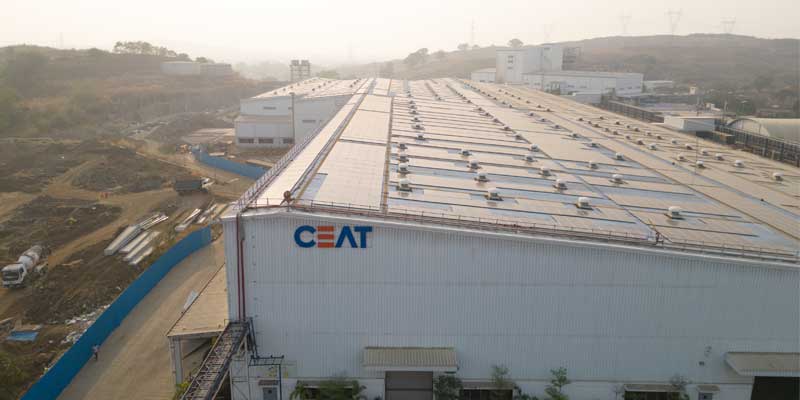
CEAT Ambernath: Smart Manufacturing at MOQ One
CEAT’s Ambernath plant combines AI, automation, digital traceability and lean manufacturing to produce over 1,200 tyre variants, even efficiently handling an minimum order quantity of one.
Read moreSmart Manufacturing

India has real depth in manufacturing: Matthias Lapp
India’s growing role in LAPP’s global manufacturing strategy comes into focus as Matthias Lapp, CEO, LAPP Group, speaks to Ashlin Rajan about the Bhopal expansion, automation, technology and eme..
Read moreAerospace Defence
The New Manufacturing Engine of Indian Aerospace
: India’s aerospace sector is moving beyond assembly, building indigenous capabilities in precision engineering, avionics and advanced manufacturing to compete globally, writes Ashlin Rajan.
Read moreRelated Products
Troop Comforts revolutionises military gear with indigenous innovations
Aerospace & Defence
Troop Comforts Ltd (TCL), a state-owned defence corporation, has recently received a request for proposal (RFP) from the Northern Command of the Indian Army for its indigenously developed military gea Read more
latest News
Subscribe to iNoW

For Industry News on WhatsApp, Give a Miss Call on: +91 84228 74016