






Schedule a Call Back


The Digital Thread: Aerospace Manufacturing’s Real Competitive Advantage
 Articles
- Sep 17,26
The aerospace industry is entering a new era where digital thread, digital twins and AI are connecting engineering, manufacturing and operations, writes Anant Saurabh, VP & Head of Aerospace - Digital Services, Tata Technologies.

Every aircraft has a story. When a rocket launches, the world watches. People gather around screens. Engineers hold their breath. Social media fills with countdowns, anticipation and applause. For a few minutes, millions are captivated by the sheer complexity of sending a machine into space.
Yet every day, thousands of aircraft quietly do something equally remarkable. They carry millions of passengers safely across continents, through changing weather, across oceans and time zones. We board, fasten our seatbelts and trust that we will arrive safely at our destination. Perhaps that is the greatest testament to aerospace engineering. Success has become so routine that it no longer feels extraordinary.
Behind every routine take-off lies an intricate web of engineering decisions, manufacturing processes, quality checks, certifications and operational expertise. A modern aircraft contains millions of components, highly sophisticated software, advanced materials and interconnected systems, all designed, produced and validated to meet some of the world's most stringent safety requirements. The reliability we take for granted did not happen by accident. It is the result of decades of engineering discipline, manufacturing excellence, quality management and relentless attention to detail.
Today, however, the challenge is becoming even greater. Meeting these expectations requires more than incremental improvements on the shop floor. It calls for a shift in how aircraft are designed, industrialised and manufactured. Digital manufacturing is emerging as an important enabler of that shift, although the industry is still at an early stage of adoption.
Historically, aerospace programmes have relied on a sequential approach. Design teams created the product, manufacturing engineers developed production processes and quality teams validated the final output. While this approach delivered results, it could also introduce delays, engineering changes and expensive rework when issues surfaced late in development.
As aircraft become increasingly sophisticated, these challenges become harder to ignore. Digital manufacturing is beginning to change this model by connecting design, manufacturing engineering, production, quality and certification through a common digital foundation. Instead of reacting to problems during production, manufacturers can identify and address them earlier, improving production readiness and reducing programme risk. At the heart of this transformation lies one of the most important concepts shaping the future of aerospace manufacturing: the digital thread.
The digital thread is often discussed as a technology initiative, but its real value lies in continuity. Rather than treating engineering data as isolated information across teams, it creates a continuous flow of information throughout the product lifecycle. Requirements, design models, manufacturing plans, tooling data, inspection records and engineering changes remain connected, providing greater traceability from concept through production and into service.
Imagine a seemingly minor design modification. A bracket is repositioned by a few millimetres to improve assembly access. What appears to be a small engineering change can affect tooling, work instructions, supplier documentation, inspection plans and certification records. Traditionally, multiple teams would need to independently assess those impacts. The digital thread changes this equation. With a connected digital thread, those relationships can already be linked, helping teams make faster, more informed decisions. Every decision retains its context. Every change remains traceable. Every stakeholder works with the same source of truth.
In many ways, the digital thread serves as the invisible connective tissue of an aerospace programme, ensuring that information moves seamlessly across disciplines rather than becoming fragmented across organisations and systems. This capability is particularly important in aerospace, where programmes can remain in production for decades and design modifications continue throughout an aircraft's lifecycle.
A connected digital environment helps stakeholders work with current engineering information, reducing inconsistencies while strengthening configuration management and regulatory compliance. Yet the industry's digital thread journey is far from complete. While many aerospace and defence organisations have begun implementing digital thread initiatives, only a limited number have deployed them across the enterprise. The opportunity, therefore, is not simply to adopt digital tools, but to scale them across the organisation.
The digital thread becomes even more powerful when combined with virtual manufacturing and digital twins. Engineers can simulate assembly processes, validate tooling, assess factory layouts and optimise production sequences before production begins. Digital twins allow teams to evaluate products and manufacturing operations under different scenarios, helping identify bottlenecks and validate decisions before significant physical resources are committed. The objective is simple but transformative: discover problems digitally before encountering them physically.
Artificial intelligence (AI) is expected to extend these capabilities further. Its greatest opportunity may lie less in replacing engineers and more in augmenting their expertise. AI can assist in validating technical documentation, identifying inconsistencies across engineering records, analysing production data for quality trends and supporting faster engineering-change assessments. By reducing repetitive work, engineers can devote more time to innovation and complex problem-solving.
Advanced materials and additive manufacturing are adding another dimension. Aerospace manufacturers continue to seek ways to reduce weight while maintaining structural integrity and safety. Additive manufacturing enables lightweight, highly optimised components with geometries that are difficult to achieve through conventional methods. Combined with simulation and digital validation, it can support faster design iterations while reducing material waste.
India’s aerospace ecosystem is also entering an important phase of growth. Expanding aviation demand, defence programmes, the growing space sector and deeper participation in global aerospace supply chains are creating opportunities across engineering, manufacturing and digital services. As India strengthens its position as a global aviation and MRO hub, digital technologies will play a critical role in accelerating that journey.
However, technology alone will not define success. Digital manufacturing requires organisations to rethink how engineering, manufacturing and quality teams collaborate. Future aerospace engineers will need expertise spanning mechanical and systems engineering, automation, data analytics and digital technologies. The ability to connect disciplines may become just as important as technical expertise itself.
Ultimately, digital manufacturing is not simply about making factories more efficient. It is about building an engineering ecosystem in which product development, manufacturing planning, production, quality and certification are increasingly connected. As aerospace programmes become more complex and production expectations rise, competitive advantage will belong to organisations that can connect engineering, manufacturing and digital technologies at scale.
And perhaps that brings us back to where the story began.
The next time a rocket launches, the world will stop and watch. The next time an aircraft takes off, most of the world will not. And that is precisely the point. One captures our imagination because it pushes the boundaries of what is possible. The other earns our trust because it delivers the extraordinary, every single day.
As aerospace enters a new era of complexity, maintaining that trust will depend on an invisible thread connecting requirements to designs, designs to manufacturing and manufacturing to safe flight. Passengers may never see that thread. Yet every reliable take-off, every successful programme and every future breakthrough will travel along it.
And in that invisible connection lies aerospace’s next leap forward.

About the author:
Anant Saurabh is the Vice President & Head of Aerospace - Digital Services at Tata Technologies.
Image Courtesy: Magnific.com
Tata Technologies
Anant Saurabh
Aerospace Manufacturing
Digital Thread
Digital Twins
Digital Manufacturing
Artificial Intelligence (AI)
Additive Manufacturing
Aerospace Engineering
Related Stories
Automation & Robotics
The Digital Thread: Aerospace Manufacturing’s Real Competitive Advantage
The aerospace industry is entering a new era where digital thread, digital twins and AI are connecting engineering, manufacturing and operations, writes Anant Saurabh, VP & Head of Aerospace - Digit..
Read moreAutomation & Robotics

Flex India is creating an agile, resilient manufacturing ecosystem: Nikhil Rao
In this interaction with Rakesh Rao, Nikhil Rao, VP Operations, Flex India, discusses the company’s manufacturing evolution, Industry 4.0 adoption, sustainability initiatives and its roadmap to bu..
Read moreAerospace Defence
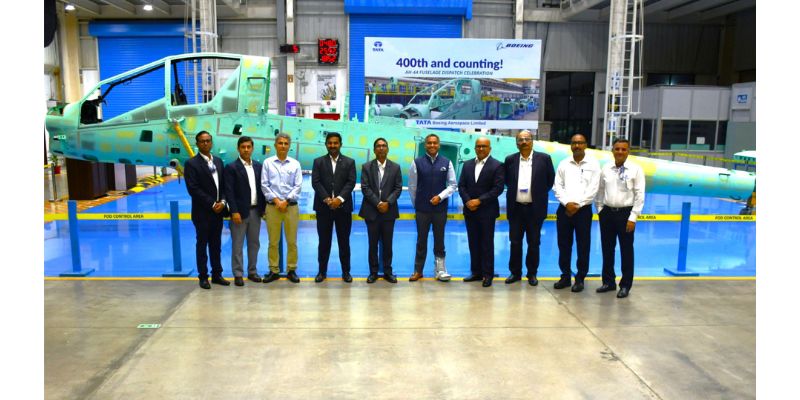
TBAL rolls out 400th Apache fuselage from Hyderabad facility
Tata Boeing Aerospace has rolled out its 400th AH-64E Apache fuselage from Hyderabad, highlighting India’s growing aerospace manufacturing capabilities and role in global defence supply chains.
Read moreRelated Products
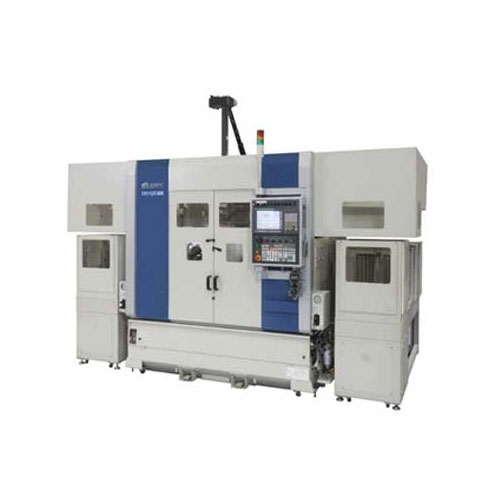
Compact Fmc - Motorum 3048tg With Fs2512
INDUSTRIAL AUTOMATION & TECHNOLOGY CONSULTANCY
Meiban Engineering Technologies Pvt Ltd offers a wide range of Compact FMC - Motorum 3048TG with FS2512.
Digital Colony Counter
INDUSTRIAL AUTOMATION & TECHNOLOGY CONSULTANCY
Rising Sun Enterprises supplies digital colony counter.

Robotic Welding SPM
INDUSTRIAL AUTOMATION & TECHNOLOGY CONSULTANCY
Primo Automation Systems Pvt. Ltd. manufactures, supplies and exports robotic welding SPM.
latest News
Subscribe to iNoW

For Industry News on WhatsApp, Give a Miss Call on: +91 84228 74016