








Schedule a Call Back


Semicon 2.0 needs skills to scale production: Kishen Kavikondala
 Articles
- Oct 29,26
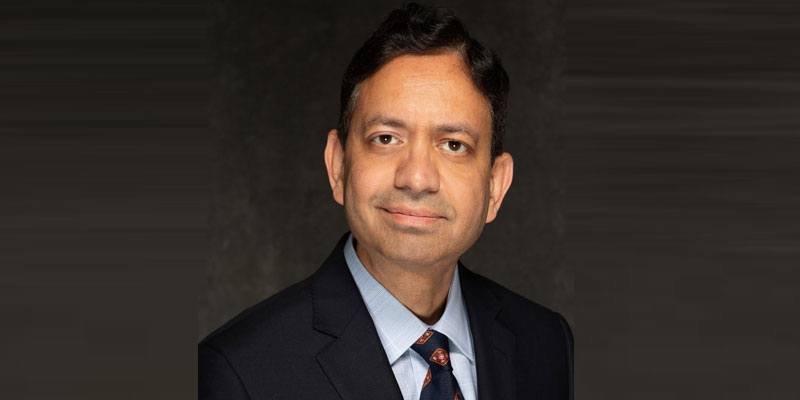
India’s semiconductor shift to scaled production will demand automation and skilled talent, Kishen Kavikondala, CEO, ATS India, discusses the opportunity with Ashlin Rajan.
Could you tell us about Automated Tooling Systems (ATS) and its manufacturing expertise?
Automated Tooling Systems in Hyderabad has been in business for about 13 years, working in high-end automation, primarily for the automotive and industrial manufacturing sectors. We design and build special-purpose machines for assembling engines, transmissions and car bodies.
A car body that has been fully assembled before painting is known as a “body in white”. Our work in this area requires sophisticated engineering and precision. Our capabilities span understanding the requirements and engineering specifications of large global companies, and designing and building equipment for production volumes of 100,000 to 500,000 pieces a year.
ATS has primarily been export-oriented. In the past two or three years, however, Indian companies and multinationals operating in India have approached us to solve engineering challenges locally. About 10 per cent of our business in recent years has focused on products and solutions for the Indian market.
What capabilities does ATS have in India, and how are you adapting them for semiconductor manufacturing?
ATS India has the capabilities to take a machine from concept to installation: conceiving and designing it, manufacturing and building it, and integrating it at the customer’s site. These capabilities currently work in tandem with our factory in Michigan, US.
We are also doing this work for aerospace companies in India. We design special equipment, get the design approved by the customer, build it at our Hyderabad factory and install it at the customer’s facility. We also train the customer’s team to operate the equipment and improve its processes.
Some of the capabilities needed for semiconductor equipment, particularly high-precision engineering and manufacturing, overlap with what we already do. We now need to understand the sector’s specifications, regulations and equipment standards, and adapt our engineering capabilities to meet its requirements. That is our biggest learning curve. With Hirata’s support, we believe we can become a strong player in this market.
Why is automation becoming more important as India’s semiconductor industry moves into its next phase?
Automation has been central to manufacturing in the West for decades. It supports not only high-volume production but also consistent product quality. In India, the need for high volumes was limited for many years, and labour arbitrage did not always make automation viable.
Semicon 1.0 focused on building the foundation for growth. As the industry moves towards Semicon 2.0 and production scales up, manufacturers will need to produce at higher volumes while meeting demanding quality requirements. Automation is one of the fastest, most efficient and safest ways to achieve this.
ATS and its partners see this as an important time to enter the Indian market. We bring decades of automation experience and can help companies move from the foundation stage to production at scale, serving both the domestic market and India’s export ambitions.
What will Indian semiconductor manufacturers need to do to reach global levels of automation, precision and productivity?
They will need to understand global expectations for volume, quality and market specifications. In my view, the engineering and quality requirements of the Indian market are similar to those of global markets.
Manufacturers also need to assess what capital equipment is required to integrate automation into their production lines. They should be open to ideas from global high-speed automation companies, identify technologies suited to their applications and invest in the right partners to build and integrate that technology.
This can help manufacturers move from manual or semi-automated operations to fully automated assembly lines, while scaling production and maintaining quality.
What are the biggest capability gaps India must address to support advanced manufacturing?
The biggest challenge is the availability of a skilled workforce. Semicon 1.0 placed considerable emphasis on chip design, and India now has companies working in chip design and prototyping. The next challenge is understanding the types of automation available, how to apply them and what skills are needed to bring the technology onto the factory floor.
The ecosystem will also need people who can operate and service sophisticated automated equipment. Building these skills will take time; it will not happen overnight.
India is uniquely positioned because it has a young workforce. It can train people at advanced manufacturing facilities overseas, or bring experienced professionals from those countries to train the next generation in India. Developing qualified and available talent will be essential to closing the technical gap and serving both domestic and export markets.
What role can ATS and Hirata play as India develops its semiconductor manufacturing ecosystem?
We have worked with Hirata in other business segments, so we understand each other’s capabilities and have an established relationship of trust. We believe the timing is right, given the government’s focus on accelerating manufacturing after the foundation-building phase of Semicon 1.0.
Opportunities may emerge in areas such as outsourced semiconductor assembly and test (OSAT), packaging and sorting. Our expertise, together with Hirata’s, covers automation at the front end of production as well as at the back end, including packaging and JEDEC tray sorting. We bring technology, manufacturing capabilities and experience serving global customers. We believe these capabilities can support Semicon 2.0 and help prepare the industry for its next phase.
India also faces short-term uncertainties from global market and geopolitical conditions. Over the long term, however, we believe the opportunity remains strong.
What will make the Indian market ready for customised, application-specific semiconductor equipment?
Indian companies need to be open to working with global technology providers and understand that advanced capabilities come at a cost. Their ambitions will determine what technology they need, where they source it and how much they must invest to serve global markets.
If Indian companies develop chips for applications specific to the Indian market, they will need to work with equipment providers to determine what is required at the front and back ends of production. The objective will be to manufacture at scale while maintaining global quality standards, serving customers in India and competing internationally.
How do you expect ATS India’s production mix and manufacturing footprint to evolve?
At least 95 per cent of our current production is exported. Over the next two years, I expect 20 per cent of our current production capacity in Hyderabad, along with the additional capacity we are adding, to serve the Indian market. Our target is to reach a mix of 60 per cent exports and 40 per cent domestic business within five years.
As demand grows, there may be sufficient reason for our partner in Japan to consider expanding its manufacturing footprint in India in collaboration with us. This would bring production closer to customers. If it makes sense, some semiconductor equipment manufactured in India could also serve global markets, although we expect much of it to be absorbed by the domestic market.
BLURBS:
Automation is one of the fastest, most efficient and safest ways to achieve this.
Indian companies need to be open to working with global technology providers and understand that advanced capabilities come at a cost.
Semiconductor manufacturing
factory automation
semiconductor equipment
skilled workforce
India’s semiconductor ecosystem
OSAT and packaging
ATS India
Hirata automation
Kishen Kavikondala
Ashlin Rajan
Related Stories
Automation & Robotics

Critical Manufacturing will grow with India's semiconductor industry: Weng Keong
In this interview with Rakesh Rao, Weng Keong, MD, Critical Manufacturing Malaysia, discusses smart factories, digital infrastructure and India’s semiconductor manufacturing potential.
Read moreMachine Tools & Accessories
Imports make up 60% of India’s machine tool: Jibak Dasgupta
Despite fourfold growth since 2014, imports still supply 60% of India’s machine tool demand by value. Jibak Dasgupta, Director General & CEO, IMTMA, tells Ashlin Rajan how India can build global c..
Read moreMachine Tools & Accessories
Less than 1% of Indian SMEs export: R Srinivasan
In this interview R Srinivasan, Director, AIRA Consulting Private Limited, speaks with Ashlin Rajan about Make in India’s impact on SMEs, manufacturing challenges and the path to global competitiv..
Read moreRelated Products
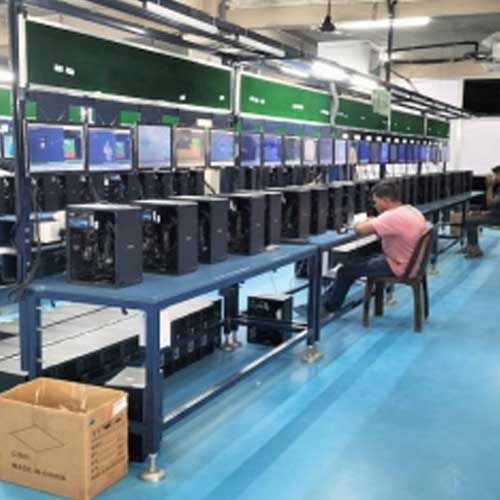
Computer And Laptop
ELECTRICAL & ELECTRONIC EQUIPMENT
SICCO Engineering Works offers a wide range of computer and laptop.
Read more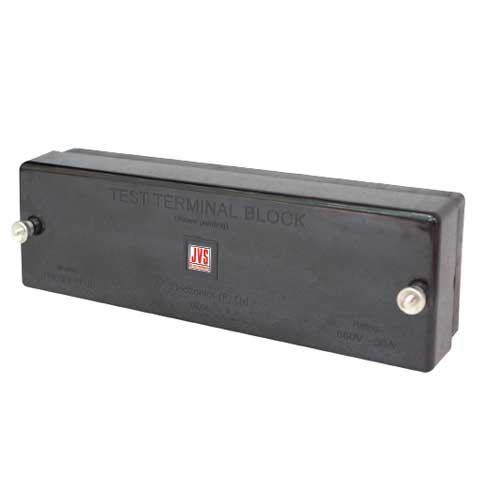
Test Terminal Block Utility Plus - Jttbu Plus
ELECTRICAL & ELECTRONIC EQUIPMENT
JVS Electronics Pvt Ltd offers a wide range of test terminal block utility plus - JTTBU plus.
Read more
Kusam-meco Handheld Thermal Camera Model- Km 300
ELECTRICAL & ELECTRONIC EQUIPMENT
KUSAM-MECO, the innovators of new products in the Test and Measurement field, have added a new Thermal Imager with Camera.
Read morelatest News
Subscribe to iNoW

For Industry News on WhatsApp, Give a Miss Call on: +91 84228 74016