






Schedule a Call Back


Operational Optimisation: Automation – When And How Much?
 Articles
- Sep 26,26
As we put our efforts into optimising our operations, we journeyed from discussions on operational flow, including the “why”, “where”, “what” and “how”, before looking at data-based operational decision-making. In this month’s column, Zurvan Marolia highlights that automation is a double-edged sword, where “appropriate” stands at the dividing line
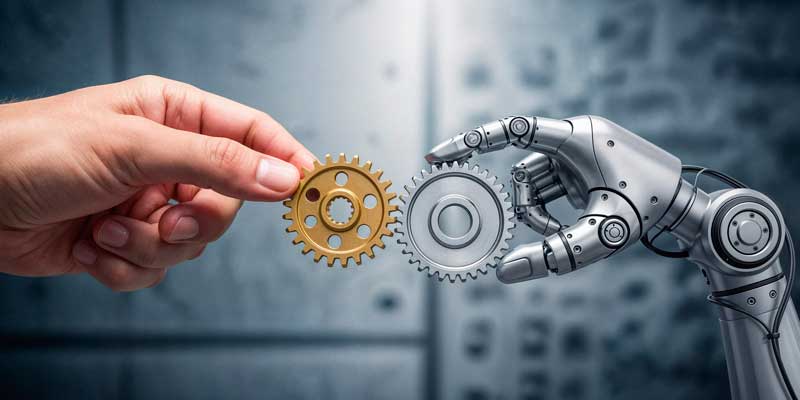
Close your eyes and think of the images that are conjured up by the word “Automation”. What comes to mind are the most traditional and dominant mental images of automation, featuring synchronized, heavy-duty robotic arms precisely welding, painting, or assembling complex structures like vehicles. In a way, it feels like the panacea for all the challenges faced in productivity and cost competitiveness.
This could not be further from reality. Automation is not an objective in itself; it is a means of improving the flow of the operation.
With the technology available at our disposal today, the question "Can we automate it?" is no longer relevant. The question that needs to be considered is "Should we automate it?”. That distinction is important.
Let us first understand “why automate?” or what are the benefits of automating a process.
Automation gives us:
- Consistency
- Repeatability
- Predictability
- Safety
- Intelligence / Real-time data
Notice the above list is over and above the obvious benefits of cost and manpower reduction.
Bill Gates said, “The first rule of any technology used in a business is that automation applied to an efficient operation will magnify the efficiency. The second is that automation applied to an inefficient operation will magnify the inefficiency.”
Automation (and its more evolved avatar of AI), must thus be viewed as a tool at our disposal to be used judiciously.
Let us therefore look at the processes where maximum benefits can be derived from automation. The ideal processes are processes that:
- are stable and well defined
- require a high degree of repeated steps
- involve a low or non-judgemental manual labour (fatigue impact on productivity)
- have clear measurable results
- where quality depends on operator skill (fatigue impact on quality)
- are potentially unsafe
Having identified processes for automation, we need to embark on the next step: ‘how much?
- What is the level of automation appropriate to the volume and product life? A high-volume, long-life product can justify a very different solution from a low-volume, frequently changing product.
- What should remain with people? Judgement, problem-solving, creativity, exception handling and continuous improvement may be better left to people.
There is also a useful middle ground between manual work and full automation.
A process can be partially automated: the machine may handle positioning, feeding or repetitive movement, while the operator performs inspection, judgement or final assembly. This human–machine collaboration often provides the best combination of flexibility and productivity.
For example, instead of fully automating a component assembly operation, a simple fixture could ensure correct positioning, a pneumatic device could perform the pressing operation, and the operator could retain responsibility for loading, visual inspection and responding to abnormalities. The investment is lower, the process becomes more consistent, and the operator is relieved of the most repetitive and physically demanding activity.
This is particularly relevant for growing manufacturing businesses. Automation should not become a technology acquisition exercise. It should be part of a deliberate progression:
Stabilise the process ? Simplify the process ? Mechanise where appropriate ? Automate where justified ? Integrate where it adds further value.
The objective is not to create a factory with the maximum number of robots or automated machines.
The objective is to create a factory where every task is performed at the most appropriate level of automation—by a person, a simple device, a machine, or an integrated automated system.
ROI of automation
The ROI of automation should not be judged simply by “How many people will it replace?” A proper business case should consider the total value created over the life of the automation.
Increased throughput – additional output from the same production footprint can be more valuable than labour savings.
- Improved quality – fewer defects, rework, rejects and customer complaints.
- Higher machine utilisation – longer operating hours and more consistent cycle times.
- Reduced downtime and variability – particularly where automation eliminates delays, handling losses or inconsistent operator practices.
- Condition-based maintenance – where feedback sensors provide early signals of potential breakdowns while maintaining current performance levels
- Improved delivery performance – greater capacity and process predictability can improve on-time delivery.
- Safety and ergonomics – reducing hazardous or physically demanding work has both direct and indirect value.
- Lower dependence on scarce skills – critical operations become less dependent on the availability of highly skilled operators.
- Data and traceability – automated systems can provide information that improves process control and decision-making.
- Scalability – automation can provide capacity for future growth without proportionately increasing organisational complexity.
- Asset utilisation – better use of existing machines and production space can defer additional capital investment.
Most importantly, the calculation should include the complete lifecycle cost—capital investment, installation, integration, maintenance, tooling, programming, downtime, training and eventual replacement—not just the purchase price.
The real ROI of automation is the value of the capability it creates, not merely the labour costs it eliminates.
Automation won’t fix a broken process—it will only multiply its flaws.
- Bill Gates
"Automation is good, so long as you know exactly where to put the machine."
- Dr Eliyahu Goldratt
About the author:
Zurvan Marolia is the former Senior Vice President of Godrej & Boyce Mfg. Co. Ltd, part of Godrej Enterprises Group. He is a former member of the National Manufacturing Council of the Confederation of Indian Industry (CII), and a former Chair of the Manufacturing Council of Godrej & Boyce. Marolia is now a freelance consultant and can be reached at zurvan@takttime.com.
Zurvan Marolia
Godrej & Boyce
Godrej Enterprises Group
Automation
Manufacturing Automation
Operational Optimisation
Smart Manufacturing
Digitalisation
Industry 4.0
Factory Automation
Manufacturing Excellence
Takt Time
Related Stories
Material Handling Equipment
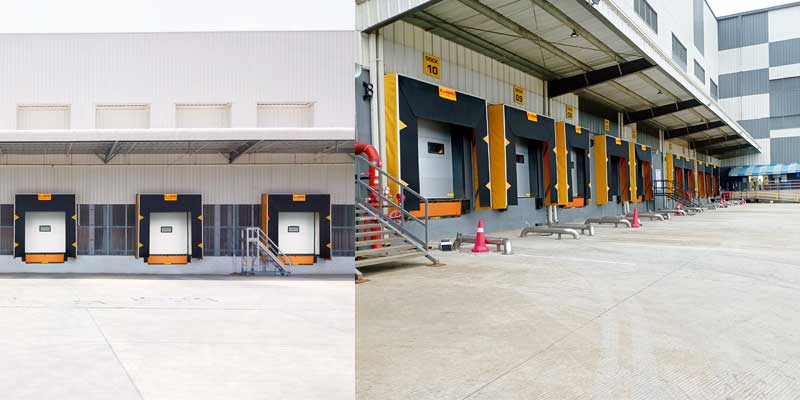
Gandhi Automations strengthens loading bays with advanced dock shelters
Gandhi Automations offers retractable, cushion and inflatable dock shelters designed to improve loading bay safety, insulation, energy efficiency and protection
Read moreSmart Manufacturing
Operational Optimisation: Automation – When And How Much?
As we put our efforts into optimising our operations, we journeyed from discussions on operational flow, including the “why”, “where”, “what” and “how”, before looking at data-based ..
Read moreSmart Manufacturing
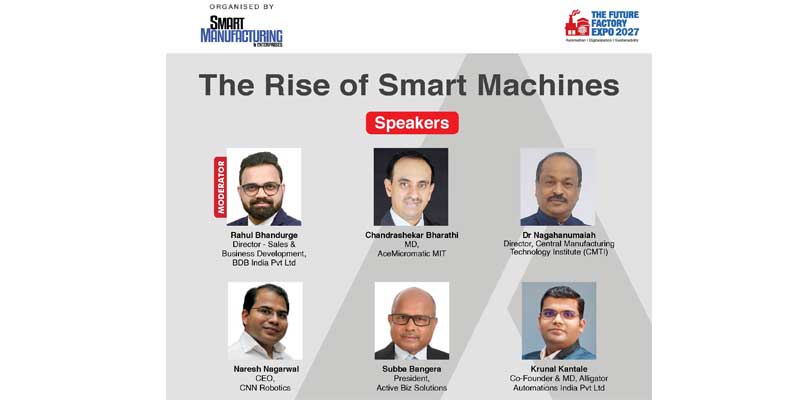
Future Factory Expo Webinar Discusses Rise of Smart Machines in Manufacturing
Smart Manufacturing & Enterprises, along with Future Factory Expo (FFE), hosted the webinar to explore how intelligent machines are enabling data-driven decision-making, higher productivity and sust..
Read moreRelated Products
Fanless Industrial Pc for Smart Manufacturing
Smart Manufacturing
CONTEC Launches BX-M4600 Series - Fanless Industrial PC for Smart Manufacturing.
latest News
Subscribe to iNoW

For Industry News on WhatsApp, Give a Miss Call on: +91 84228 74016