






Schedule a Call Back


Future factories will integrate mechanical and digital tech: Sachin Tare
 Articles
- Aug 29,26
With manufacturing becoming increasingly technology-driven, Sachin Tare, Director – Manufacturing, CASE Construction Equipment, shares his perspective with Ashlin Rajan on automation, digitalisation and India’s evolving manufacturing landscape.
How would you describe CASE Construction's manufacturing footprint in India today, and how does it support the company's growth strategy?
India is an important manufacturing and export base for CASE Construction Equipment, with the Pithampur facility playing a central role in our growth strategy. The plant currently manufactures a broad portfolio of construction equipment and serves both the domestic market and international markets. The scale of the operation reflects the strategic importance of India within CASE's global manufacturing network.
In the previous year, the Pithampur facility produced approximately 7,500–8,000 machines, and we are working towards taking this beyond 10,000 units over the next couple of years. This growth will be supported by both increasing volumes across our existing portfolio and introducing additional product lines at the facility.
The plant is also strongly export-oriented, with nearly 50% of its production being exported. This demonstrates the competitiveness of Indian manufacturing not only in terms of cost, but also quality, product fit and finish, delivery responsiveness and supply-chain agility.
Our approach is therefore not limited to manufacturing for the Indian market. We are strengthening Pithampur as a competitive manufacturing base capable of supporting both India's infrastructure requirements and CASE's global product and export ambitions.
How is automation transforming construction equipment manufacturing in areas such as productivity, precision, quality and shop-floor efficiency??
Automation is becoming an important enabler of manufacturing competitiveness. For us, the objective is not automation for its own sake, but the application of technology where it can deliver measurable improvements in quality, productivity, consistency and safety.
In construction equipment manufacturing, where machines involve complex assemblies and demanding operating conditions, process consistency is particularly important. Automation and digital process controls can help reduce variability, improve repeatability and strengthen quality assurance across critical manufacturing stages.
The larger opportunity is to combine automation with the experience and judgement of our workforce. Technology can improve process visibility and enable faster identification of deviations, while skilled teams remain critical to decision-making, problem-solving and continuous improvement.
As production volumes increase and the product portfolio expands, automation and digital manufacturing capabilities will become increasingly important in maintaining consistent global quality standards while improving shop-floor efficiency.
Which manufacturing processes at CASE are seeing greater adoption of automation and digital technologies, and what benefits are these delivering?
We are looking at automation and digitalisation from the perspective of the overall manufacturing system rather than individual technologies. Areas such as welding, machining, assembly, painting and quality processes offer opportunities where greater process control, repeatability and traceability can create tangible value.
The benefits are reflected in better consistency, improved quality control, higher productivity and greater visibility into shop-floor performance. Digital processes also support faster identification of deviations and more structured root-cause analysis, which is important for continuous improvement.
As we expand the Pithampur facility's production capacity and introduce additional product lines, these capabilities become increasingly important. The objective is to build a manufacturing system that can scale efficiently without compromising quality or reliability.
Ultimately, the success of automation should be measured by business outcomes—better quality, improved throughput, reduced variability, enhanced safety and greater responsiveness to customer demand.
How is CASE increasing component localisation in India, and which areas offer further potential for strengthening the domestic supply chain?
Localisation is an important part of building a competitive and resilient manufacturing ecosystem in India. For us, it is not simply a question of replacing an imported component with a locally sourced one; it is about developing supplier capabilities that can consistently meet the required standards of quality, technology, cost and delivery.
A stronger domestic supplier ecosystem provides multiple benefits. It can improve supply-chain responsiveness, reduce lead times, increase flexibility and support greater competitiveness of products manufactured in India.
There is continued potential to deepen localisation across areas such as fabricated structures, assemblies, hydraulic systems and electrical and electronic components, subject to the maturity and capability of the domestic supplier base.
As India's manufacturing ecosystem continues to mature, collaboration between OEMs and suppliers will be critical to developing the capabilities required for the next phase of localisation.
5. How are the changing component sourcing ecosystem influencing manufacturing costs, supply-chain resilience and product development?
The supply chain has become a strategic component of manufacturing competitiveness. Cost remains important, but resilience, quality, responsiveness and the ability to manage volatility have become equally critical.
India has a significant advantage in this regard because of its growing supplier ecosystem and its ability to provide competitive products with the required quality and delivery responsiveness.
The export performance of the Pithampur facility is an important reflection of this competitiveness. We are also seeing greater importance being placed on supplier collaboration and diversification. A robust sourcing ecosystem allows manufacturers to respond more effectively to fluctuations in commodity prices, logistics and global supply conditions.
From a product development perspective, closer engagement with suppliers can also improve manufacturability, accelerate localisation and enable faster adaptation of products to market requirements. The objective is therefore to build a supply chain that is not merely cost-efficient, but structurally resilient and capable of supporting long-term growth.
With equipment becoming more technology-driven, how are electronics, connectivity and advanced power solutions changing machine manufacturing and integration?
Construction equipment is becoming increasingly technology-intensive, with greater integration of electronic controls, sensors, connectivity and advanced powertrain technologies.
This is changing manufacturing because the focus is moving from assembling primarily mechanical systems to integrating mechanical, electrical, electronic and software-enabled systems into a single machine. This requires greater precision during assembly, stronger validation processes and increasingly skilled manufacturing teams.
Connected technologies are also creating a closer link between the machine and the broader customer ecosystem. Telematics, for example, can provide operational and machine-level information that supports better utilisation, monitoring and maintenance.
From a manufacturing standpoint, the key requirement is to ensure that these technologies are integrated without compromising the fundamental attributes customers expect from construction equipment - reliability, durability, uptime and ease of operation.
As the industry evolves, manufacturing capabilities will increasingly need to reflect this convergence of mechanical engineering, electronics, software and data.
From a manufacturing perspective, what major trends are shaping India’s construction equipment industry and evolving customer expectations?
The Indian construction equipment industry is moving towards greater technology adoption, higher localisation, improved manufacturing efficiency and increasingly sophisticated customer expectations.
Customers are no longer evaluating equipment only on the initial purchase price. They are increasingly looking at the overall value proposition: machine productivity, fuel efficiency, uptime, reliability, attachments, service support and the cost of ownership over the equipment lifecycle.
This is also reflected in the increasing interest in connected technologies and solutions around the machine. The industry is gradually moving from a product-centric approach towards a broader equipment-and-solutions approach. From the manufacturing side, this means that quality and reliability remain non-negotiable, while productivity, digitalisation, sustainability and flexibility are becoming increasingly important.
At the same time, India's infrastructure development continues to create opportunities across traditional construction segments as well as emerging areas such as logistics parks and data centres. This creates demand for equipment that is productive, versatile and capable of meeting evolving application requirements.
What are CASE Construction Equipment’s key manufacturing priorities in India?
Our immediate priority is to strengthen Pithampur as a scalable, globally competitive manufacturing base. The facility produced approximately 7,500–8,000 machines last year, and we are working towards crossing 10,000 units over the next couple of years.
This growth will come through a combination of higher volumes from our existing product portfolio and the introduction of additional product lines that are currently not manufactured at Pithampur. These include opportunities such as skid steer loaders, compact track loaders and additional excavator ranges, as we progressively expand into heavier product segments.
Exports will remain an important part of this strategy. Nearly 50% of Pithampur's production is currently exported, and as overall production grows, the absolute volume of exports can increase further while maintaining India's position as a competitive manufacturing base.
Alongside capacity expansion, we will continue to focus on localisation, automation, supplier capability development, quality and workforce skills. The objective is to create a manufacturing ecosystem that can support a broader product portfolio, higher volumes and increasingly sophisticated customer requirements.
Our confidence in India remains strong. The investments and expansion taking place at Pithampur reflect the long-term opportunity we see in the Indian market as well as India's potential to serve global markets.
construction equipment manufacturing
Pithampur facility
smart manufacturing
automation
digitalisation
localisation
Industry 4.0
Sachin Tare
CASE Construction Equipment
Ashlin Rajan
Related Stories
Electrical & Electronics
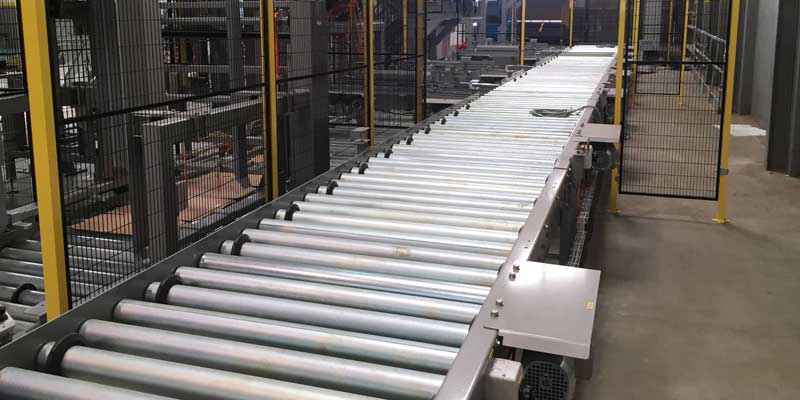
SICCO Engineering: Powering Industrial Material Movement
With over four decades of experience, SICCO Engineering Works is advancing industrial material handling through customised conveyor systems, automation solutions and high-quality roller technologies..
Read moreSmart Manufacturing

Lights-Out Manufacturing: The Future of Intelligent Circular Sawing
In this article, Prakhar Jain, CEO of the Indore-based ITL Industries Ltd, explains how the company is transforming metal cutting through smart automation.
Read moreSmart Manufacturing

Clean manufacturing is key to India’s future growth: Yash Kashyap
Yash Kashyap, India Lead, Industrial Transition Accelerator, shares insights with Ashlin Rajan on industrial decarbonisation, clean manufacturing, green technologies and India’s transition towards..
Read moreRelated Products
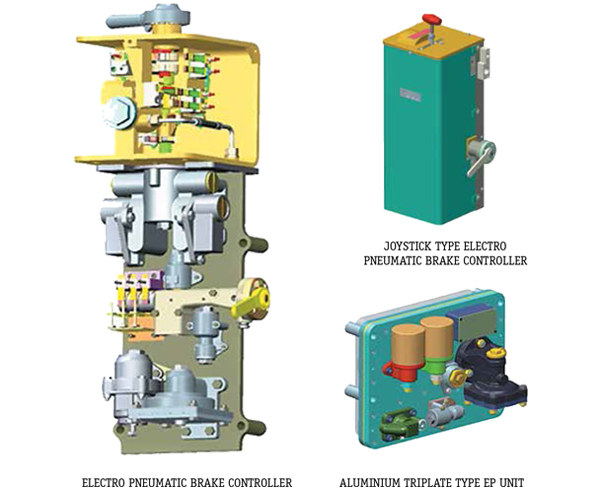
Electro - Pneumatic Brake System for Emu
CONSTRUCTION, MINING & EARTH MOVING EQUIPMENT
Escorts Kubota Limited offers a wide range of electro - pneumatic brake system for EMU.
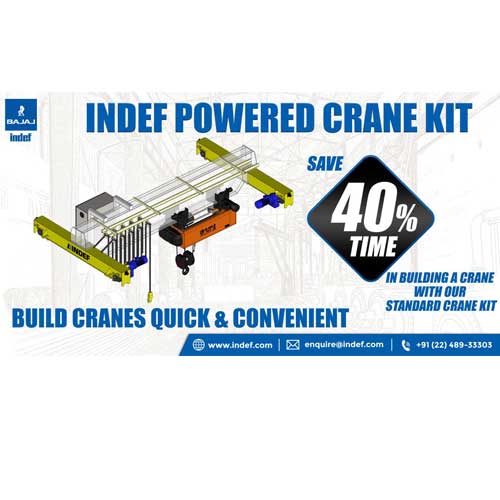
Indef Powered Crane Kit
CONSTRUCTION, MINING & EARTH MOVING EQUIPMENT
Hercules Hoists Ltd offers a wide range of Indef powered crane kit.
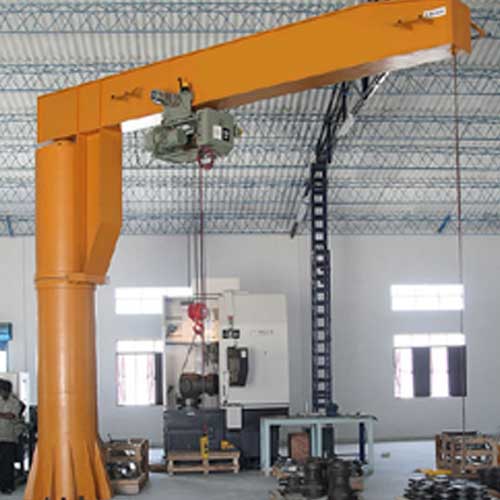
Jib Crane
CONSTRUCTION, MINING & EARTH MOVING EQUIPMENT
DC Hoist & Instruments Pvt Ltd offers a wide range of Jib crane.
latest News
Subscribe to iNoW

For Industry News on WhatsApp, Give a Miss Call on: +91 84228 74016