








Schedule a Call Back


India spent only 0.64% of GDP on R&D during FY2020-21: Shardul Fadnavis
 Articles
- Oct 27,26
As India’s manufacturing ambitions evolve, Shardul Fadnavis, Partner and Leader – Industrial Development and Investment Promotion, says Make in India’s progress in an interview with Ashlin Rajan

How has Make in India changed India’s manufacturing landscape since 2014, and where has progress fallen short?
Make in India has expanded India’s industrial scale, strengthened its investment proposition and created globally competitive capabilities in selected sectors. These sectoral successes were expected to lead to an economy-wide manufacturing transformation, with a lag, and we are beginning to see the results.
Annual FDI inflows increased from US$36.05 billion in FY2013-14 to US$94.83 billion in FY2025-26, a compound annual growth rate of approximately 8.4 per cent over 12 years. Cumulatively, India received US$843.58 billion between FY2014-15 and FY2025-26.
India’s FDI profile is beginning to shift from services-, trading- and construction-led inflows towards manufacturing and technology-intensive sectors such as automobiles, chemicals, pharmaceuticals, renewable energy and IT hardware. These sectors now account for around 35 per cent of inflows, compared with a combined 33 per cent share for traditional sectors in FY2014-15.
India has expanded its factory base while strengthening higher-value industrial capabilities. Registered-factory output reached approximately US$1.85 trillion in FY2023-24 and grew by a further 7.81 per cent in FY2024-25. Basic metals, automotive, chemicals, pharmaceuticals, electronics and electrical equipment, and food processing collectively contributed more than 60 per cent of registered-manufacturing GVA in FY2024-25.
Value creation within registered factories is strengthening, although it remains concentrated. ASI manufacturing GVA increased from about US$266 billion in FY2022-23 to about US$296 billion in FY2023-24, an 11.89 per cent increase in rupee terms. It grew by another 9.59 per cent in FY2024-25 to about US$318 billion.
India’s export basket is also becoming more sophisticated. Merchandise exports increased from approximately US$314 billion in FY2013-14 to a record approximately US$441.8 billion in FY2025-26, while total merchandise and services exports reached approximately US$863.1 billion. Electronics, pharmaceuticals, electrical machinery and automobiles have emerged as higher-value export drivers.
However, manufacturing remains concentrated across industries and regions. Six industries accounted for more than 60 per cent of registered-manufacturing GVA, while Tamil Nadu, Maharashtra, Gujarat, Uttar Pradesh and Haryana accounted for more than 56 per cent of registered-manufacturing employment in FY2024-25. Emerging states such as Madhya Pradesh, Chhattisgarh, Odisha, Jharkhand and Assam have industrial, mineral or connectivity advantages that could support more competitive manufacturing ecosystems.
PLI schemes had enabled more than US$244 billion in production and sales across 14 strategic sectors by December 2025. However, India’s R&D expenditure stood at 0.64 per cent of GDP in FY2020-21, with the private sector funding approximately 36 per cent of national R&D, compared with more than 70 per cent in China, South Korea and the United States. The next phase of industrial policy should complement production incentives with stronger support for product development, engineering, patents and commercialisation.
MSMEs are the backbone of India’s industrial economy. They contribute approximately 35 per cent of manufacturing output and 48 per cent of exports. Policy and industry collaboration should help them move from back-end production into design, tooling, precision components, engineering and export-facing roles.
Why has manufacturing growth not translated into a larger share of GVA, and what needs to change?
India has built manufacturing scale faster than manufacturing depth. The priority now is to convert higher output into greater domestic value addition, productive employment and technology ownership.
The Government’s August 2026 assessment places manufacturing at 16–17 per cent of GDP. Manufacturing GVA at constant prices grew at a 10.88 per cent compound annual growth rate between FY2022-23 and FY2025-26 under the revised national-accounts series. The issue is not an absence of manufacturing growth. Services and the wider economy have also expanded, while industrial growth has not generated a proportionate increase in domestic value added.
Medium- and high-technology industries contributed 46.3 per cent of manufacturing value added in FY2025-26. However, dependence on imported machinery, components and intellectual property can limit the domestic value retained from this production. PLI-led capacity could be complemented by support for private R&D, domestic tooling, product engineering and supplier development.
Over the past five years, metals, automotive, food and beverages, electronics and electricals, and chemicals and petrochemicals contributed more than 65 per cent of India’s industrial output, with their GVA consistently ranging between 15 and 18 per cent. Machinery and equipment, pharmaceuticals, and mineral-based industries accounted for around 20 per cent of industrial output but demonstrated a higher GVA range of 25–35 per cent. PLI schemes have helped trigger value-addition and localisation initiatives across core sectors. These efforts need to be intensified to capitalise on rising domestic consumption and use free trade agreements to support export growth.
Investment quality and the speed of execution remain uneven. Manufacturing-oriented FDI and PLI schemes have expanded capacity, but regulatory costs, delayed approvals, logistics gaps and fragmented state-level implementation can slow the transition from investment announcement to commercial production. Progress should be tracked through time to operationalisation, compliance costs, capacity utilisation and supplier localisation, rather than approvals and commitments alone.
The National Manufacturing Mission focuses on five priorities: ease and cost of doing business, a future-ready workforce, stronger MSMEs, technology availability and product quality. It also targets domestic value addition in solar cells, EV batteries, motors, controllers and other clean-technology value chains. Coordinated execution across these areas is essential for manufacturing to claim a materially larger share of India’s GVA.
Have PLI schemes and other policies built lasting manufacturing capabilities? What should they prioritise next?
PLI schemes and related reforms have moved beyond investment commitments to create operating capacity, exports and import substitution in selected sectors. Results are strongest where performance incentives are reinforced by large domestic demand, localisation requirements, infrastructure support and state-level industrial policies. The larger opportunity is to convert this scale into deeper supplier networks, proprietary technology and competitiveness beyond the incentive period.
As of 31 March 2026, the 14 PLI schemes had generated more than US$27 billion in actual investment and cumulative exports exceeding approximately US$171 billion. By December 2025, cumulative production and sales had exceeded US$244 billion, reported by 836 approved applicants. PLI schemes have shown that performance-linked incentives can accelerate operational capacity. The next scorecard should also prioritise capacity utilisation, domestic value addition and global market share.
Approximately US$3.4 billion in incentives had been disbursed by December 2025. Linking fiscal support to incremental production and sales has strengthened accountability. Future disbursements could increasingly reward localisation, exports and technology development. India’s competitive proposition also depends on market access, infrastructure, supplier availability and policy predictability.
Infrastructure planning and regulatory delivery have become more integrated and digital. By August 2025, PM Gati Shakti had integrated around 1,700 data layers and evaluated 293 infrastructure projects worth US$140.39 billion. By February 2026, states and Union Territories had implemented more than 9,700 BRAP reforms, while over 47,000 compliance requirements had been simplified, digitised or eliminated. Digital approvals, geospatial planning and industrial-land platforms have made the investment environment more transparent.
Electronics manufacturing grew from US$29 billion in FY2014-15 to more than US$100 billion in FY2022-23. Mobile handset production rose from 60 million units to 310 million by FY2023-24. Localisation is improving in PCBs, batteries and displays, although semiconductors and precision components remain heavily dependent on imports. Semiconductor Mission 2.0 has a US$15 billion outlay and aims to build full-stack domestic capabilities across chip design, fabrication and packaging, with the goal of developing a US$200 billion industry by 2035.
Pharmaceuticals have made a notable advance in localisation. PLI-enabled domestic manufacturing now covers 191 bulk drugs, with 83.7 per cent domestic value addition and approximately US$210 million in import substitution. Growth is also extending into biosimilars and monoclonal antibodies.
The automotive sector was expected to reach US$300 billion in revenue by FY2025-26. Exports grew 19 per cent year on year to 5.3 million units in FY2024-25. PLI investments of approximately US$5.2 billion have supported local production of advanced automotive parts, including EV batteries, motors, power electronics and safety technology. Testing and validation facilities such as ICAT, ARAI, GARC and NATRAX support capabilities across batteries, electric motors, powertrains, automotive electronics, crash safety and homologation. By March 2026, PLI-Auto manufacturing activity was spread across 225 units, led by clusters in Maharashtra, Tamil Nadu, Haryana, Karnataka and Gujarat.
Telecom and networking equipment manufacturing has also advanced. Domestic capabilities in antennas and 4G and 5G equipment generated US$9.4 billion in sales, including US$1.8 billion in exports, by early 2025. This progress was supported by incentives for indigenous design.
How far has India moved from assembly to domestic value addition and technology ownership, and what barriers remain?
India’s manufacturing GVA was expected to grow from approximately US$498 billion in FY2024-25 to more than US$1 trillion by FY2029-30. However, domestic value addition remains modest in some sectors. In consumer electronics, assembly accounts for 95–99 per cent of domestic production, while domestic value addition is estimated at 18–23 per cent. Assembly scale supports exports and employment, but India still has limited domestic capability in intermediate goods, advanced machinery and indigenous intellectual property.
Electronics provides the strongest combination of scale, exports and import substitution. Mobile-phone production increased approximately 2.4 times after the PLI scheme was launched, while imports declined by about 77 per cent. Around 99.2 per cent of mobile phones sold in India are now manufactured domestically. Smartphones became India’s largest exported commodity in calendar year 2025, with exports of US$30.13 billion. The next value pool lies in components, materials, production equipment, design and intellectual property.
The expanded Electronics Components Manufacturing Scheme targets components, sub-assemblies, raw materials and capital equipment. India Semiconductor Mission 2.0 focuses on chip design, fabrication, advanced packaging, equipment, materials and R&D. This shift is becoming visible in Dholera, where Tata Electronics is constructing a commercial semiconductor fabrication plant designed for 50,000 wafer starts per month.
In medical devices, 22 applicants had begun operations and 55 products—including MRI systems, CT scanners and catheterisation laboratories—had been commissioned by March 2026. These sectors show that incentives can create import-substituting capabilities; the next step is indigenous product development, clinical validation and exportable intellectual property.
Solar-module manufacturing capacity increased from 3 GW in 2014 to approximately 162.15 GW by June 2026. Expanding the Approved List of Models and Manufacturers to cells, wafers and ingots is intended to reduce dependence on imported upstream inputs. India must now move from module capacity towards integrated manufacturing across cells, wafers, ingots, polysilicon, solar glass and production equipment.
Automotive policy is moving localisation beyond vehicle assembly into advanced propulsion, electronics and safety systems. PLI-Auto had attracted approximately US$5.3 billion in investment by March 2026, with incentives restricted to advanced automotive products achieving at least 50 per cent domestic value addition. By August 2026, 18 applicants had secured domestic-value-addition certification for 155 products and variants. Localisation is expanding across electric two- and three-wheelers, electric powertrains, traction motors, motor controllers and inverters, power electronics, electric compressors, regenerative-braking systems, advanced transmissions and axles, hydrogen fuel-cell components, and advanced safety and driver-assistance systems.
The transition remains constrained by dependence on imported industrial inputs, infrastructure gaps and skills shortages. India has an opportunity to reduce reliance on Chinese imports of semiconductors, rare-earth magnets, critical APIs and chemical intermediates. Localised clusters are beginning to develop, but scaling them is necessary to strengthen domestic supply chains.
Logistics is another area with scope for improvement. The sector accounted for 8.5 per cent of India’s GDP, or US$349 billion, in calendar year 2025 and is expected to grow at a 9.3 per cent compound annual growth rate through 2030. Addressing fragmentation and infrastructure gaps through initiatives such as the National Logistics Policy and 35 Multi-Modal Logistics Parks in key port cities could improve cost efficiency and export competitiveness.
India also has an opportunity to strengthen its skilled workforce, particularly in robotics, chemical synthesis, SMT electronics assembly and practical Industry 4.0 applications. More hands-on training in automation and advanced manufacturing tools would improve workforce readiness. Supporting MSMEs in skill development will be important to accelerating technology adoption and innovation.
How can MSMEs gain a stronger role in supply chains, technology adoption and exports?
The impact of Make in India on MSMEs varies significantly by sector. Automotive is a clear success story: MSMEs operating as Tier 2 and Tier 3 suppliers have developed into specialised precision-component manufacturers, serving global OEMs such as Kia Motors, Maruti Suzuki and Tata Motors through local-sourcing requirements.
In electronics assembly, MSMEs have gained opportunities to produce inputs such as chargers, PCBs and cables, supported by PLI and phased manufacturing programmes, even as global majors retain final assembly roles. Space and defence are emerging areas in which MSMEs contribute advanced micro-components. Indigenous efforts in Chandrayaan missions reflect the role of strategic indigenisation policies.
India has approximately 75.7 million MSMEs, around 99 per cent of which are classified as micro-enterprises. They employ more than 320 million people, making the sector the second-largest source of employment after agriculture. MSMEs contribute around 30.1 per cent of India’s GVA, based on 2022-23 data, and 35.4 per cent of total manufacturing output. They account for nearly 48.58 per cent of merchandise exports. More than 87 million MSME registrations through Udyam have given firms formal recognition and helped ease access to credit and corporate procurement channels.
MSMEs primarily serve as Tier 2 and Tier 3 suppliers, specialising in sub-assemblies or raw-material processing for larger manufacturers and global OEMs. Many operate as local contract manufacturers and enter global value chains through larger trading houses and multinational corporations. Their market linkages tend to remain localised within clusters, leaving scope to improve network connectivity and quality.
MSMEs face an informal credit gap of approximately Rs 30 trillion, as traditional banks often require property collateral. The Credit Guarantee Fund Trust provides collateral-free credit guarantees for loans of up to Rs 100 million, while the Self Reliant India Fund provides Rs 500 billion in equity support for viable mid-tier MSMEs.
Payment delays by large corporate buyers create cash-flow challenges. The MSME Samadhaan Portal and the Trade Receivables Discounting System have been established to track and expedite payments and facilitate digital invoice discounting. Meeting global quality and environmental standards can also be costly. The MSME Champions Scheme, through its Zero Defect Zero Effect certification model, provides financial support to help MSMEs upgrade their compliance capabilities.
Despite these initiatives, access to affordable, timely credit remains inconsistent. Skill shortages and limited R&D exposure continue to hinder deeper technology adoption and movement beyond lower-tier supply activities. Fragmented supply chains and regulatory complexities also reduce operational efficiency and limit MSMEs’ integration into higher-value industrial ecosystems.
To reduce the capital burden on MSMEs, the Government promotes affordable, ready-to-operate industrial infrastructure. The BHAVYA Scheme seeks to build 100 industrial parks, with land parcels as small as 25 acres, equipped with power, water and effluent treatment facilities alongside streamlined approvals. The Micro and Small Enterprises Cluster Development Programme funds up to 70 per cent of Common Facility Centres, enabling shared access to high-tech laboratories, software and logistics yards. State policies, including MIDC in Maharashtra, UPSIDA in Uttar Pradesh and GIDC in Gujarat, provide flatted factory complexes where MSMEs can lease small operational spaces at lower upfront cost.
Industrial clusters can also link smaller suppliers with anchor investments. Maharashtra’s automotive ecosystem accounts for 20 per cent of India’s auto-component production and added 22 steel units through FY2023-24. Andhra Pradesh has added eight steel manufacturing units, including MSMEs. The Aurangabad automotive cluster and the Shendra-Bidkin industrial zone near Chhatrapati Sambhajinagar are examples of locations where MSME suppliers can benefit from proximity to global OEM investments and deepen their participation in value chains.
Make in India
Indian manufacturing
industrial development
investment promotion
manufacturing policy
domestic value addition
MSMEs
global competitiveness
Ashlin Rajan
Shardul Fadnavis
PwC
Related Stories
Machine Tools & Accessories
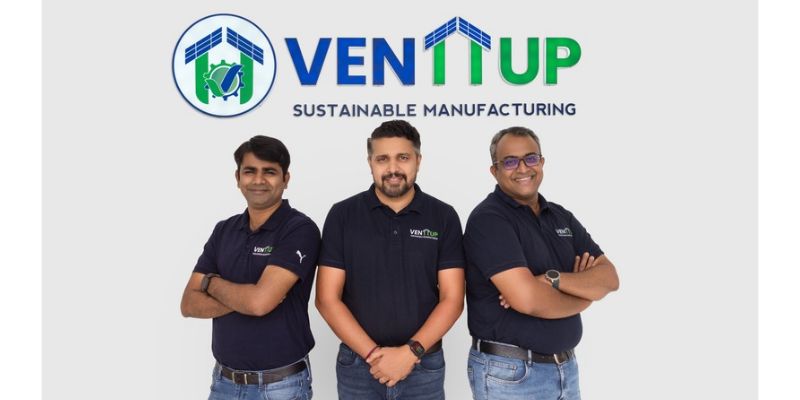
Venttup Raises $3 Million to Scale Precision Manufacturing
Venttup has raised $3 million in a Pre-Series A round to expand its engineering and manufacturing capabilities for critical sectors.
Read moreMachine Tools & Accessories

Imports make up 60% of India’s machine tool: Jibak Dasgupta
Despite fourfold growth since 2014, imports still supply 60% of India’s machine tool demand by value. Jibak Dasgupta, Director General & CEO, IMTMA, tells Ashlin Rajan how India can build global c..
Read moreMachine Tools & Accessories

Less than 1% of Indian SMEs export: R Srinivasan
In this interview R Srinivasan, Director, AIRA Consulting Private Limited, speaks with Ashlin Rajan about Make in India’s impact on SMEs, manufacturing challenges and the path to global competitiv..
Read moreRelated Products
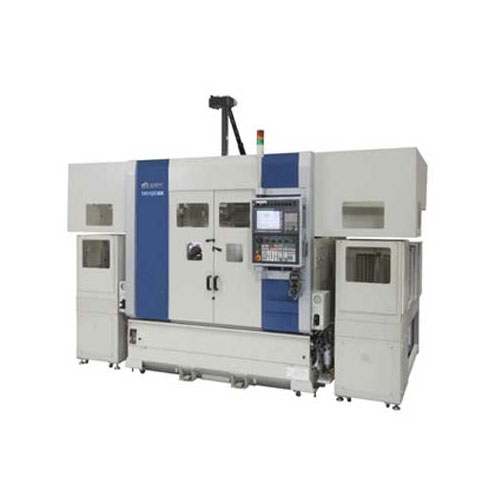
Compact Fmc - Motorum 3048tg With Fs2512
INDUSTRIAL AUTOMATION & TECHNOLOGY CONSULTANCY
Meiban Engineering Technologies Pvt Ltd offers a wide range of Compact FMC - Motorum 3048TG with FS2512.
Digital Colony Counter
INDUSTRIAL AUTOMATION & TECHNOLOGY CONSULTANCY
Rising Sun Enterprises supplies digital colony counter.

Robotic Welding SPM
INDUSTRIAL AUTOMATION & TECHNOLOGY CONSULTANCY
Primo Automation Systems Pvt. Ltd. manufactures, supplies and exports robotic welding SPM.
latest News
Subscribe to iNoW

For Industry News on WhatsApp, Give a Miss Call on: +91 84228 74016