



Schedule a Call Back


Why India's Manufacturing Ambitions Depend on a Strong Tooling Industry
 Articles
- Oct 27,26
India must strengthen its tooling ecosystem through policy reforms, innovation, skilled talent and industry partnerships to boost manufacturing competitiveness, writes Pankaj Abhyankar, Business Head, Tooling Business, Godrej Enterprises Group
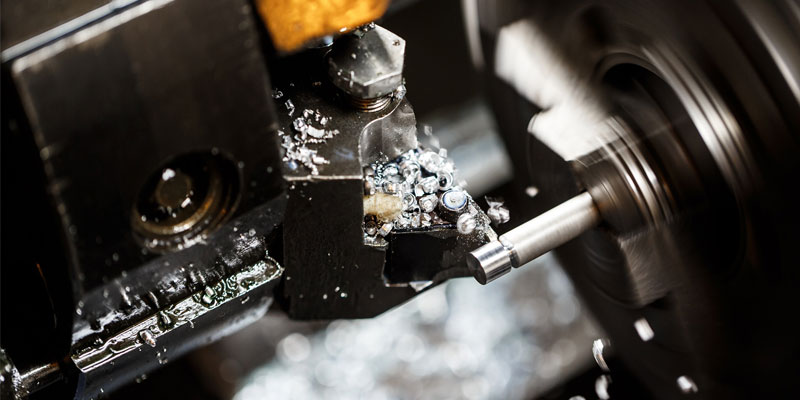
In every advanced manufacturing nation, the spotlight often falls on iconic automotive brands, cutting-edge products and large-scale industrial investments. Yet behind every successfully launched vehicle, consumer product or industrial innovation lies an industry that rarely receives equivalent recognition: the tooling industry.
Widely acknowledged as the foundation of advanced manufacturing, the tooling sector transforms product concepts into physical reality. Products are imagined, conceptualised and designed within OEM research and development centres, but it is toolmakers who convert those digital ideas into manufacturable solutions. Whether through prototype tooling for design validation or complex production tooling for mass manufacturing, the tooling industry provides the critical bridge between innovation and commercialisation.
Without tooling, there is no manufacturing. Without capable toolrooms, there can be no sustainable industrial growth.
The unsung enablers of industrialised nations
The industrial advancement of any country is often linked to the success of its globally recognised manufacturers. The US has Ford, General Motors, Chrysler and Tesla. Europe is home to Volkswagen, Mercedes-Benz and BMW. Japan has Toyota, Honda and Nissan.
While these brands enjoy worldwide recognition, the thousands of specialised toolrooms and die makers supporting them remain largely invisible. Yet their contribution is indispensable. Behind every successful OEM stands a mature tooling ecosystem that has evolved alongside the country's industrial development.
Most developed nations established their tooling industries nearly a century ago, during the early phases of industrialisation. Their growth was supported by a combination of favourable government policies, public-private R&D initiatives, industrial subsidies, infrastructure development and strategic trade protection measures. These interventions helped build globally competitive manufacturing ecosystems that continue to provide technological and economic advantages today.
India's tooling industry: A remarkable journey with a delayed start
India's commercial tooling industry follows a similar trajectory, albeit with a delay of several decades. While global toolmakers have benefited from nearly a century of industrial evolution, the Indian tooling ecosystem started taking shape only in the mid-1990s.
Despite this relatively late beginning, Indian toolmakers have demonstrated exceptional resilience and capability. Operating with comparatively less collective experience, limited infrastructure and a developing supplier ecosystem, they have consistently delivered cost-effective and technically competent solutions to domestic industries.
The story of tooling worldwide has largely been one of entrepreneurial passion. Typically, an engineer with technical expertise, limited capital and abundant ambition establishes a toolroom and gradually builds capabilities through persistence and innovation. India is no exception.
Unlike many other manufacturing segments, commercial tooling has seen relatively limited participation from large corporate groups. One notable exception is Godrej Enterprises Group, whose tooling operations originated more than nine decades ago to meet captive requirements and have grown into a leading commercial toolroom serving the automotive and industrial sectors over the last three decades.
Yet despite these achievements, a critical challenge remains. While India has significantly scaled up vehicle manufacturing and component production, domestic tooling capabilities in several strategic areas have not always expanded at the same pace. This has resulted in continued dependence on imported dies, moulds and tooling systems.
Such dependence brings longer lead times, reduced development flexibility, higher logistics costs and increased supply-chain vulnerabilities. As geopolitical uncertainties and global supply-chain disruptions continue to reshape manufacturing strategies worldwide, strengthening domestic tooling capabilities has become a strategic imperative rather than a commercial preference.
The competitiveness challenge
To strengthen its global competitiveness and reduce dependence on imports, India's tooling industry must address two critical challenges: infrastructure gaps and structural cost disadvantages that require targeted policy intervention.
1. Infrastructure and ecosystem development: Industry studies consistently identify tooling lead times, capability gaps, investment constraints and infrastructure limitations as key contributors to India's continued reliance on imported tooling. One of the most significant competitive advantages enjoyed by Chinese toolmakers is the existence of highly integrated industrial ecosystems. Material suppliers, component manufacturers, heat-treatment facilities, machining centres, logistics providers and support services are often located in close proximity, minimising non-value-added activities and significantly improving project turnaround times.
In contrast, Indian toolrooms frequently lose substantial time in transportation, material movement, outsourcing coordination and delays between processes. It is estimated that more than half of the total project lead time is often spent on such non-productive activities rather than actual manufacturing operations.
The automotive industry has successfully demonstrated the benefits of vendor parks located near OEM facilities to support just-in-time manufacturing. A similar approach is required for tooling. Dedicated tooling parks, integrated with steel suppliers, machining centres, heat-treatment vendors, metrology services and automation partners near major automotive clusters, would significantly enhance competitiveness while reducing lead times.
2. The need for policy support: Indian toolmakers frequently lose business to overseas competitors, particularly Chinese die makers, primarily because of cost considerations. However, a detailed analysis reveals that labour costs are not the primary differentiator. Labour typically accounts for only 15 to 20 per cent of total tooling costs. In fact, Indian labour remains highly competitive globally. The real challenge lies elsewhere.
Indian toolmakers procure steel, machine tools, power, technology, financing and imported components at prices comparable to or higher than those paid by global competitors. These structural disadvantages are largely beyond the control of individual enterprises.
A particularly significant issue is tariff inversion. In many cases, the effective duty paid on tool steel, mould bases and imported proprietary tooling components exceeds the duty applicable to a finished imported die or mould. The result is a paradoxical situation in which importing a completed tool becomes economically more attractive than manufacturing it domestically.
Corporate taxation also affects competitiveness. Several manufacturing-focused economies provide lower effective tax rates and stronger incentives for technology development and innovation. In addition, enhanced R&D tax deductions, which have historically helped manufacturing sectors accelerate technological advancement, can significantly improve global competitiveness.
Addressing such structural cost disadvantages could substantially narrow the pricing gap faced by Indian toolmakers and support the industry's long-term growth.
From vendor to development partner: Building a partnership-based model
Perhaps the most important shift required is not technological or financial, but philosophical.
Toolmakers should not be viewed merely as suppliers of dies and moulds. They should be regarded as strategic development partners.
Globally, advanced product development programmes involve tooling experts from the earliest design stages. Their inputs on manufacturability, tooling feasibility, material behaviour, process capability and cost optimisation influence product designs well before engineering release.
This collaborative approach enables:
- Faster development cycles
- Lower tooling costs
- Improved manufacturability
- Reduced engineering changes
- Higher first-time-right success rates
Tooling specialists contribute far more than materials and machining operations. They bring practical manufacturing knowledge that can significantly influence product success. Such collaboration becomes even more valuable during pilot production phases, when design changes, engineering modifications and process refinements are common. The flexibility and responsiveness of experienced toolmakers often become critical enablers of project success.
Extensive experience across two-wheeler OEMs and emerging EV technology providers has demonstrated that the early involvement of tooling teams consistently improves project outcomes. Similarly, proactive support during serial production, breakdown recovery and expedited engineering changes has emerged as a major differentiator for leading toolrooms.
A partnership approach creates shared ownership of product success. Unfortunately, many procurement models continue to treat tooling as a transactional purchase, often relying on simplified commercial benchmarks that fail to recognise engineering complexity, innovation efforts and value-added contributions.
Such practices undermine the spirit of collaboration and disproportionately favour the party with greater negotiating power. If India seeks to accelerate innovation, especially in next-generation technologies, this mindset must evolve.
The EV opportunity
The need for stronger tooling partnerships becomes even more critical in the electric vehicle ecosystem. Unlike mature internal combustion engine (ICE) technologies, many EV products are still evolving. Established OEMs, start-ups and technology developers are simultaneously navigating steep learning curves in product design, manufacturing processes and quality requirements.
EV components often demand tighter tolerances, more complex geometries, lightweight materials and higher reliability standards than traditional automotive products.
This environment requires rapid prototype development, accelerated validation cycles, extensive mock trials and continuous engineering collaboration. Toolmakers, therefore, become active participants in the innovation process rather than passive suppliers.
Countries that successfully integrate tooling expertise into product development will gain significant advantages in EV competitiveness and future mobility technologies.
Talent: The industry's next strategic challenge
Despite being technologically sophisticated, tooling is often not perceived as an attractive career destination by students and young engineers. This perception gap is one of the industry's most pressing concerns.
Modern toolrooms operate at the intersection of advanced manufacturing technologies, including:
- CAD/CAM and digital engineering
- Simulation-driven design
- Industry 4.0 solutions
- Automation and robotics
- Additive manufacturing
- Smart manufacturing systems
- Precision metrology
The sector offers opportunities that are both technologically challenging and intellectually rewarding. However, greater industry outreach, stronger academic engagement, apprenticeship programmes and improved visibility of career paths are required to position tooling as a preferred engineering profession.
India's aspiration to become a global manufacturing hub will depend not only on physical infrastructure but also on its ability to attract and retain highly skilled technical talent.
What toolrooms must do
While ecosystem support is important, toolrooms themselves must continuously evolve.
Be predictable: Customers value reliability as much as capability. Toolrooms that plan around unrealistic capacity assumptions often find themselves relying on excessive overtime and crisis management. This affects profitability and damages customer confidence. Maintaining appropriate capacity buffers and strengthening project management discipline are essential for predictable execution.
Be innovative: Customer expectations continue to evolve rapidly. Competitive advantage will increasingly come from innovation rather than repetition. Toolrooms must focus on developing specialised competencies, proprietary methods and differentiated solutions that create measurable value for customers.
Be agile: Technology cycles are becoming shorter and more demanding. Strategic technical collaborations, joint ventures and partnerships with global tooling experts can accelerate capability development, bridge knowledge gaps and shorten learning curves. Agility must become a defining characteristic of the next generation of Indian toolrooms.
Recognising tooling as a national capability
India has set ambitious goals for manufacturing growth, localisation, advanced mobility and technological self-reliance. Achieving these objectives will require more than investments in assembly plants and component production facilities. It will require a strong, competitive and globally capable tooling ecosystem.
The tooling industry may operate behind the scenes, but its influence is reflected in every successful product launch, every efficient production line and every manufacturing breakthrough. It is the silent enabler of innovation, quality and industrial progress.
The gap between the growth of OEMs and the growth of the tooling sector can no longer be ignored. The capital-intensive and talent-intensive nature of tooling deserves greater recognition, stronger policy support and deeper customer engagement.
India's future manufacturing competitiveness will ultimately depend on the strength of the industries that build the builders. If the country aspires to become a global manufacturing powerhouse, strengthening its tooling ecosystem is not optional. It is essential.
About the author
Pankaj Abhyankar, Executive Vice President & Business Head – Tooling, Godrej Enterprises Group, has extensive experience in tooling, precision engineering and advanced manufacturing, with expertise in automotive and EV tooling, automation, Industry 4.0 and localisatio
Tooling Industry
Pankaj Abhyankar
Godrej Tooling
Indian Manufacturing
Toolrooms
Precision Engineering
Manufacturing Competitiveness
Electric Vehicles
Industrial Policy
Skill Development
Tooling Business
Godrej Enterprises Group
Related Stories
Machine Tools & Accessories
Piramal Alternatives Invests Rs 1.35 bn in Q&Q Solutions
Piramal Alternatives has invested Rs 1.35 billion in Coimbatore-based Q&Q Solutions to support capacity expansion, manufacturing capabilities and strategic growth.
Read moreSmart Manufacturing
Operational optimisation: Beyond the factory walls
As we focus our efforts on optimising operations, we journeyed from discussions on operational flow, including the “why”, “where”, “what” and “how”, before looking at data-based oper..
Read moreMachine Tools & Accessories

Imports make up 60% of India’s machine tool: Jibak Dasgupta
Despite fourfold growth since 2014, imports still supply 60% of India’s machine tool demand by value. Jibak Dasgupta, Director General & CEO, IMTMA, tells Ashlin Rajan how India can build global c..
Read moreRelated Products
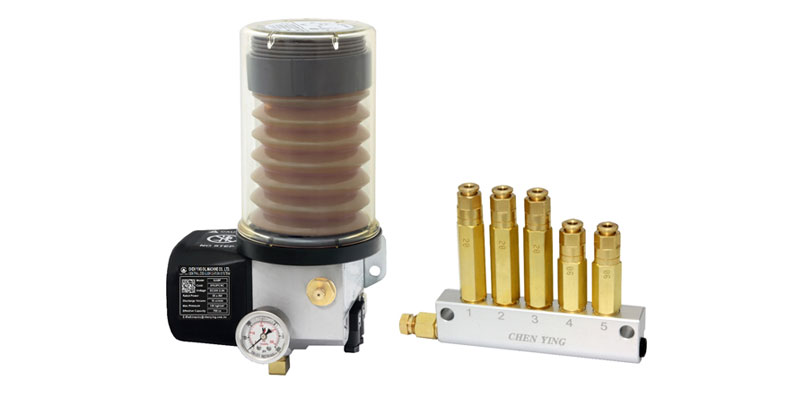
KABP-07 Electric Grease Lubricator
MACHINE TOOLS, POWER & HAND TOOLS
The KABP-07 features an efficient planetary gear motor and concealed safety switches. Paired with CFB Volumetric Distributors, it ensures consistent lubrication for industrial applications.
Read more
Hittco -SOLID Carbide Drills Engineered For Performance
MACHINE TOOLS, POWER & HAND TOOLS
Hittco Tools Ltd offers a wide range of hittco-solid carbide drills engineered for performance.
Read morelatest News
Subscribe to iNoW

For Industry News on WhatsApp, Give a Miss Call on: +91 84228 74016

Log In
To Contact this Supplier
Please Log In to your Account

INDUSTRIAL PRODUCTS FINDER (IPF) is India’s only industrial product portal. Referred to as the ‘Bible’ of the manufacturing sector in India,
SPECIAL OFFER

Hi There!
Now get regular updates from IPF Magazine on WhatsApp!
Click on link below, message us with a simple hi, and SAVE our number
You will have subscribed to our Industrial News on Whatsapp! Enjoy