








Schedule a Call Back


Reimagining Cable Management in the Age of Smart Manufacturing
 Articles
- Oct 30,26
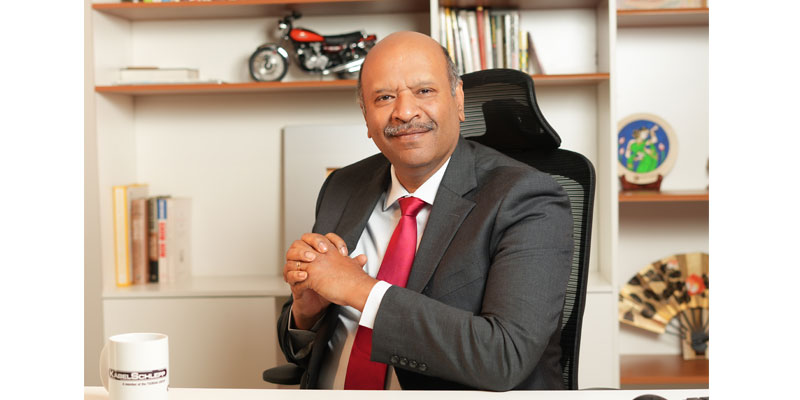
As factories become smarter, Srinivas P Kamisetty, MD, Kabelschlepp India, explains how advanced cable management enables reliable automation and efficient manufacturing.
As manufacturing becomes increasingly automated, connected and intelligent, the definition of industrial productivity is evolving. Smart factories are no longer distinguished solely by the sophistication of their machines or the intelligence of their software. Their performance increasingly depends on how effectively every component works together to deliver precision, continuity and efficiency.
Within this transformation, cable management is undergoing a significant evolution. Once viewed primarily as a means of organising and protecting cables from mechanical damage, cable carriers have become an integral part of the motion infrastructure supporting modern manufacturing.
Beyond cable protection
The earliest cable carriers addressed a fundamental industrial challenge: how to guide and protect power and data cables as machinery moved. As machine tools advanced and automated equipment became more prevalent, the requirements became considerably more demanding. Higher speeds, longer travel distances, tighter installation spaces and increasingly complex cable configurations called for solutions that could deliver consistent performance under continuous movement.
Cable carrier technology has evolved in response. Modern systems are engineered to guide cables and hoses through defined paths while managing bending radii, reducing mechanical stress and supporting reliable machine operation. Advances in materials, structural design and system integration have expanded their applications across CNC machines, robotics, material handling equipment and automated production lines.
This evolution reflects a broader industrial shift: components that were once considered auxiliary are now recognised for their contribution to overall equipment performance.
Connecting with Industry 4.0
Industry 4.0 is built on the integration of machines, data, connectivity and intelligent decision-making. Yet, the effectiveness of a connected factory depends on the reliability of the physical systems that make this integration possible.
Automated equipment relies on an uninterrupted power supply and the reliable transmission of control signals and data. As robotic cells, high-speed machining centres and flexible manufacturing systems become more interconnected, the movement of cables and hoses becomes a critical engineering consideration.
A poorly designed cable management arrangement can contribute to cable wear, unplanned downtime, increased maintenance requirements and production disruptions. Conversely, a well-engineered cable carrier system helps protect essential connections, supports predictable movement and reduces avoidable mechanical stress.
The value extends beyond individual components. When cable management is considered at the machine design stage, manufacturers can improve accessibility, simplify installation and maintenance, and create more organised machine layouts. These advantages become particularly relevant in facilities where uptime, repeatability and production flexibility are central performance indicators.
Engineering flexible factories
The next generation of manufacturing will demand greater flexibility. Production lines are being designed to accommodate changing product requirements, collaborative robotics and increasingly customised manufacturing processes. Machines must operate reliably while adapting to new production demands.
Cable management systems must evolve alongside these requirements. Compact designs, application-specific configurations and integrated solutions combining cable carriers with suitable cables, connectors and related components can simplify engineering and installation. The objective is not merely to accommodate movement but also to ensure that power, data and other essential connections remain protected throughout the machine's operating cycle.
Equally important is the shift towards lifecycle thinking. Manufacturers must look beyond the initial purchase price and consider the total cost of ownership, including maintenance, replacement, downtime and operational reliability. Selecting an appropriate cable carrier system at the design stage can help address these considerations before they become production challenges.
Enabling future manufacturing
As India strengthens its manufacturing capabilities and accelerates the adoption of automation, the conversation around smart factories must extend beyond robots, software and advanced machinery. It must also recognise the engineering systems that allow these technologies to function reliably together.
The future of manufacturing will be shaped by the integration of intelligent technologies with dependable physical infrastructure. Cable carriers may not be the most visible components on the production floor, but their role in enabling controlled movement, protecting essential connections and supporting operational continuity is significant.
At Kabelschlepp India, we see this as an opportunity to rethink how motion-related infrastructure is designed and integrated into industrial applications. The objective is to help manufacturers approach reliability, productivity and maintenance as interconnected priorities rather than isolated challenges.
Ultimately, a smart factory is only as effective as the systems that keep it moving. As manufacturing becomes more connected and automated, reimagining cable management is not simply about protecting cables. It is about enabling the reliable and efficient movement on which tomorrow's smart factories will depend.
About the author:
Srinivas P Kamisetty is the Managing Director of Kabelschlepp India.
Cable Management
Smart Manufacturing
Cable Carriers
Industrial Automation
Industry 4.0
Motion Infrastructure
Predictive Maintenance
Manufacturing Efficiency
Srinivas Kamisetty
Kabelschlepp
Related Stories
Smart Manufacturing
Operational optimisation: Beyond the factory walls
As we focus our efforts on optimising operations, we journeyed from discussions on operational flow, including the “why”, “where”, “what” and “how”, before looking at data-based oper..
Read moreAutomation & Robotics

Critical Manufacturing will grow with India's semiconductor industry: Weng Keong
In this interview with Rakesh Rao, Weng Keong, MD, Critical Manufacturing Malaysia, discusses smart factories, digital infrastructure and India’s semiconductor manufacturing potential.
Read moreAutomation & Robotics
Reimagining Cable Management in the Age of Smart Manufacturing
As factories become smarter, Srinivas P Kamisetty, MD, Kabelschlepp India, explains how advanced cable management enables reliable automation and efficient manufacturing.
Read moreRelated Products
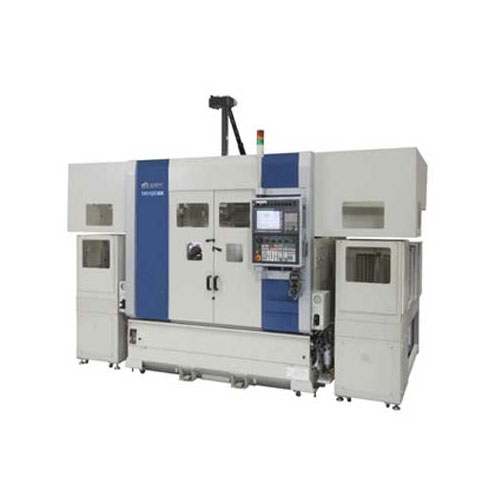
Compact Fmc - Motorum 3048tg With Fs2512
INDUSTRIAL AUTOMATION & TECHNOLOGY CONSULTANCY
Meiban Engineering Technologies Pvt Ltd offers a wide range of Compact FMC - Motorum 3048TG with FS2512.
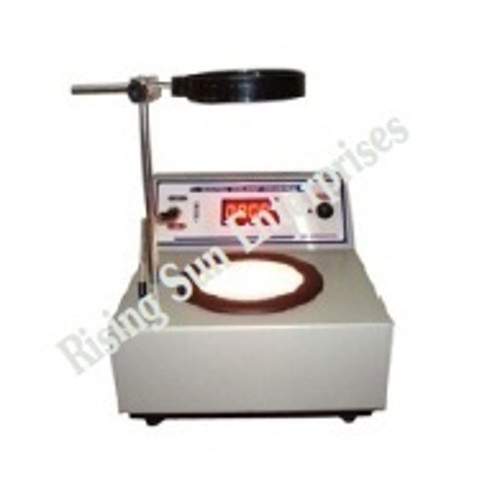
Digital Colony Counter
INDUSTRIAL AUTOMATION & TECHNOLOGY CONSULTANCY
Rising Sun Enterprises supplies digital colony counter.

Robotic Welding SPM
INDUSTRIAL AUTOMATION & TECHNOLOGY CONSULTANCY
Primo Automation Systems Pvt. Ltd. manufactures, supplies and exports robotic welding SPM.
latest News
Subscribe to iNoW

For Industry News on WhatsApp, Give a Miss Call on: +91 84228 74016