







Schedule a Call Back


TKIL Industries focuses on developing fuel-flexible solutions: Abhay Patil
 Interviews
- Oct 30,26
In an interaction with Rakesh Rao, Abhay Patil, Director – Energy, TKIL Industries, discusses emerging trends in industrial energy systems, AI-enabled operations and the company's plans to expand its capabilities in India.
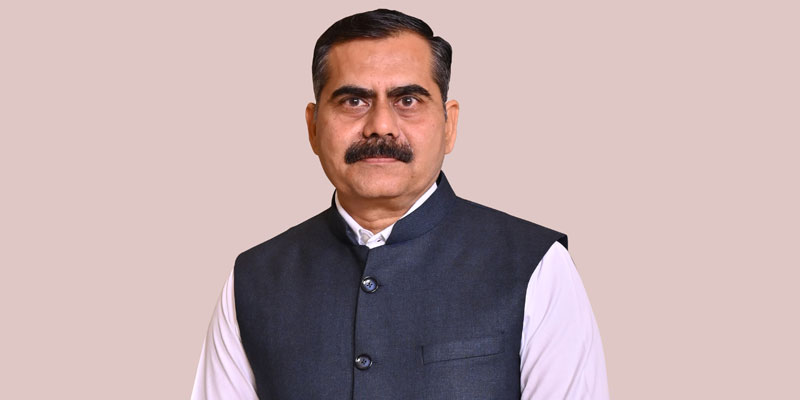
As Indian industries seek to improve energy efficiency, reduce carbon emissions and optimise fuel utilisation, TKIL Industries is strengthening its focus on biomass-based boilers, waste heat recovery, advanced automation and flexible fuel technologies. In an interaction with Rakesh Rao, Abhay Patil, Director – Energy, TKIL Industries, discusses emerging trends in industrial energy systems, AI-enabled operations and the company's plans to expand its capabilities in India.
How is TKIL Industries serving its customers?
TKIL Industries, formerly known as thyssenkrupp Industries India, has a manufacturing legacy spanning approximately 75 years. Our business portfolio includes equipment and solutions for the energy, cement, sugar and material-handling industries.
TKIL’s energy business primarily addresses the steam and power requirements of industrial customers. Our solutions cater to both process industries and power generation applications, covering capacities ranging from approximately 6 MW to 300 MW, or equivalent process steam requirements.
Our major customers include captive power producers in chemicals, fertilisers, cement and other process industries. We also serve independent power producers (IPPs), including those developing power generation facilities in the 300 MW category.
How is TKIL responding to the growing demand for renewable and cleaner energy solutions?
Our energy portfolio has traditionally been associated with conventional fuels, particularly coal. However, we are increasingly focusing on alternative fuels and technologies that can reduce dependence on fossil fuels.
Biomass combustion is an important part of this transition. For instance, we have supplied a boiler to Jubilant in Gujarat that can operate with approximately 70 per cent biomass. This significantly reduces the quantity of coal required and helps customers lower their carbon footprint.
We have also developed technologies capable of utilising agricultural residues, including crop stubble. Agricultural waste burning is a major environmental concern, particularly in northern India during winter. Our specialised boiler technology can handle such high-alkali fuels, creating opportunities to convert agricultural residues into useful energy.
These applications demonstrate how industrial energy systems can support waste utilisation while contributing to cleaner energy generation.
How are you serving the cement industry?
Waste heat recovery is one of our major focus areas in the cement industry. Cement manufacturing generates substantial quantities of waste heat, which can be captured and converted into electricity.
We provide waste heat recovery power plants that utilise this otherwise wasted thermal energy to generate electricity for captive consumption within cement facilities.
Our waste heat recovery portfolio in the cement sector represents close to 600 MW of capacity across installations. This technology has become increasingly important as cement manufacturers seek to reduce purchased electricity requirements, improve energy efficiency and lower operating costs.
We have been actively promoting this concept in India and internationally, helping manufacturers recognise the economic and environmental benefits of recovering process heat.
What major trends are shaping the industrial energy sector?
Conventional fuels will continue to play an important role in India's energy mix, and their replacement will not happen overnight. Nevertheless, the transition towards cleaner and more sustainable fuel sources is clearly gathering momentum.
We are witnessing growing interest in biomass co-firing, with certain procurement requirements calling for biomass utilisation in the range of 20–30 per cent.
Another significant development is the use of hydrogen in industrial boilers. We have undertaken projects involving hydrogen firing alongside conventional fuels. Such developments indicate that the industry is gradually moving towards greater fuel flexibility. Our objective is to develop combustion technologies that can accommodate changing fuel requirements without requiring customers to replace their entire energy infrastructure.
Which areas are receiving priority in research and product innovation?
We are concentrating on two major areas. The first is increasing the proportion of biomass that can be utilised in industrial boilers. Our objective is to develop technologies capable of handling higher biomass content while maintaining reliable and efficient operation.
The second area is automation, particularly improving equipment safety and operational reliability. Manufacturing a boiler is one aspect of the business, but ensuring safe and efficient operation throughout its life cycle is equally important. With changing workforce capabilities and operational requirements, advanced control systems are becoming essential.
We have a technology collaboration with Finland-based Valmet for distributed control systems (DCS), which we manufacture at our Pune facility. One of the notable capabilities of these systems is the 'time machine' feature, which allows operators to examine equipment behaviour at a particular point in the past.
For example, if a boiler has been operating for seven years, operators can revisit its operating conditions from several years earlier and compare them with current performance. This provides valuable insights for troubleshooting, performance assessment and operational improvements.
How do you envisage artificial intelligence transforming boiler operations?
Artificial intelligence offers considerable potential for improving equipment safety, reliability and operational efficiency. However, effective AI integration requires three fundamental elements: suitable computing hardware, domain knowledge and comprehensive operating data.
We already possess substantial engineering and process knowledge. Our advanced control systems are also helping us establish the data infrastructure required for future AI applications.
The time machine functionality is particularly valuable because it provides access to detailed historical operating conditions. By analysing these datasets and developing appropriate algorithms, we can progressively introduce intelligent monitoring and operational optimisation capabilities.
This is not an overnight transformation. AI systems require extensive data, validation and continuous learning before they can be reliably deployed in critical industrial applications.
Our strategy is therefore to establish a strong technological foundation and progressively develop self-learning systems that support safer equipment operation.
What are your growth plans?
We are investing in capacity expansion to address emerging opportunities in the power sector, including larger projects of around 800 MW.
However, our approach differs from conventional power generation technologies. Large coal-based power plants in India predominantly utilise pulverised coal combustion systems, which can present challenges when handling certain grades of coal.
We see significant opportunities in circulating fluidised bed combustion (CFBC) technology, particularly for utilising India's low-grade, high-ash coal. CFBC technology enables the combustion of fuels that may be unsuitable for conventional systems, helping reduce dependence on higher-grade or imported coal.
An equally important advantage is fuel flexibility. Such boiler systems can be configured to utilise different fuels, including coal, biomass, gas and oil, depending on their design.
Our ambition is to promote fuel-flexible solutions that can adapt to India's evolving energy requirements while supporting greater self-reliance.
Can industrial waste and low-grade coal become economically viable energy resources?
Certainly. One example is our engagement with a leading Indian coal producer regarding the utilisation of coal washery rejects. During coal beneficiation, lower-quality material is separated and often remains unused. In some cases, companies incur disposal costs of approximately ?500 per tonne to remove these rejects from their premises.
We worked for nearly two years with this coal producer to demonstrate how this material could be utilised for power generation through appropriate combustion technology. Following these discussions, a tender for three 90 MW units was issued.
This illustrates the potential to transform material previously considered waste into a productive energy resource. It can reduce disposal costs, improve resource utilisation and support domestic power generation.
How do energy efficiency initiatives influence your future business strategy?
Energy efficiency is becoming increasingly important across energy-intensive industries, including cement, steel and chemicals. Government initiatives, particularly those led by the Bureau of Energy Efficiency (BEE), are also encouraging industries to improve performance.
Our experience in cement waste heat recovery offers a useful example. When we initially introduced the concept, convincing manufacturers that waste heat could reliably generate electricity was challenging. It took almost a decade of engagement before the industry began recognising its full potential. Today, waste heat recovery has become an established consideration in cement manufacturing.
We now intend to extend this philosophy to other industries, particularly steel and chemicals, where substantial quantities of recoverable thermal energy are available. Our objective is simple: wherever usable waste heat exists, we want to explore technologies that can recover it and convert it into productive energy.
This approach, combined with fuel flexibility, automation and advanced combustion technologies, will guide the future growth of our energy business.
Abhay Patil
TKIL Industries
energy efficiency
carbon emissions
optimise fuel utilisation
biomass-based boilers
waste heat recovery
advanced automation
Rakesh Rao
Related Stories
Electrical & Electronics
Wartsila Study Sees EUR 196bn in Data Centre Power Savings
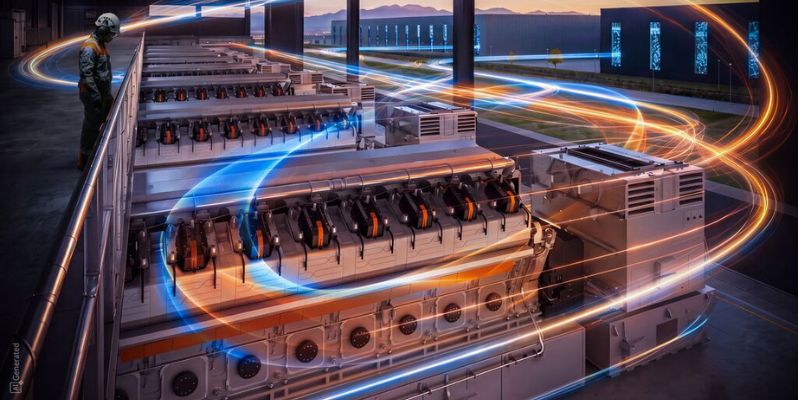
Flexible off-grid engines could lower costs, water and land use while helping data centres support renewable energy growth, according to a Wärtsilä study.
Read moreAerospace Defence

Igus Unveils Lubrication-free Ball Transfer Units for Aviation
The FAA-compliant solution from igus combines lightweight construction and high load capacity with permanently lubrication-free operation. Xiros hollow ball transfer units reduce weight in cargo air..
Read morePumps & Valves
Avcon Controls Eyes Global Growth with Smart Valves
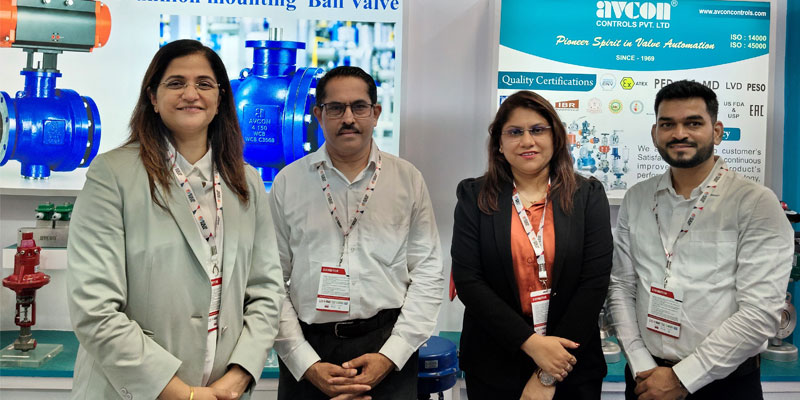
The company is focusing on specialised products, automation and exports to meet evolving industrial demands and expand into higher-value markets, writes Rakesh Rao.
Read moreRelated Products

Programmable Controllers - Pcd-33a Series
CHEMICAL PROCESS, FOOD/PHARMA EQUIPMENT & ANALYTICAL INSTRUMENTS
Pro-Med Instruments (P) Ltd offers a wide range of programmable controllers - PCD-33A Series.
Gasket Graphite Powder
CHEMICAL PROCESS, FOOD/PHARMA EQUIPMENT & ANALYTICAL INSTRUMENTS
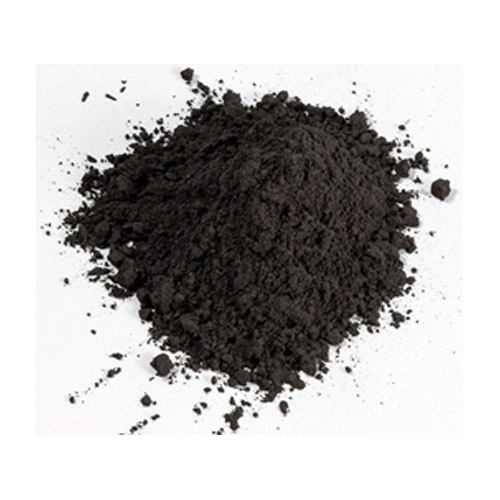
Arihant Packing & Gasket Company offers a wide range of gasket graphite powder.
Asahi Kasei expands 3D printing filament sales in North America
CHEMICAL PROCESS, FOOD/PHARMA EQUIPMENT & ANALYTICAL INSTRUMENTS
Asahi Kasei, a leading resin and compounding technology provider, has initiated the sales of 3D printing (3DP) filaments in North America through Asahi Kasei Plastics North America (APNA). The soft la Read more
latest News
Subscribe to iNoW

For Industry News on WhatsApp, Give a Miss Call on: +91 84228 74016