







Schedule a Call Back


NITI Aayog member advocates adjustments in centre's PLI Scheme
 Industry News
- Oct 06,23
Speaking at the National Conference on India's Industrial Transformation in New Delhi, NITI Aayog member and experienced economist, Arvind Virmani highlighted the scheme's effectiveness for industries like electronics and telecom, where China dominates ov
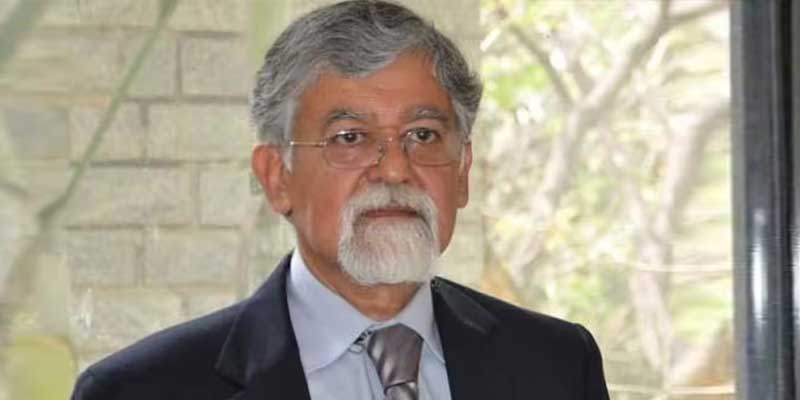
NITI Aayog member and experienced economist Arvind Virmani emphasised the success of the Centre's production-linked incentive (PLI) scheme in sectors like telecom and electronics. However, he noted the necessity for adjustments and adaptations in various other sectors. Speaking at the National Conference on India's Industrial Transformation in New Delhi, Virmani highlighted the scheme's effectiveness for industries like electronics and telecom, where China dominates over 40% of the global market.
The PLI scheme, with an allocated budget of Rs 1.97 trillion for production-driven incentives across 14 sectors, has prompted discussions within ministries to expand its scope to include more industries. Virmani clarified that the PLI scheme aimed to incentivise achieving the scale of manufacturing seen in countries like China. He emphasised that this approach differed from conventional subsidies, as it aimed to support industries in reaching the minimum efficient scale (MES) for independent competition.
While acknowledging that the PLI scheme might not be flawless, Virmani praised its underlying concept. He highlighted the need for India to become an upper-middle-income country within the next 10-15 years and ultimately transition into a high-income country by 2050, aligning with the Centre's goals. Virmani also emphasised the opportunities arising from demographic shifts in developed nations, India's increasing share in the global working population, the nation's transition from an unskilled labour-intensive economy to a skilled one, supply chain diversification, and the emergence of global economic blocs.
In light of these factors, Virmani advocated for the importance of free trade agreements (FTAs) with developed countries. He stressed that a significant portion of global trade, approximately 60% to two-thirds, occurs through multinational corporation (MNC)-anchored supply chains. Failing to seize these opportunities, according to Virmani, would put India at a competitive disadvantage.
Source: Business Standard
NITI Aayog
PLI scheme
Arvind Virmani
China
National Conference on India's Industrial Transformation
New Delhi
Related Stories
Smart Manufacturing
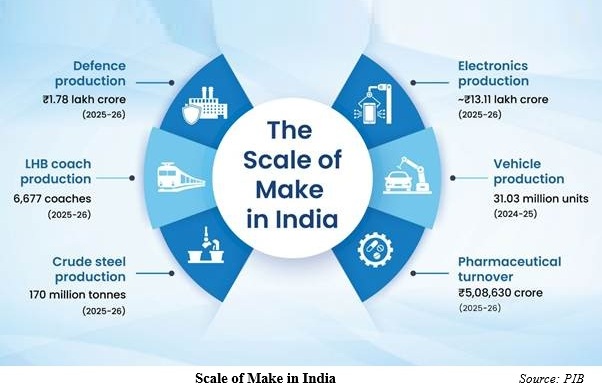
12 Years of Make in India: A look at India’s manufacturing progress
Over the past 12 years, India has expanded manufacturing across key sectors, with the next phase hinging on stronger domestic value addition and increasing global competitiveness.
Read moreElectrical & Electronics
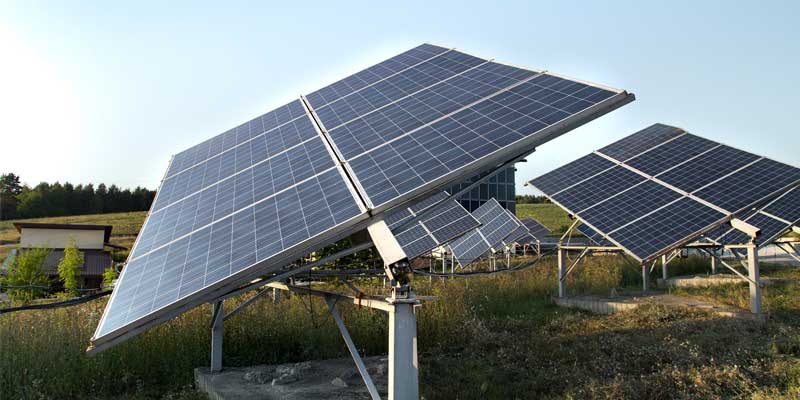
From Modules to Materials: India’s Roadmap for Solar Manufacturing Leadership
India’s solar manufacturing journey is entering a new phase, driven by policy initiatives, domestic demand and global opportunities. The NITI Aayog report outlines the roadmap to build a resilient..
Read moreAuto & Auto Components

India’s PV and CV sales surge as EVs, infrastructure drive growth
India’s passenger and commercial vehicle markets are expanding on policy support, infrastructure growth, rising incomes, exports and faster EV adoption.
Read moreRelated Products
latest News
Subscribe to iNoW

For Industry News on WhatsApp, Give a Miss Call on: +91 84228 74016