








Schedule a Call Back


Critical Manufacturing will grow with India's semiconductor industry: Weng Keong
 Interviews
- Oct 30,26
In this interview with Rakesh Rao, Weng Keong, MD, Critical Manufacturing Malaysia, discusses smart factories, digital infrastructure and India’s semiconductor manufacturing potential.

Critical Manufacturing, a subsidiary of ASMPT, helps manufacturers build the connected, intelligent factories of the future by combining MES, connectivity, automation, analytics and trusted AI. In an interview with Rakesh Rao, Weng Keong, Managing Director, Critical Manufacturing Malaysia, discusses smart factories, digital infrastructure and India’s semiconductor manufacturing potential.
How does Critical Manufacturing’s Industrial Operations Platform go beyond conventional MES solutions, and what manufacturing challenges does it address in the semiconductor and electronics industries?
Traditional manufacturing execution systems (MES) record production activities and enforce process routes. Equipment connectivity and analytics typically operate through separate tools that do not share a common data model. Consequently, every new insight requires additional integration and customisation.
Our Industrial Operations Platform brings manufacturing execution, equipment integration, data management and artificial intelligence (AI) onto a unified foundation with a common data model. This ensures that insights are linked to production context and can be acted upon directly within manufacturing workflows.
For semiconductor and electronics manufacturers, the platform addresses four critical challenges:
Delayed insights: When analytics operate outside production workflows, they generate reports rather than support immediate decisions. Our platform integrates insights and recommendations directly into manufacturing processes, enabling action during production.
Slow and costly process changes: New semiconductor packages and testing processes require frequent modifications. Extensive customisation can turn these changes into complex IT projects and hinder system upgrades. Our platform enables process engineers to configure changes without writing custom code.
Unreliable AI outcomes: AI can produce inconsistent results when equipment data lacks manufacturing context. Our Data Platform integrates production, quality and binning data into a structured model aligned with ISA-95, making it suitable for yield analytics and AI applications.
Advanced packaging traceability: Chiplets and advanced packaging technologies require detailed genealogy down to the individual die. Our platform supports this capability in accordance with the SEMI E142 standard, capturing traceability information during production.
How will the integration of manufacturing equipment, MES, connectivity, analytics and AI transform semiconductor factories, particularly through Critical Manufacturing’s collaboration with ASMPT?
Our joint presence with ASMPT at SEMICON India 2026 demonstrates the growing importance of integrating manufacturing equipment and software. Intelligent factories depend on reliable equipment data. If machine data is incomplete or lacks production context, the resulting analytics and AI outputs cannot be trusted. When equipment manufacturers and software providers adopt standard interfaces, new production lines can be connected more quickly and predictably.
Two capabilities are particularly important:
Equipment qualification within MES: Following maintenance, component replacement or a yield deviation, equipment and process recipes must be requalified within the MES. Qualification status is not merely advisory; equipment cannot resume production until the required checks are completed successfully.
Contextualised analytics and AI: The MES links equipment data with specific production lots, products and recipes. This enables manufacturers to identify process deviations early and take corrective action while production is still underway.
For example, if a bonding machine begins to drift during a shift, the platform can flag the deviation, trigger requalification and prevent further production until the equipment passes the required checks. This helps prevent defective units from progressing downstream.
What are the major operational and technological challenges confronting semiconductor and electronics manufacturers as production complexity, quality expectations and traceability requirements increase?
Most manufacturers I interact with face five major operational pressures and one underlying technological challenge.
Production complexity: Chiplets and advanced packaging technologies introduce additional process steps, product variants and frequent changes. These complexities must be managed during manufacturing execution rather than addressed retrospectively.
Speed to market: Shorter product lifecycles and increasingly stringent qualification requirements make rapid production stabilisation essential. Manufacturers that achieve stable yields faster are often better positioned to secure business.
Traceability and compliance: Customers increasingly expect comprehensive product genealogy and audit-ready quality records that can be accessed whenever required.
Geographical diversification: As supply chains expand across countries and manufacturing locations, each new facility must meet consistent customer qualification and quality standards, often while production is still ramping up.
Workforce availability: Experienced process, equipment and yield engineers remain in short supply across global semiconductor manufacturing markets.
The underlying technological challenge is the continued dependence on legacy, heavily customised systems and fragmented data architectures. These limitations make operational changes slower and more expensive. Many manufacturers begin AI initiatives before establishing the necessary digital systems and data infrastructure. We believe the correct approach is to build reliable systems and structured data foundations first, followed by AI deployment.
How are automation, AI and real-time analytics transforming shop-floor decision-making, operational efficiency and quality management in high-tech manufacturing?
Traditionally, manufacturing data was collected during a shift and reviewed the following day. By the time decisions were made, the material had often moved further along the production line. With real-time analytics and AI, many operational decisions can now be made on the shop floor while production is underway.
Engineers and operators can access relevant information directly within their existing systems. They can query production lots, equipment or procedures, compare document versions and receive automatically generated shift-handover summaries.
Real-time dispatching, automated recipe selection and early equipment-health warnings help reduce waiting times and unplanned downtime.
The focus is shifting from defect detection to defect prevention. Quality checks can be performed throughout production rather than relying solely on final testing, enabling earlier identification and containment of problems.
However, AI adoption must be gradual and controlled. The initial stage involves using AI as an assistant, followed by systems that generate recommendations requiring human approval. Only after these capabilities have been validated should autonomous AI agents be permitted to perform actions within defined approval controls.
This phased approach enables manufacturers to increase automation while retaining appropriate human oversight.
What digital infrastructure, process capabilities and workforce skills are essential for India and other emerging markets to build globally competitive semiconductor manufacturing ecosystems?
Malaysia's semiconductor industry, particularly in Penang, has developed over more than five decades. One important lesson from this experience is that several capabilities must develop together. A single large investment is insufficient to establish a complete semiconductor manufacturing ecosystem.
Four elements are particularly important:
Digital infrastructure: Manufacturers need an operations platform in place before the first production lot, standardised equipment connectivity and a common data model aligned with industry standards such as ISA-95. This enables data to be used for analytics and AI applications and shared across manufacturing sites. Shop-floor cybersecurity must also be incorporated from the outset, as customers assess these capabilities during facility qualification.
Process capabilities: Manufacturers must develop strong new product introduction, yield engineering, statistical process control (SPC) and quality-management capabilities that meet automotive industry standards and international customer requirements.
Workforce development: The industry needs skilled process and equipment engineers, automation specialists and professionals who understand both manufacturing operations and data systems. Local engineers must also be trained and certified to configure, operate and support these systems without depending on overseas teams. On the shop floor, integrated checklists and structured data-collection procedures can help new operators follow established processes from their first day.
Supporting ecosystem: Local systems integrators, equipment service providers, training institutions and suppliers are essential. Without these supporting capabilities, a semiconductor fabrication plant or outsourced semiconductor assembly and test (OSAT) facility operates in isolation. With them, a broader industrial ecosystem can develop.
What opportunities and challenges does India face in establishing digitally enabled semiconductor fabrication, assembly, testing and advanced packaging facilities?
India's biggest advantage is that most of its semiconductor manufacturing facilities are new. Unlike established manufacturing markets, these facilities do not have to begin by replacing ageing legacy systems.
This creates three significant opportunities.
Digitalisation by design: Manufacturers can select their operations platforms before equipment installation, ensuring that traceability, equipment connectivity and data architecture are integrated into production ramp-up plans.
Faster customer qualification: Customer qualification depends heavily on reliable manufacturing data and complete production records. Digitally enabled facilities can demonstrate their capabilities more quickly.
Replicable manufacturing systems: Once a standardised process model and master-data structure are established at the first facility, they can be replicated across subsequent sites. This allows new plants to begin with proven systems rather than developing their digital infrastructure from scratch.
However, India must also address following challenges:
- Delayed digital implementation: Under pressure to accelerate production ramp-up, manufacturers may postpone digital-system deployment to a later phase. This can result in dependence on spreadsheets and manual workarounds that become difficult to eliminate.
- Limited operational experience: India is still developing the depth of hands-on experience needed to manage complex semiconductor manufacturing operations.
- Local implementation capacity: With several facilities ramping up simultaneously, India needs sufficient experienced implementation engineers to support these projects.
Our recommendation is to select the manufacturing operations platform alongside production equipment and include its implementation in the project plan and budget from the beginning.
What is Critical Manufacturing’s strategy for expanding its presence in India’s semiconductor and electronics industries, and how important are local partnerships to this growth?
Our India strategy focuses on high-tech manufacturing and is built around three priorities: establishing strong local delivery partnerships, supporting facilities currently ramping up and collaborating with the broader semiconductor ecosystem.
We provide the technology platform and domain expertise, while our partners, including global services organisations and Indian and international systems integrators, execute projects locally through engineers trained on our platform. This gives manufacturers access to support within their own time zones during production ramp-up and avoids dependence on a single implementation provider.
Our immediate priority is OSAT and assembly, testing, marking and packaging (ATMP) facilities supported under the India Semiconductor Mission. These facilities require production-grade MES capabilities before achieving commercial-scale manufacturing.
We are open to working with equipment manufacturers, industry associations and emerging technology alliances in India to address the growing demand for advanced manufacturing solutions.
What are Critical Manufacturing’s priorities in India over the next three to five years, and how will the company support the development of smart, connected manufacturing facilities?
India's semiconductor industry is progressing faster than many anticipated. Several approved facilities have already entered commercial production, with more expected to begin operations over the coming years.
We already have a foundation in the market. Several of our international customers operate our MES at their Indian facilities as part of global deployments, while our partners have engineers in India who are trained and certified on our platform.
Over the next three to five years, we will focus on three priorities.
- Strengthening local talent: We aim to increase the number of certified engineers through our partner network, ensuring that every Indian facility using our MES has access to experienced local technical support.
- Accelerating digital transformation: We will work with high-tech manufacturers looking to adopt advanced digital manufacturing technologies, including new facilities undergoing production ramp-up and existing plants modernising their operations.
- Supporting multi-site expansion: As manufacturers establish additional production facilities, we will help them implement standardised manufacturing systems rapidly while preserving the operational flexibility required at individual sites.
Ultimately, our measure of success is practical: helping Indian semiconductor manufacturers ramp up production faster, achieve customer qualification sooner and continuously improve manufacturing performance.
If we can contribute to these outcomes, Critical Manufacturing will grow alongside India's semiconductor industry.
Weng Keong
Critical Manufacturing
ASMPT
Semiconductor Manufacturing
Manufacturing Execution Systems (MES)
Industrial Operations Platform
Smart Manufacturing
Artificial Intelligence
Advanced Packaging
Digital Transformation
Manufacturing Traceability
Related Stories
Automation & Robotics
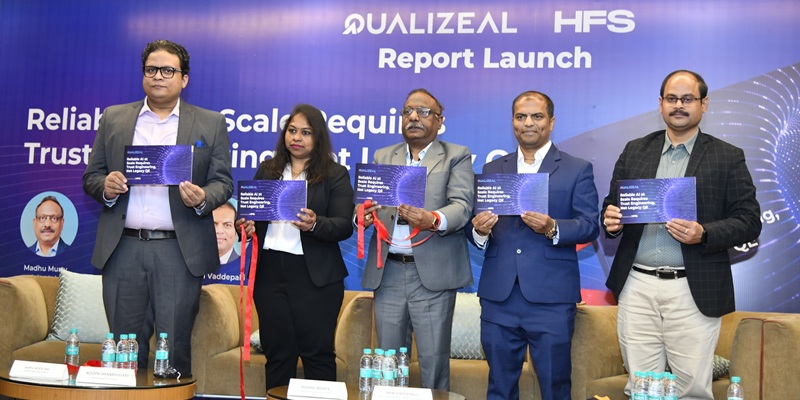
QualiZeal-HFS Study Exposes Major AI Testing Gaps Across Enterprises
QualiZeal-HFS study finds 57 per cent of US enterprises deploy GenAI, but only 15 per cent have dedicated AI testing frameworks.
Read moreSmart Manufacturing

Quest Global Strengthens Wearables and AI Testing with Tests Assured Acquisition
Quest Global acquires US-based Tests Assured to expand its capabilities in wearables engineering, AI-enabled devices and advanced product testing.
Read moreAutomation & Robotics
Critical Manufacturing will grow with India's semiconductor industry: Weng Keong
In this interview with Rakesh Rao, Weng Keong, MD, Critical Manufacturing Malaysia, discusses smart factories, digital infrastructure and India’s semiconductor manufacturing potential.
Read moreRelated Products
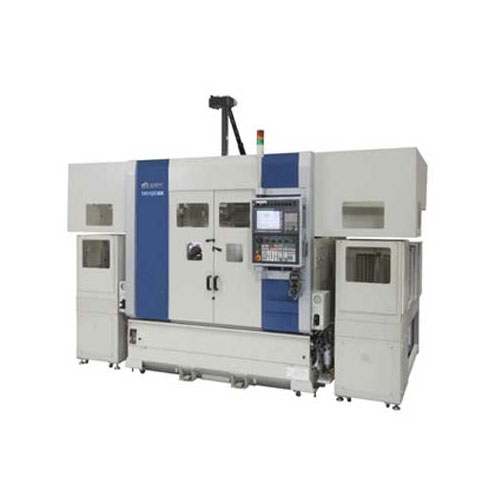
Compact Fmc - Motorum 3048tg With Fs2512
INDUSTRIAL AUTOMATION & TECHNOLOGY CONSULTANCY
Meiban Engineering Technologies Pvt Ltd offers a wide range of Compact FMC - Motorum 3048TG with FS2512.
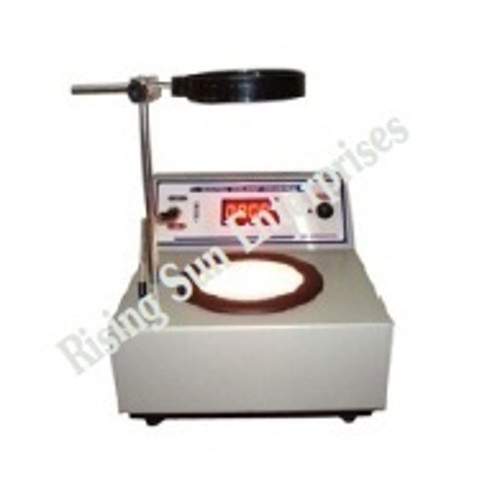
Digital Colony Counter
INDUSTRIAL AUTOMATION & TECHNOLOGY CONSULTANCY
Rising Sun Enterprises supplies digital colony counter.

Robotic Welding SPM
INDUSTRIAL AUTOMATION & TECHNOLOGY CONSULTANCY
Primo Automation Systems Pvt. Ltd. manufactures, supplies and exports robotic welding SPM.
latest News
Subscribe to iNoW

For Industry News on WhatsApp, Give a Miss Call on: +91 84228 74016