






Schedule a Call Back


Make in India must beat imports on competitiveness: Abhishek Bhatia
 Articles
- Aug 29,26
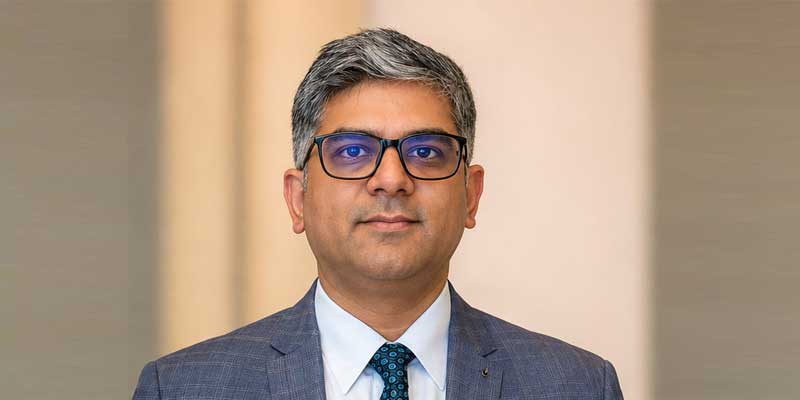
In this interview with Ashlin Rajan, Abhishek Bhatia, Managing Director and Partner, Boston Consulting Group, shares insights on India’s construction equipment sector, and its roadmap towards becoming a global manufacturing hub.
BCG works closely with manufacturing and industrial companies. What major shifts are you seeing in India’s construction equipment industry?
India's construction equipment sector has moved from being an import-led market to a genuine global growth platform over the last few years. One of the key factors has been the significant increase in domestic demand.
Domestic demand is now more than $17 billion in 2025 and has been growing at 10-12 per cent, which is the fastest in Asia. Very recently, India became a net exporter of mining and construction equipment, with exports now close to almost $5 billion.
I think that is a great achievement. Localisation has also increased significantly. We are now at around 50 per cent localisation, and global OEMs are setting up new R&D and engineering centres rather than just assembly lines.
All of this has led to a very positive movement in the overall mining and construction equipment sector. We are now moving towards cleaner powertrains and connected fleets, which will ensure that this sector continues to grow healthily over the next few years.
With rising infrastructure and industrial investments, which construction equipment segments will benefit the most?
Many sectors will benefit, but most importantly, infrastructure build-out will be a major driver. Roads, railways, ports and airports will be the biggest demand pools, given all the equipment required for earthmoving, paving, piling, tunnel boring and other applications.
The second major sector will be the overall manufacturing scale-up. As new plants and warehouses are developed, given the government’s PLI schemes for many specialised sectors, that will create another major demand opportunity.
The third sector would be critical minerals as well as coal. Energy demand will continue increasing, and critical minerals are going to be a big area for India. This will require higher-specification equipment for mining, including continuous miners, road headers, shearers and other specialised machinery.
These three sectors will definitely be sunrise sectors for the industry.
India’s construction and mining equipment sector has strong export potential. What must change for Indian manufacturers to compete globally?
Across many countries, including Africa, the Middle East and South America, there are buyers seeking a China-plus-one alternative.
To capture this opportunity, India will need local sales offices, local dealer networks, local after-sales support, products engineered for local duty cycles and requirements, and the right price points backed by good financing solutions.
Developed countries like North America, the EU and Australia represent a much longer-term opportunity. There, India has to compete with much more capable Japanese, Korean and European OEMs.
However, countries in Southeast Asia, the Middle East, Africa and South America can definitely be captured if we invest in building local sales offices, dealer networks, after-sales infrastructure and products with the right value proposition for customers.
For developed markets, we need more technology-driven and upgraded products to ensure emission compliance and meet higher service requirements. This will require consistent investment in R&D and certifications over the next four to five years.
We should carry this as a two-pronged strategy, one for developed markets and one for developing markets, which is more urgent and can be addressed immediately.
The government also needs to continue promoting Make in India and make manufacturing in India more competitive than importing equipment. This has worked successfully in sectors such as defence, where India moved from import dependence towards indigenous manufacturing and growing exports.
How are automation, AI, and connected technologies changing construction industry?
The installed base of units with telematics is increasing exponentially. We had around 8 million units in 2024, which is expected to grow to 13-14 million units by 2039.
I think we have to shift focus from monitoring single machines to managing the entire fleet.
Automation is scaling rapidly globally. What matters, especially for India, is that mining is a hazardous industry. Automation can significantly help in improving safety, especially where the workforce is not significantly trained.
Autonomous equipment and telematics can significantly help in improving safety, increasing output and enhancing uptime.
In India, companies are already working on this. For example, JCB has Live Link, Tata Hitachi is working on connected solutions, and Coal India, which is an Indian PSU, is working on an initiative for real-time fleet monitoring.
The green shoots are already there. We need to scale it effectively.
As equipment becomes more technology-driven, how can manufacturers improve processes, quality and supply chains?
We have to think about it the way the automotive industry has developed. OEMs in construction equipment need to invest in Tier 1 and Tier 2 supplier clusters and build the entire ecosystem so that there is shared capability in components rather than every company developing that capability individually.
The entire supplier ecosystem should also become digitally capable. Digital capability has to be treated as part of the product feature itself, not as an additional bolt-on.
The data layer created through digital capability will become the foundation for predictive maintenance and service models. This is a real gap that we need to address going forward.
It will also help improve safety performance, prevent counterfeit aftermarket parts, ensure better certification, provide traceability and create accountability for products brought into the market.
The industry also needs capable manpower who can drive innovation and R&D. Along with manufacturing capability, upgrading ITIs and vocational training institutions will be important to address the skilled operator gap.
The CII-BCG report highlights India’s potential to become a global manufacturing and export hub. What key changes are needed to achieve this?
There are a few structural changes impacting this industry. First, India has now become a net exporter in mining and construction equipment. This will be a major trend, and we should target markets where India can become a manufacturing hub for mining and construction equipment.
Second, we need investments in digital and software-defined fleets. They are becoming an industry standard, and we cannot miss the opportunity because that data layer will help create better equipment, improve feedback loops and enable predictive maintenance.
The third area is autonomous equipment. We need to scale it because India will continue moving towards deeper and underground mining in coal, uranium and zinc as surface grades decline.
Additionally, new ownership models will emerge through leasing, financing and equipment-as-a-service rather than only outright purchase of equipment.
Many global OEMs want to set up Global Capability Centres (GCCs) in India, which can become design hubs for their global footprint. For example, JCB has a large capability centre in India that designs for global markets. Similar opportunities can be created for other OEMs as well.
What challenges do manufacturers face while investing in advanced technology, R&D and low-emission equipment while keeping products affordable?
The challenges are twofold. First, emission norms and safety norms will continue to become stricter, especially if companies want to target developed economies. However, equipment costs cannot increase significantly.
Therefore, manufacturers need to focus on continuous innovation and cost reduction so that they can meet emission and safety requirements while maintaining affordability.
The second focus area is productivity. Innovation should ensure that within the same price range, machines become more productive. Technology, R&D and innovation can help improve productivity and capital efficiency.
Regarding low-emission equipment, hydrogen is still not at a stage where it can be widely adopted. Battery-electric equipment is also at a very low adoption stage, though adoption is happening across many areas, especially underground mining.
What major trends will shape the future of India’s construction equipment industry?
One major trend will be that we will move towards deeper and more underground mining because surface ore grades will continue declining.
We will need to move towards cleaner powertrains. There will be more battery-operated equipment and eventually hydrogen solutions, while diesel equipment will also need upgrades as regulations change.
All fleets will have to become digital and software-defined. The data generated will need to be effectively used for improving equipment performance.
We will also move towards more autonomous equipment, especially for underground mining.
Lastly, newer ownership models will emerge, including equipment-as-a-service, leasing and financing models, which will significantly change the industry compared with the current direct ownership model.
construction equipment
mining equipment
India manufacturing
global export hub
infrastructure growth
automation
telematics
digital fleets
r&d
connected equipment
BGC
Ashlin Rajan
Abhishek Bhatia
Boston Consulting Group
Related Stories
Heating & Cooling Equipment

Boiler India 2026 Opens in Navi Mumbai with Focus on Safety and Efficiency
Boiler India 2026 has opened in Navi Mumbai, bringing together 240+ exhibitors and industry experts to discuss boiler safety, efficiency, digitalisation and modern technology.
Read moreAutomation & Robotics

Schneider Electric buys PTC for $22.6 bn to expand industrial software portfolio
Schneider Electric will acquire PTC for $22.6 billion, strengthening its industrial software, AI and digital engineering capabilities. The deal is expected to significantly reshape competition in in..
Read moreAutomation & Robotics
IIIT Hyderabad, Hexagon Set Up Digital Twin Centre of Excellence
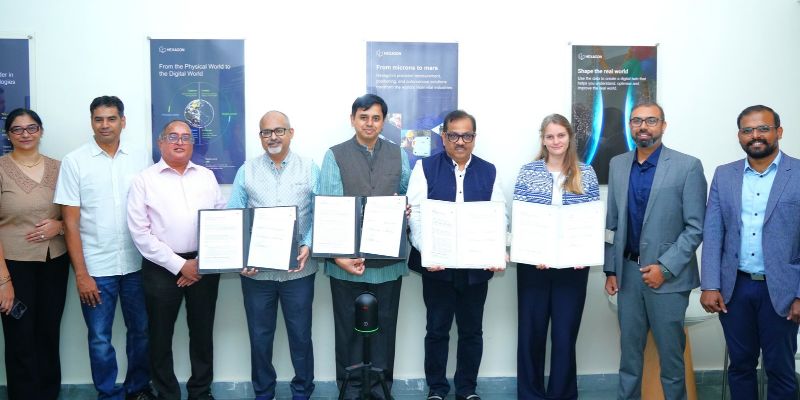
IIIT Hyderabad and Hexagon R&D India are establishing a Digital Twin CoE to advance AI-led research, education and industry applications in computer vision and spatial computing.
Read moreRelated Products
Electro - Pneumatic Brake System for Emu
CONSTRUCTION, MINING & EARTH MOVING EQUIPMENT
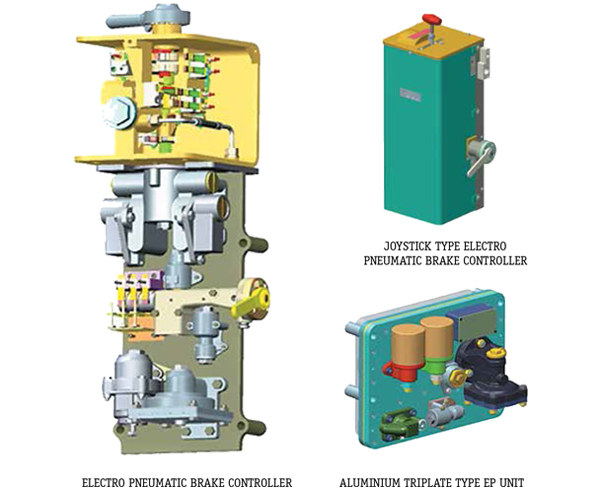
Escorts Kubota Limited offers a wide range of electro - pneumatic brake system for EMU.
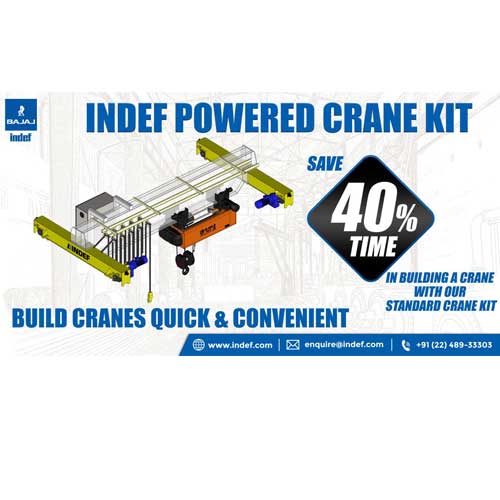
Indef Powered Crane Kit
CONSTRUCTION, MINING & EARTH MOVING EQUIPMENT
Hercules Hoists Ltd offers a wide range of Indef powered crane kit.
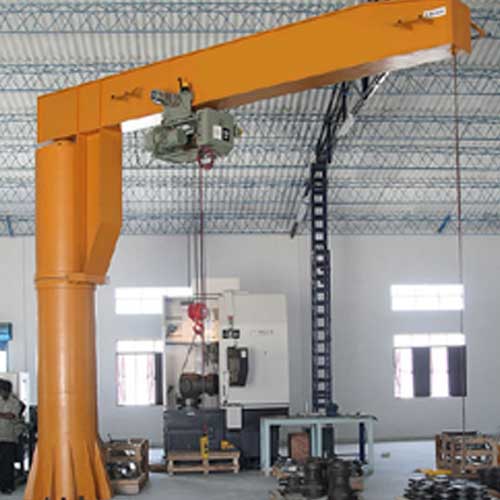
Jib Crane
CONSTRUCTION, MINING & EARTH MOVING EQUIPMENT
DC Hoist & Instruments Pvt Ltd offers a wide range of Jib crane.
latest News
Subscribe to iNoW

For Industry News on WhatsApp, Give a Miss Call on: +91 84228 74016