







Schedule a Call Back


India has real depth in manufacturing: Matthias Lapp
 Articles
- Sep 28,26
India’s growing role in LAPP’s global manufacturing strategy comes into focus as Matthias Lapp, CEO, LAPP Group, speaks to Ashlin Rajan about the Bhopal expansion, automation, technology and emerging growth opportunities.

Could you take us through LAPP’s 30-year journey in India, its evolution as a manufacturing base and what the Bhopal expansion means?
LAPP is a family-owned company headquartered in Stuttgart, Germany, and is one of the world’s leading providers of integrated solutions and branded products for cable and connection technology. The company employs nearly 6,000 people globally, manufactures at 27 international production locations and is active in more than 80 countries. Our products and solutions connect machines, systems, factories, infrastructure and energy networks, enabling industries to operate reliably, safely and efficiently.
LAPP’s relationship with India goes back several decades. The family developed deep ties with India as early as the 1980s, and in 1996 we established our own operations here. This year marks 30 years in India. Over these three decades, India has become one of the great success stories within our global organisation. It is now our largest market after Germany, bigger than the US, and one of the most strategically important countries in the LAPP world.
That success has been built through long-term commitment, local investment and strong partnerships with governments, customers and suppliers. We believe in manufacturing where our customers are, investing where we see long-term growth, and developing local talent and capabilities. That philosophy has guided our growth in India for three decades and remains equally relevant today.
The Bhopal facility is a strong example of this development. Since operations began in 2012, the site has steadily expanded its capabilities. What started with single-core wires has evolved into multi-core cable manufacturing, solar cable production, advanced compounding capabilities and EV-related solutions.
With the latest expansion, LAPP Cable Works Bhopal is becoming our largest manufacturing facility globally. It is also not only about size. The facility represents some of the most advanced manufacturing capabilities within our worldwide network.
These capabilities enable us to serve demanding applications and industries such as industrial automation, Industry 4.0, renewable energy, rail and metro systems and infrastructure. The expanded presence in Bhopal strengthens our ability to support customers with world-class manufacturing and technology.
For the latest PowerLV expansion, LAPP has made a triple-digit investment in the facility. The investment reflects our confidence not only in the site but also in the long-term potential of India and Madhya Pradesh. The expansion will also secure more than 200 high-quality manufacturing jobs before the end of this year.
How important is India to LAPP’s global growth, and what makes the market strategically important?
India is a key driver of the success of the whole LAPP Group. Without the success of India and the capabilities we have here, we would not be as far as we are as a group. The specific expertise and knowledge we have developed in our Indian facilities also help us in the global market.
It is not only the size or technological capabilities that matter. The speed at which the Indian market develops also plays a vital role. India teaches us how to operate and learn in a fast-growing market, not only here but also across Asia Pacific and the wider group.
In a fast-growing environment, you have to align processes, structures, hiring and everything that comes with growth. India is a good example for us of what it means to grow in an environment where demand changes much faster.
Coming from Germany, I see a difference in the way new technologies are approached. In Germany, there are many rules and regulations, and before something is allowed, there can be extensive processes of assessment and approval. In India and Asia, there is more willingness to experiment, try and learn along the way. This is also something we can learn from.
This commitment to India goes back to the previous generations of our family, who started the business here 30 years ago. The Bhopal inauguration is not the conclusion of that journey. We will continue to focus on and invest in this market.
What sets LAPP’s Indian manufacturing capabilities apart, and how do they support the company’s global operations?
For me, the most exciting aspects are speed, scale and technological capabilities.
We now have three production sites in India. Bhopal, founded in 2012, has experienced very rapid growth and is now the biggest production site with the highest volume output in the group. Many companies would not expect a production site in India to grow faster than in China or elsewhere, but that is what has happened here. It was the family believing in this opportunity and the people in India who made it possible.
The second aspect is technological depth. You would perhaps not expect that India has such depth in manufacturing, but it does.
Bhopal is the only production site in our group that has its own compounding capability. The compound of a cable product is a major differentiator. Oil resistance and UV-load resistance, for example, come from the outer shield, and you need the knowledge and engineers to design these characteristics and bring the required feature set to customers.
It is unique within our group to have engineers working on compounding and cable production at the same site.
One example is train cables. We started this work in India and initially failed because we could not find a compound on the market that could fulfil the high requirements of a train cable. A train cable is supposed to last for 40 or 50 years, and you need to prove that.
Through collaboration within the group, teams in India, Switzerland and Korea worked together to develop a compound capable of withstanding these harsh conditions and requirements. This is a real success story for us.
From a broader perspective, we manage by technology and by cluster. We have centres of excellence for technology around the world, and India is the centre of excellence for infrastructure, which will serve the whole world.
For domestic requirements, we still buy newer technology and the latest innovation from Germany when it is at an early stage and production scale has not reached its peak. We are therefore not under pressure to manufacture it in India immediately. But if the volume and demand in India increase, then we have to bring that technology into the country.
What were the biggest challenges LAPP faced when it first entered the Indian market?
In the beginning, 30 or 40 years ago, that was the biggest challenge for us. Our sellers depended a lot on the perception that something was German. But we have evolved.
Today, our sellers say that we can give customers the best solution and that LAPP stands for quality and reliability.
The early days were difficult because India was an export-oriented country, whereas those dynamics have changed today. Selling the story, selling the brand and selling the whole concept of reliability were very difficult at that time.
How is the growing demand for automation shaping LAPP’s business opportunity and technology roadmap?
Automation is our core market. If you look at machine-tool building and machine-tool builders, I think this was our first customer group.
The whole automation business helps us because the more you automate, the more robots and machines you use, and the more power, electricity and data you need to control them.
We use tactical and strategic foresight for five years. We have a five-year integrated roadmap covering product requirements, product portfolio, local norms and approvals.
We also have a technology board, an advisory board consisting of five professors who consult us across different functions. One is from the electricity field, one from electronics, one from the compound area and one from automation and manufacturing.
They help us understand the newest trends and how we will manufacture in the future. We assess how we should move there step by step.
We also assess whether there are differences between China and India, the United States and Europe, or whether a particular development is a global phenomenon happening across markets at the same time.
With that, we try to move forward with better offerings and new portfolios.
Which emerging industries do you see offering the biggest opportunities in India?
Defence is one area, but the major drivers are battery energy storage systems, or ESS, as well as AI and data computing, particularly data centres.
The demand here is huge. You see that in India as well. The computing power that is needed requires a lot of hyperscalers and large server farms, and that is one of the biggest growth areas we see.
The EV industry is also growing. Producing for EVs, including batteries and battery production, is another core growth driver.
How does India compare with other major Asian manufacturing markets in terms of competitiveness and investment potential?
If you compare the cost of production in India, it is more favourable than, for example, China, Singapore or South Korea.
At the same time, because what we make in India is sold in India, the selling price is also lower. So what we gain in having cheaper production costs, we give back to the market.
When we look at manufacturing today, we look by what we call technology groups. For example, China is the biggest market for data cables, so we invest and produce our data cables in China.
India is highly infrastructure-oriented, including building wires, so we invest in India for that technology.
We work as a team and as a region. We are now changing the rules of engagement a little. We allow India to sell to China, for example, provided that politically we can do that. Politics comes into play.
How do you see India’s role evolving within LAPP’s global manufacturing strategy?
We are now assessing how to use the capabilities we have built here. At the moment, we are doing ‘Make in India for India’. With the expertise and capabilities we have built, we want to use them for exports as well, not only for Asia Pacific but also for at least Africa and, sometimes, Europe.
In the near future, I foresee that the capabilities and setup we have here can support this expansion.
We already have expertise teams in India for the global group, particularly in IT. The manufacturing capabilities are something we want to leverage more.
Indian customers are also going global, and that creates an opportunity for us to support their growth while using the capabilities we have developed in India more extensively.
LAPP Group
Matthias Lapp
India manufacturing
Lapp Bhopal facility
industrial automation
cable technology
EV
data centres
Ashlin Rajan
Related Stories
Smart Manufacturing
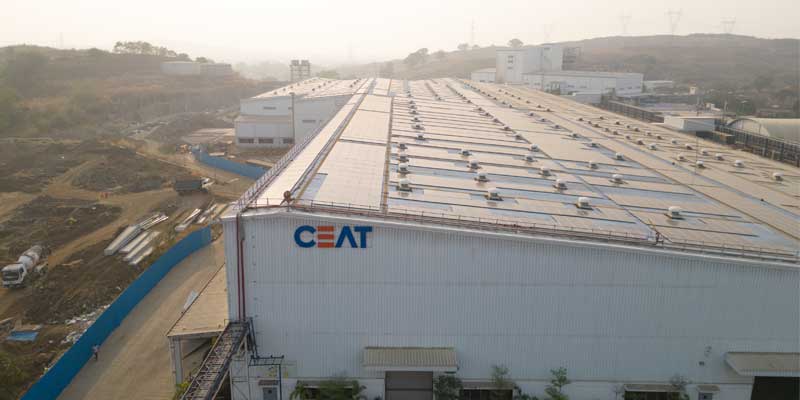
CEAT Ambernath: Smart Manufacturing at MOQ One
CEAT’s Ambernath plant combines AI, automation, digital traceability and lean manufacturing to produce over 1,200 tyre variants, even efficiently handling an minimum order quantity of one.
Read moreSmart Manufacturing
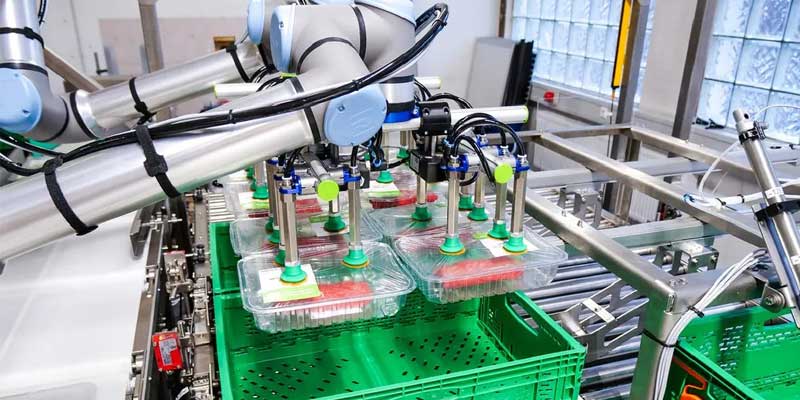
Schmalz enables smarter manufacturing with electric vacuum technology
Schmalz’s electric vacuum generators enable flexible automation, reducing energy use while supporting mobile robotics and digital manufacturing
Read moreSmart Manufacturing
India has real depth in manufacturing: Matthias Lapp
India’s growing role in LAPP’s global manufacturing strategy comes into focus as Matthias Lapp, CEO, LAPP Group, speaks to Ashlin Rajan about the Bhopal expansion, automation, technology and eme..
Read moreRelated Products
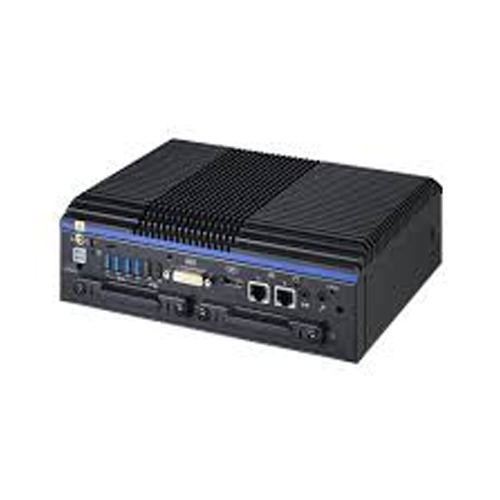
Fanless Industrial Pc for Smart Manufacturing
Smart Manufacturing
CONTEC Launches BX-M4600 Series - Fanless Industrial PC for Smart Manufacturing.
latest News
Subscribe to iNoW

For Industry News on WhatsApp, Give a Miss Call on: +91 84228 74016