






Schedule a Call Back


Höganäs has ambitious investment plan for India
 Articles
- Nov 28,26
In this interview with Rakesh Rao, Henrik Ager, President and CEO, and Munish Sharma, Market President – India, Höganäs, discuss the company's growth strategy, evolving material technologies, and India's growing role in its global manufacturing network
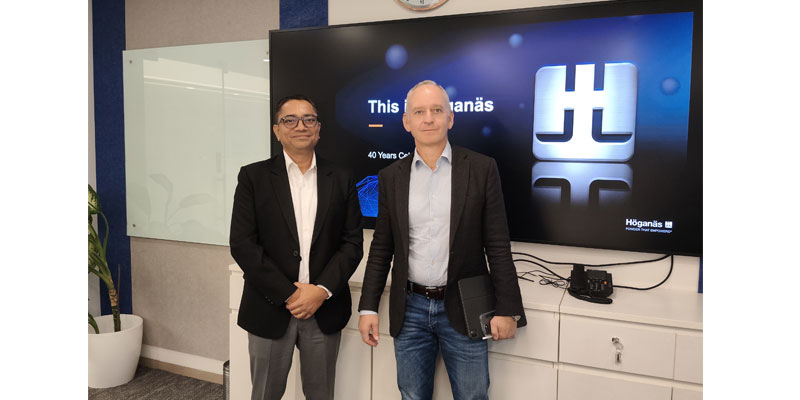
As Höganäs celebrates 40 years in India, the Swedish metal powder manufacturer is preparing substantial investments to expand its production capabilities and capitalise on opportunities across automotive, aerospace, steel, electrification and advanced manufacturing. In this interview with Rakesh Rao, Henrik Ager, President and CEO, and Munish Sharma, Market President – India, Höganäs, discuss the company's growth strategy, evolving material technologies, localisation opportunities and India's growing role in its global manufacturing network.
How important is India to Höganäs' global business, and how has its role evolved in recent years?
Henrik Ager (HA): India is becoming increasingly important to our global business. It is a significant growth engine for Höganäs, and expanding alongside a rapidly growing market creates substantial opportunities. We are already investing in India and intend to increase our investments significantly over the next five years to strengthen our manufacturing capabilities and market presence.
India currently contributes approximately 8–10 per cent of our global revenue. In terms of production, our Indian operations manufacture around 40,000 tonnes annually, compared with the company's global annual production capacity of 500,000 tonnes.
We see India playing an increasingly important role in our global manufacturing network. While our proposed investments will primarily address growing domestic demand, part of the additional production capacity will also cater to export markets.
Which industries are driving Höganäs' growth in India, and how do you expect demand to evolve over the next five years?
Munish Sharma (MS): The automotive industry is our largest business contributor in India and will remain a major growth driver. We serve this sector through multiple business segments, including powder metallurgy, which supplies materials for components used in engines, transmissions, body and chassis structures, and suspension systems.
Our surface coating technologies also support automotive applications such as cylinder heads, piston rings and engine valves, where specialised coatings improve resistance to high temperatures and wear.
Aviation represents another promising opportunity, particularly with the government's emphasis on indigenous manufacturing. We expect demand for advanced materials and specialised components to increase as domestic aerospace manufacturing capabilities expand.
In the steel industry, growth opportunities are emerging not only from capacity expansion but also from technological improvements that enhance productivity and equipment performance. We are working with customers on solutions designed to extend component life and reduce operational downtime. In recent trials with Indian steel manufacturers, we achieved a threefold improvement in component life, demonstrating the potential for significant productivity gains.
Our future growth will therefore come from a combination of industrial expansion and deeper penetration of existing markets through advanced material solutions.
How are government initiatives such as the Production Linked Incentive (PLI) scheme and India's increasing focus on precision manufacturing creating new opportunities for Höganäs?
MS: Two significant developments are reshaping India's manufacturing landscape. First, components that were traditionally imported are increasingly being manufactured domestically. The PLI scheme has encouraged global manufacturers, including companies with production facilities in Europe and the Americas, to establish or expand manufacturing operations in India.
Second, Indian manufacturers are moving towards higher levels of technological sophistication. Earlier, the emphasis was largely on producing components at lower costs and in larger volumes. Today, discussions increasingly begin with product quality, technological capabilities and performance, followed by delivery efficiency and cost.
We are witnessing strong growth across virtually all the industrial segments we serve. Companies are investing in production capacity, advanced technologies and new capabilities. This shift towards value-driven manufacturing is creating substantial opportunities for advanced materials and precision engineering solutions.
With the automotive industry transitioning towards electrification, how is Höganäs positioning itself to address changing material requirements?
MS: We view electrification as a significant growth opportunity rather than a challenge.
Höganäs has a dedicated business division focused on electromagnetic applications, including materials used in electric motors and electrified vehicle technologies.
We are already working with major automotive manufacturers, and our powders are being incorporated into electric motor applications. Some of these technologies have reached commercial production and are being used in vehicles globally.
Although this business is still at a relatively early stage of development for us, it is gaining traction. We expect demand to increase as the automotive industry continues its transition towards electrification.
Which of Höganäs' business divisions are supported by its Indian manufacturing operations, and what materials are currently produced locally?
HA: Our Indian manufacturing operations primarily support two divisions: Powder Metallurgy Technologies (PMT) and Metal Consumables and Elements (MCE), which account for our largest production volumes globally. These divisions supply materials for a broad range of applications, including powder metallurgy components, hand warmers, textile filtration systems, building pads and brake pads. This diversified portfolio enables us to serve multiple industrial sectors with specialised material solutions.
How is demand for Höganäs' products evolving in India's textile industry, particularly in the man-made fibre segment?
HA: Our presence in the textile industry is primarily concentrated in man-made fibres. Our materials form part of the production value chain for synthetic fibres such as polyester and nylon.
Demand from this segment has been growing exceptionally well, creating significant opportunities for our specialised material solutions.
What growth opportunities do you foresee for ceramic powders in India, particularly in semiconductors and other high-technology applications?
MS: We see considerable potential for ceramic powders in India, particularly as industries adopt more advanced materials and manufacturing technologies. However, expanding our market penetration remains an important priority.
Our ceramic materials serve several specialised applications. For instance, certain powders manufactured at our German facility are used in automotive airbag systems. We also supply materials for armour plates and semiconductor applications.
With significant investments planned in India's semiconductor industry and growing demand for advanced engineering solutions, we expect these segments to offer promising opportunities.
Compared with seven or eight years ago, we are examining these emerging applications much more closely as part of our growth strategy.
In volume terms, ceramic powders represent a much smaller share of our business than metal powders. However, their contribution in value terms is considerably higher because they are highly specialised, high-performance materials.
Ceramic powder manufacturing involves complex processes and stringent specifications. Different applications require precise particle sizes and material characteristics, and producing extremely fine powders can significantly increase their value. Consequently, ceramic powders contribute disproportionately to sales value relative to their production volumes.
How is India's additive manufacturing market evolving, and what opportunities does 3D printing present for advanced powder materials?
MS: India's additive manufacturing industry has considerable growth potential, although there is still significant scope for technological advancement and wider industrial adoption. We are witnessing impressive developments in high-value applications. Companies are using additive manufacturing technologies to produce rocket engine components, demonstrating the capabilities of advanced 3D printing.
The medical sector is another promising area. Companies in Pune are developing 3D-printed orthopaedic implants, opening new possibilities for customised medical solutions and advanced surgical applications. These developments demonstrate that India has the technical capabilities to advance additive manufacturing. However, broader industrial adoption and the development of new applications will be essential for the market to realise its full potential.
Within aerospace, how is Höganäs addressing opportunities across civil aviation and defence manufacturing?
MS: Our primary focus is on materials and applications associated with aircraft engine manufacturing. We see opportunities as India's aerospace manufacturing ecosystem develops. The government's focus on indigenous manufacturing is expected to create additional demand for advanced materials and specialised components.
Höganäs has an extensive global patent portfolio. What role do its Indian operations play in research, development and innovation?
MS: Our Indian team contributes to research and development initiatives undertaken by the Höganäs Group across different locations. We participate in technical developments and contribute to innovations that may eventually result in patents being filed by other group entities.
Although India is not currently a primary research centre for the group, our engineering expertise and application development activities contribute to its broader innovation efforts. An important aspect of our approach is the potential to deploy successful applications across markets. For example, we are working with Indian steel manufacturers on solutions to improve equipment performance and component durability. Once these applications are validated and commercially adopted, similar solutions can be introduced to steel producers in other markets.
This enables innovations developed for specific customer requirements in India to create opportunities across our global customer base.
Beyond automotive, steel, aerospace and energy, which emerging sectors could become important growth drivers for Höganäs in India?
MS: Automotive, steel, aerospace and energy remain our principal focus areas because of their scale and growth potential. However, opportunities can also emerge from new material formulations and technological developments within our global research and development network.
For example, a new product or application could make India an attractive manufacturing location because of its raw material availability, supply-chain advantages or existing production capabilities.
We therefore remain open to investments in additional product lines and emerging applications as new opportunities materialise.
With capacity utilisation already high, what are Höganäs' key manufacturing expansion priorities in India, and what level of investment is being considered?
HA: We are developing an ambitious investment roadmap for India. Munish and I have discussed the expansion opportunities, and I have encouraged the Indian team to put forward substantial investment proposals aligned with the market's growth potential. Our plans include installing new electric arc furnaces, expanding annealing furnace capacity and potentially introducing additional manufacturing technologies.
Although the precise investment amount is still being finalised, we expect it to run into billions of Indian rupees, equivalent to hundreds of millions of Swedish Krona. These investments will strengthen our manufacturing capabilities and support future growth in India.
MS: We are actively evaluating investments in consultation with our business divisions, each of which has distinct material requirements based on its application areas. Our immediate focus is on the two major divisions that require metal powders manufactured in India. The first serves powder metallurgy components, particularly automotive applications, while the second supports industries such as steel, welding and textiles.
We are assessing projected demand, additional production volumes, manufacturing requirements and potential investment locations to determine the most appropriate expansion strategy. The proposals are being finalised, and we expect investment announcements in 2027, although some decisions could be communicated earlier.
Höganäs AB
Henrik Ager
Munish Sharma
Sweden
Powder Metallurgy
Automotive Manufacturing
Additive Manufacturing
Advanced Materials
aerospace
Related Stories
Machine Tools & Accessories
Höganäs has ambitious investment plan for India
In this interview with Rakesh Rao, Henrik Ager, President and CEO, and Munish Sharma, Market President – India, Höganäs, discuss the company's growth strategy, evolving material technologies, an..
Read moreAutomation & Robotics
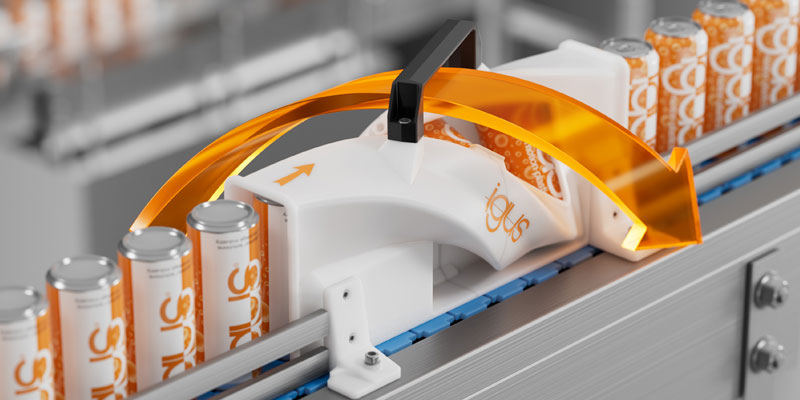
Igus gives tin production a smarter spin with 3D printing
Igus’ 3D-printed product turner can rotate up to 120,000 tins an hour. Its lightweight design aims to reduce changeover effort, maintenance and downtime on food and beverage lines.
Read moreSmart Manufacturing
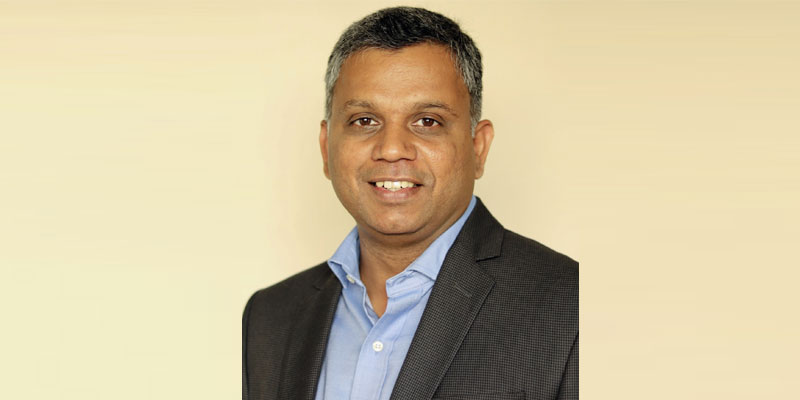
3D printing is transforming factory-floor operations: Yathiraj Kasal
In this interaction with Rakesh Rao, Yathiraj Kasal, GM & Business Head, Wipro 3D, discusses emerging business opportunities, adoption challenges and the company’s strategic roadmap for scalable a..
Read moreRelated Products
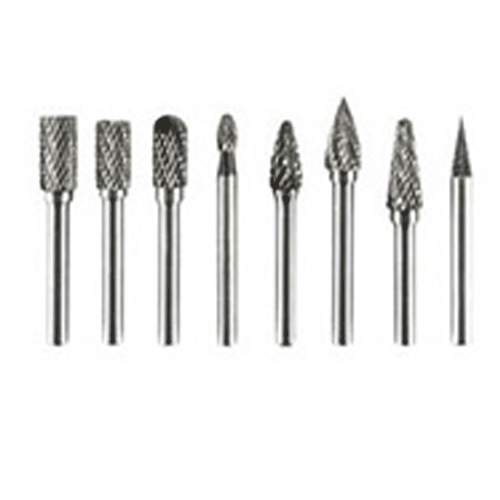
Carbide Burrs
ABRASIVES & FINISHING EQUIPMENT
SRT Industrial Tools & Equipments offers a wide range of carbide burrs.
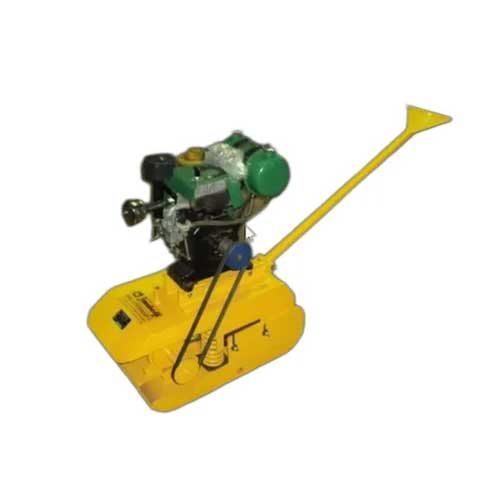
Jamshedji Soil Compactor
ABRASIVES & FINISHING EQUIPMENT
Jamshedji Constro Equip Pvt Ltd offers a wide range of jamshedji soil compactor.
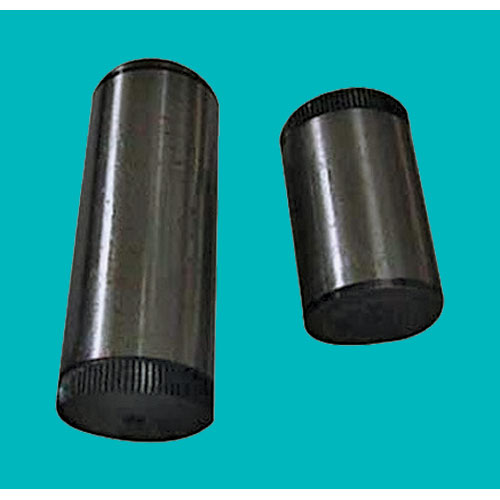
Ground Pins
ABRASIVES & FINISHING EQUIPMENT
Hans Machineries Private Limited offers a wide range of pins, hardened & ground. Read more
latest News
Subscribe to iNoW

For Industry News on WhatsApp, Give a Miss Call on: +91 84228 74016