






Schedule a Call Back


3D printing is transforming factory-floor operations: Yathiraj Kasal
 Articles
- Nov 27,26
In this interaction with Rakesh Rao, Yathiraj Kasal, GM & Business Head, Wipro 3D, discusses emerging business opportunities, adoption challenges and the company’s strategic roadmap for scalable additive manufacturing.
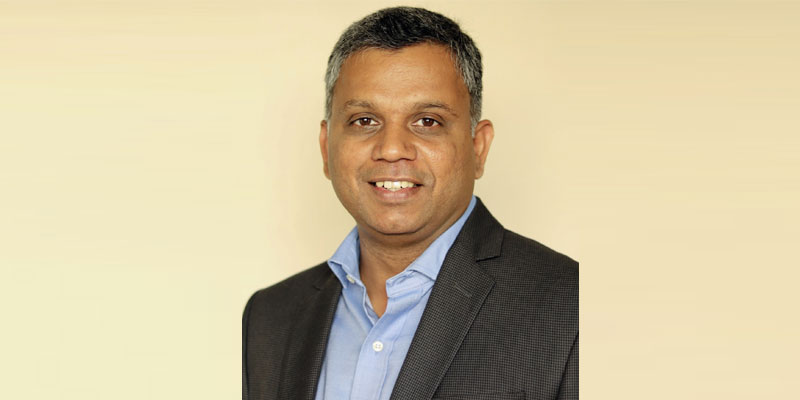
In November 2026, Wipro 3D announced partnership with Markforged to expand access to industrial composite 3D printing in India and accelerate its adoption across manufacturing sectors. In this interaction with Rakesh Rao, Yathiraj Kasal, GM & Business Head, Wipro 3D, discusses emerging business opportunities, adoption challenges and the company’s strategic roadmap for scalable additive manufacturing.
How has Wipro 3D evolved over the years, and which industries are driving demand for additive manufacturing solutions?
When Wipro 3D began its journey in 2012, much of the market conversation centred on prototyping and demonstrating that metal 3D printing could produce functional parts. Over the years, our business has evolved considerably. Today, we work across the entire additive manufacturing value chain, from application identification, design and process development to qualification, serial production, equipment deployment, consulting and lifecycle support.
I have personally witnessed a shift in customer conversations. Earlier, the first question was usually, “Can this part be 3D printed?” Today, customers increasingly ask, “How can we qualify it, industrialise it and scale it?” This change reflects the evolution of our business as well. We are moving from individual projects towards repeat production programmes, factory-floor applications, turnkey additive manufacturing centres and long-term technology partnerships.
Aerospace, space and defence continue to be important demand drivers because additive manufacturing offers clear advantages in weight reduction, part consolidation, complex geometries and shorter development cycles. At the same time, we are witnessing growing interest from automotive, oil and gas, energy, semiconductor equipment and general engineering companies. In these industries, demand is often linked to serial production, production tooling, critical spares, obsolescence management, supply-chain resilience and low-volume production. Wipro 3D has delivered more than 250,000 printed parts and worked with over 450 customers across industries, providing a strong foundation to support this transition.
One of the most satisfying aspects of this journey has been seeing components progress from drawings or early development concepts to actual deployment. For example, our work includes space hardware deployed on GSAT-19, aerospace components subjected to demanding engine tests and critical parts developed for future space propulsion programmes. Such examples demonstrate that additive manufacturing in India has moved well beyond experimentation.
What are the strategic objectives of Wipro 3D’s partnership with Markforged, and how will it strengthen your market presence?
The primary objective is to make industrial composite additive manufacturing more accessible and relevant to Indian manufacturers.
Wipro 3D has developed extensive capabilities in metal and polymer additive manufacturing, particularly in application engineering, process development, qualification and production. Markforged brings a strong portfolio of industrial composite printers, materials and software, including its Continuous Fiber Reinforcement (CFR) technology and Digital Forge platform. This combination allows us to address a wider spectrum of customer requirements, from highly demanding metal components to strong, lightweight composite tools, fixtures, spares and functional parts.
Our intention is not simply to add another machine brand to our portfolio. We want to build an application-led ecosystem around the technology. This involves working with customers to identify suitable use cases, demonstrate technical and commercial value, validate applications, deploy systems, train customer teams and provide ongoing support.
This partnership also helps us bring additive manufacturing closer to the point of use, whether on a factory floor or in a toolroom, maintenance facility, engineering centre or defence workshop. It complements our existing production and engineering capabilities and strengthens our position as a single accountable partner for customers starting or scaling their additive manufacturing journey.
What new business opportunities does this partnership present across aerospace, defence, automotive and heavy engineering?
The partnership opens up opportunities in three broad areas: composite tooling, on-demand parts and distributed manufacturing. In automotive and heavy engineering, significant opportunities exist in jigs, fixtures, inspection gauges, soft jaws, welding fixtures, assembly aids and end-of-arm tooling. Many of these are conventionally machined from metal and may take several weeks to procure. Industrial composite printing can potentially reduce their weight, shorten lead times and enable rapid design modifications when production lines change. Markforged positions its systems specifically for factory-floor applications, including the replacement of certain machined aluminium tools and fixtures with industrial composite parts.
In aerospace, opportunities include lightweight production tooling, drill guides, lay-up tools, inspection fixtures, suitable flight components and functional prototypes. Materials such as continuous carbon-fibre-reinforced polymers can provide an attractive balance of strength and low weight for suitable applications. The technology portfolio also includes materials intended for demanding and regulated environments, although every aerospace application must undergo the necessary material, process and application-specific qualification.
In defence, the opportunity is particularly relevant to operational readiness and supply-chain resilience. Legacy platforms typically require a wide range of low-volume spares, some of which may be obsolete or difficult to source. A secure digital inventory, combined with qualified production at or closer to the point of need, can help reduce stocking requirements and procurement lead times for suitable components. Covers, brackets, housings, mounts, tools and other non-critical components are practical starting points.
In my experience, adoption becomes much easier when we begin with one expensive, slow-moving or frequently required item, demonstrate the savings and then replicate the application across departments or plants. A successful fixture may appear modest when viewed in isolation, but when replicated across multiple production lines and locations, the operational benefits can become significant.
The partnership will, therefore, create opportunities not only in printer deployment but also in application development, composite printing services, reverse engineering, training, materials, software, maintenance and multi-site expansion.
How are composite 3D printing, AI and automation reshaping industrial additive manufacturing?
Composite 3D printing is expanding the role of additive manufacturing on the factory floor. It enables manufacturers to produce parts that are significantly stronger than conventional unreinforced printed polymers while remaining lighter than many metallic alternatives. In appropriate applications, continuous-fibre reinforcement can produce composite parts with strength approaching that of certain grades of aluminium.
This is important because it moves polymer additive manufacturing beyond visual prototypes. Manufacturers can now evaluate it for functional tooling, production aids, replacement parts and selected end-use components.
AI is transforming the industry in a different but complementary way. It can support application selection, design optimisation, build preparation, parameter development, in-process monitoring, anomaly detection and predictive maintenance. Connected platforms can also learn from print data across a fleet of machines, helping improve reliability and consistency over time. Markforged describes its Digital Forge as an integrated platform encompassing printers, materials and enterprise software, with fleet management, inspection and data-driven process improvement capabilities.
Automation will become equally important as additive manufacturing scales. Automated material handling, build monitoring, post-processing, inspection and production scheduling can reduce dependence on operators and make production economics more predictable.
In my view, the real transformation will come from combining these technologies. A future additive manufacturing cell will not operate as a standalone printer. It will be a connected production system in which software identifies risks, equipment monitors its own performance, inspection data provides feedback and production can be securely distributed across different locations.
What are the key barriers to industrial 3D printing adoption in India, and how can manufacturers address them?
One of the biggest barriers is that organisations sometimes begin with the technology rather than the manufacturing problem. Buying a machine without a qualified application pipeline can result in low utilisation and disappointment.
The right starting point is to identify applications where additive manufacturing offers a genuine advantage, such as high complexity, long lead times, high inventory costs, part obsolescence, frequent design changes, low-volume demand or a need for substantial weight reduction. Each application must then be evaluated against the complete business case, including design effort, materials, printing, post-processing, inspection, qualification and lifecycle value.
A second barrier is the shortage of multidisciplinary skills. Industrial additive manufacturing requires a combination of expertise in design, materials, process engineering, simulation, quality assurance, post-processing and applications. This cannot be addressed through machine operation training alone. Manufacturers need cross-functional teams and should initially work with experienced partners until their internal capabilities mature.
The third barrier is qualification and confidence. In aerospace, defence, oil and gas and other regulated industries, producing a part is only one step. The process must be repeatable, traceable and supported by an appropriate quality framework. Our own journey has reinforced the importance of certifications and controlled processes, including AS9100, Nadcap, ISO 9001, API 20S and ISO 27001.
A fourth challenge is the tendency to compare only the price of a printed part with that of a conventionally manufactured part. The evaluation should also consider tooling investment, minimum order quantities, inventory carrying costs, downtime, logistics, assembly reduction and time to market. A component that appears expensive on a unit-cost basis may still present a strong business case if it prevents several days of equipment downtime.
Manufacturers can overcome these barriers by adopting a phased approach:
- Identify a focused group of high-value applications.
- Validate the technical and financial case through trials or printing services.
- Establish repeatable design and qualification processes.
- Train a multidisciplinary internal team.
- Invest in equipment only after establishing a credible application pipeline.
- Scale successful applications across plants and business units.
This “application first, machine second” approach reduces risk and helps ensure that additive manufacturing delivers measurable operational results.
What are Wipro 3D’s strategic growth priorities for the next three to five years?
Our priority is to establish Wipro 3D as an integrated, production-led additive manufacturing company capable of supporting customers from initial application conceptualisation through qualification and scaled production.
The first growth priority is qualified production. We see increasing potential in recurring parts and manufacturing programmes, particularly in aerospace, space, defence, energy, oil and gas, semiconductor equipment and advanced industrial applications. We will continue strengthening our process, material, post-processing and quality capabilities to support these programmes.
The second priority is to expand our technology and product portfolio. Partnerships such as the one with Markforged extend our reach into industrial composites and factory-floor applications. This complements our existing capabilities in metal and polymer additive manufacturing, indigenously developed printers and turnkey solutions, allowing us to recommend solutions based on applications rather than being restricted to a single technology.
Third, we want to make it easier for customers to adopt additive manufacturing. Different customers require different entry points. Some may begin with consulting or a part-identification workshop, while others may opt for printing services, a standalone system, a bundled application solution or a complete turnkey centre. Our role is to help them select the right approach and continue supporting them as their usage expands.
Fourth, we will build stronger recurring lifecycle businesses around materials, software, maintenance, application expansion, training and overflow production support. This will help customers protect their equipment investments while providing access to specialist support as requirements evolve.
Finally, we see opportunities to take Indian additive manufacturing expertise to selected international markets. Our longer-term aspiration is to evolve from an Indian additive manufacturing pioneer into a globally relevant digital manufacturing company, with qualified production, machines, turnkey centres, engineering services and distributed manufacturing working together as one platform.
For me, growth is not about installing the largest number of printers. It is about creating successful applications, enabling repeatable manufacturing and helping customers achieve tangible results. If we do that consistently, business growth and wider adoption will follow.
Yathiraj Kasal
Wipro 3D
Additive manufacturing
3D printing
Markforged
Composite manufacturing
Digital manufacturing
Distributed manufacturing
Continuous fibre reinforcement (CFR)
Rakesh Rao
Related Stories
Smart Manufacturing
3D printing is transforming factory-floor operations: Yathiraj Kasal
In this interaction with Rakesh Rao, Yathiraj Kasal, GM & Business Head, Wipro 3D, discusses emerging business opportunities, adoption challenges and the company’s strategic roadmap for scalable a..
Read moreSmart Manufacturing
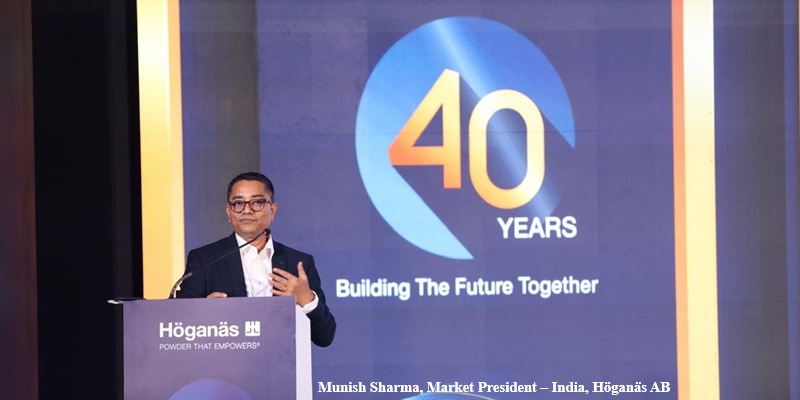
Höganäs marks 40 years in India, to expand metal powder capabilities
Höganäs plans to strengthen its manufacturing and engineering capabilities in India to tap rising demand for advanced metal powder solutions.
Read moreAutomation & Robotics
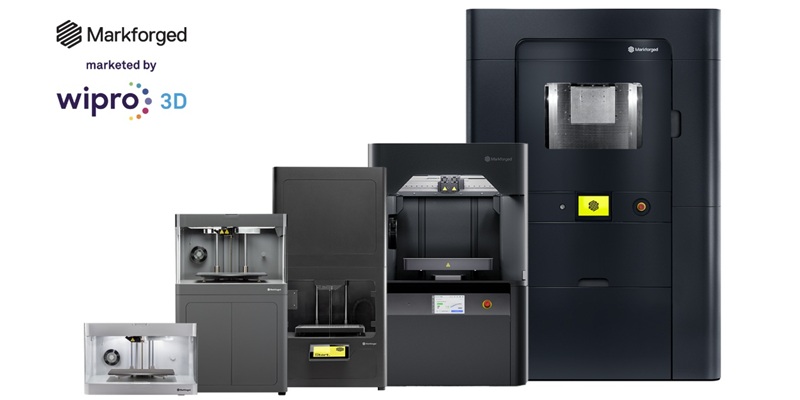
Wipro 3D, Markforged partner to expand industrial 3D printing in India
Wipro 3D and Markforged join forces to accelerate industrial composite 3D printing adoption across India's key manufacturing sectors.
Read moreRelated Products
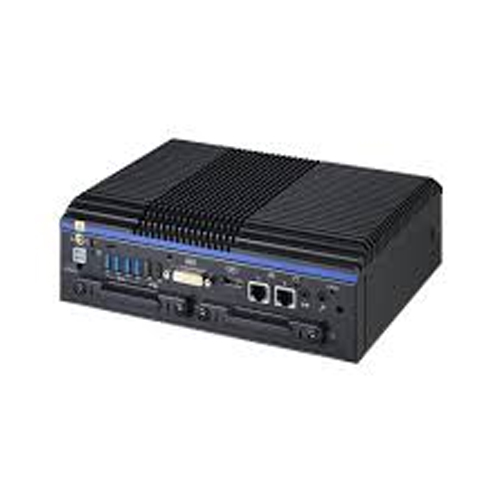
Fanless Industrial Pc for Smart Manufacturing
Smart Manufacturing
CONTEC Launches BX-M4600 Series - Fanless Industrial PC for Smart Manufacturing.
latest News
Subscribe to iNoW

For Industry News on WhatsApp, Give a Miss Call on: +91 84228 74016