








Schedule a Call Back


Energy efficiency is central to Atlas Copco’s innovation strategy
 Articles
- Oct 29,26
In this interview with Rakesh Rao, Jan Verstraeten, VP Marketing, Atlas Copco Oil-free Air Division, and Sunil Natekar, Business Line Manager – Oil-Free Air, Compressor Technique, Atlas Copco India, discuss emerging market opportunities and the company's growth plans for India.
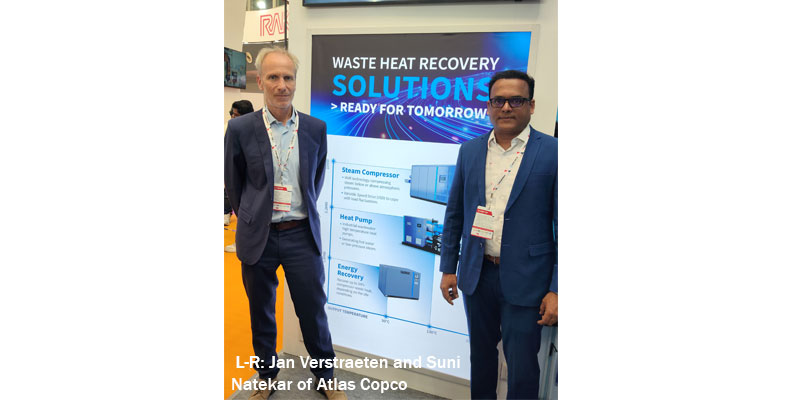
As Indian industries increasingly prioritise energy efficiency, decarbonisation and operational productivity, Atlas Copco is expanding its portfolio of oil-free compressors, industrial heat pumps, steam compressors and energy recovery solutions. In an interaction with Rakesh Rao, Jan Verstraeten, Vice President Marketing, Atlas Copco Oil-free Air Division, and Sunil Natekar, Business Line Manager – Oil-Free Air, Compressor Technique, Atlas Copco (India) Pvt Ltd, discuss emerging market opportunities, AI-enabled technologies, product innovation and the company's growth plans for India.
How is Atlas Copco positioned in India, and what are the key focus areas of your business?
Sunil Natekar (SN): Atlas Copco has had a presence in India for more than seven decades, with manufacturing operations concentrated around Pune. Globally, the company operates across four principal business areas: Compressor Technique, Vacuum Technique, Industrial Technique and Power Technique.
We represent the Compressor Technique business, which offers a comprehensive range of compressed air solutions, including oil-injected, oil-free, centrifugal and turbo compressors.
We are now expanding beyond conventional compressed air solutions into industrial heating and cooling technologies. Our portfolio includes steam compressors, industrial heat pumps, chillers and adiabatic coolers. We are introducing these technologies to Indian customers to address their evolving requirements for energy efficiency and sustainability.
How important is India to Atlas Copco's global growth strategy?
Jan Verstraeten (JV): India is becoming increasingly important to Atlas Copco's global operations. The country's expanding economy, industrial investments and significant growth potential make it a strategic market for us. We see tremendous opportunities as industries modernise their manufacturing facilities and seek more efficient technologies. Consequently, India remains a high-priority market for introducing innovative products and expanding our solutions portfolio.
What are the key priorities driving Atlas Copco's product development and innovation?
JV: Energy efficiency is central to our innovation strategy. We are particularly focused on developing technologies that reduce energy consumption and convert waste heat into useful process energy. Industrial facilities generate considerable quantities of heat that often remain underutilised. Our objective is to help customers recover this energy and utilise it productively.
Industrial heat pumps and steam compressors are important developments in this direction. Indian customers are increasingly seeking such solutions, making this an appropriate time to introduce these technologies.
How are your solutions helping industries improve energy efficiency and reduce carbon emissions?
SN: In most industrial facilities, substantial thermal energy is wasted through processes such as steam discharge or the rejection of hot water through cooling towers. We are addressing this challenge by developing solutions that recover waste energy and convert it into useful thermal energy.
Our heat pumps and steam compressors can operate alongside existing boiler systems, helping customers optimise energy consumption, reduce fuel requirements and lower operating costs.
JV: Decarbonisation is another important objective. We are developing electrically driven solutions that can replace or reduce dependence on fossil fuel-based technologies, including coal- and gas-fired boilers. India's growing renewable electricity capacity, particularly solar energy, creates opportunities for combining clean power with energy-efficient industrial equipment.
Depending on the application and prevailing energy costs, our solutions can typically deliver payback periods of one to three years. Rising fossil fuel prices can further improve the economic attractiveness of these investments.
Is the demand for energy-efficient equipment concentrated in specific industries?
SN: Energy efficiency is no longer a priority limited to energy-intensive industries. We are observing increasing interest across small, medium and large enterprises. Sustainability has become an integral consideration in investment decisions. Rising fuel costs, geopolitical uncertainties and supply chain disruptions are encouraging manufacturers to examine their energy consumption more closely.
Our approach is therefore evolving from supplying individual equipment to providing comprehensive utility solutions.
Alongside compressors and dryers, we offer solutions for oil-free compressed air, dry air, particulate control, process filtration, heating and cooling. The objective is to help customers achieve the required performance while minimising overall energy consumption.
How is artificial intelligence being integrated into your equipment and smart solutions?
JV: Artificial intelligence is already being applied in equipment engineering and product design. We are also incorporating AI into our smart utility solutions and control systems.
These systems are becoming increasingly intelligent and self-learning. By analysing operational behaviour and adapting to actual installation conditions, they can help optimise equipment performance and energy utilisation.
SN: Many of our machines feature SMARTLINK connectivity, enabling equipment monitoring and analysis of operating patterns. Our central controllers can manage multiple compressor installations according to changing demand. For instance, compressed air requirements may vary significantly between production shifts.
By analysing peak and minimum demand, the system can optimise the operation of variable speed drive compressors and other installed equipment. We also use data analytics internally to understand industry demand trends and identify emerging customer requirements, supporting both product development and market engagement.
Which industries are generating significant demand for your solutions in India?
SN: We are witnessing encouraging demand across several sectors. Metals, renewable energy, food processing and pharmaceuticals continue to perform well. We are also seeing renewed activity in chemicals and textiles, supported by investment prospects and developments in international trade.
Looking ahead, semiconductors and electronics manufacturing represent major opportunities over the next decade, particularly with increasing government support and investment. These industries require highly reliable, contamination-free compressed air. Our oil-free compressors are particularly relevant wherever compressed air comes into direct contact with products or sensitive manufacturing processes.
We also offer air-drying technologies capable of achieving pressure dew points as low as minus 90°C, depending on application requirements.
For process industries, industrial heat pumps and steam compressors provide additional opportunities to improve thermal efficiency and reduce dependence on conventional boiler systems.
What new products can Indian customers expect in 2027?
JV: We are at an early stage in expanding our heating and cooling portfolio in India. During 2027, we plan to introduce several innovative products, including chillers, adiabatic coolers, industrial heat pumps and steam compressors. We are already receiving initial customer orders, indicating encouraging market interest.
Another important development is the introduction of locally manufactured energy recovery solutions in early 2027. These products have been available internationally, with manufacturing primarily based in China and Europe. We now intend to introduce Made-in-India energy recovery solutions.
How will these energy recovery systems benefit industrial customers?
JV: Water-cooled compressors generate substantial heat during operation, which is normally transferred to cooling water. Our energy recovery systems capture this thermal energy and make it available for useful industrial applications. For instance, recovered hot water can be used for boiler feedwater preheating or other process-heating requirements.
These systems can provide hot water at temperatures of up to 90°C, making them suitable for industries such as food processing, chemicals, textiles, automotive and semiconductors. Essentially, any industrial facility requiring hot water could potentially benefit from recovering heat that would otherwise be wasted.
Are there plans to expand manufacturing capacity in India?
SN: We commissioned a new manufacturing facility last year, strengthening our production capabilities in India. We also have space available for further expansion at our existing manufacturing locations around Pune.
As demand increases and our product portfolio expands, these facilities provide opportunities to enhance manufacturing capacity in the coming years. Our broader objective is to strengthen our presence in India while supporting customers with efficient, sustainable and increasingly intelligent industrial solutions.
Energy efficiency
decarbonisation
Atlas Copco
oil-free compressors
industrial heat pumps
steam compressors
energy recovery solutions
Rakesh Rao
Jan Verstraeten
Sunil Natekar
Compressors
Related Stories
Aerospace Defence

Igus Unveils Lubrication-free Ball Transfer Units for Aviation
The FAA-compliant solution from igus combines lightweight construction and high load capacity with permanently lubrication-free operation. Xiros hollow ball transfer units reduce weight in cargo air..
Read morePumps & Valves
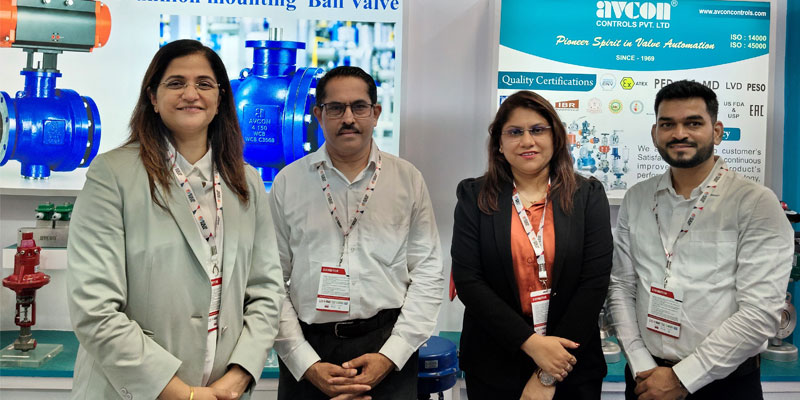
Avcon Controls Eyes Global Growth with Smart Valves
The company is focusing on specialised products, automation and exports to meet evolving industrial demands and expand into higher-value markets, writes Rakesh Rao.
Read moreOther Industrial Products
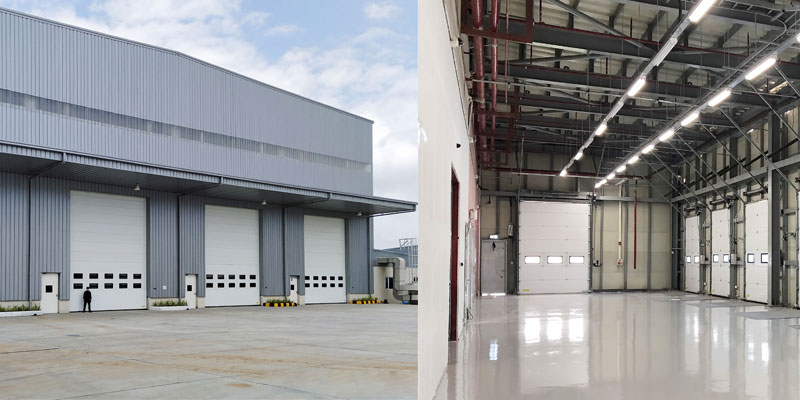
Gandhi Automations' Sectional Overhead Doors for Unrivalled Safety
These doors combine durability, thermal insulation and safety features to improve industrial efficiency
Read moreRelated Products
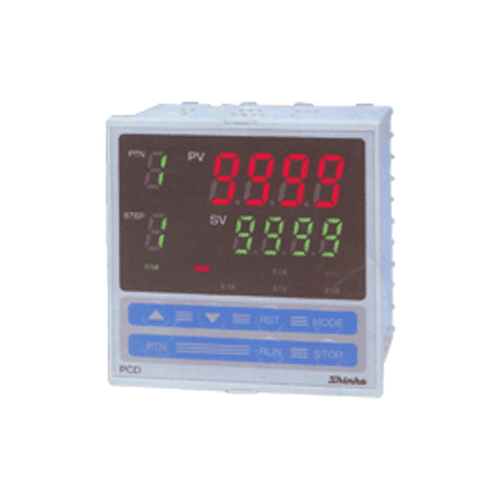
Programmable Controllers - Pcd-33a Series
CHEMICAL PROCESS, FOOD/PHARMA EQUIPMENT & ANALYTICAL INSTRUMENTS
Pro-Med Instruments (P) Ltd offers a wide range of programmable controllers - PCD-33A Series.
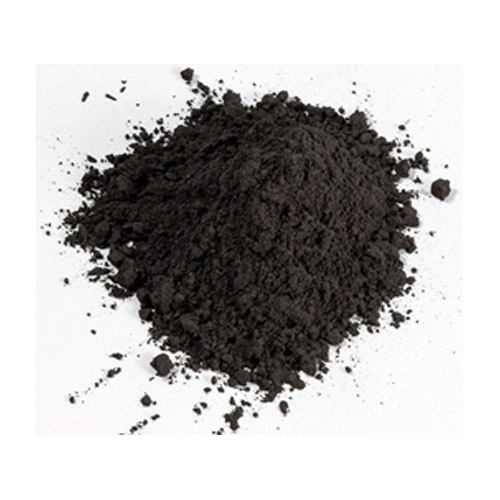
Gasket Graphite Powder
CHEMICAL PROCESS, FOOD/PHARMA EQUIPMENT & ANALYTICAL INSTRUMENTS
Arihant Packing & Gasket Company offers a wide range of gasket graphite powder.
Asahi Kasei expands 3D printing filament sales in North America
CHEMICAL PROCESS, FOOD/PHARMA EQUIPMENT & ANALYTICAL INSTRUMENTS
Asahi Kasei, a leading resin and compounding technology provider, has initiated the sales of 3D printing (3DP) filaments in North America through Asahi Kasei Plastics North America (APNA). The soft la Read more
latest News
Subscribe to iNoW

For Industry News on WhatsApp, Give a Miss Call on: +91 84228 74016