






Schedule a Call Back


Intelligent Warehouses: Building the Future of Supply Chains
 Articles
- Sep 26,26
Warehouses are transforming from traditional storage facilities into intelligent, connected and automated ecosystems powered by AI, robotics, IoT and digital infrastructure to create faster, safer and more resilient supply chains, writes Rakesh Rao.
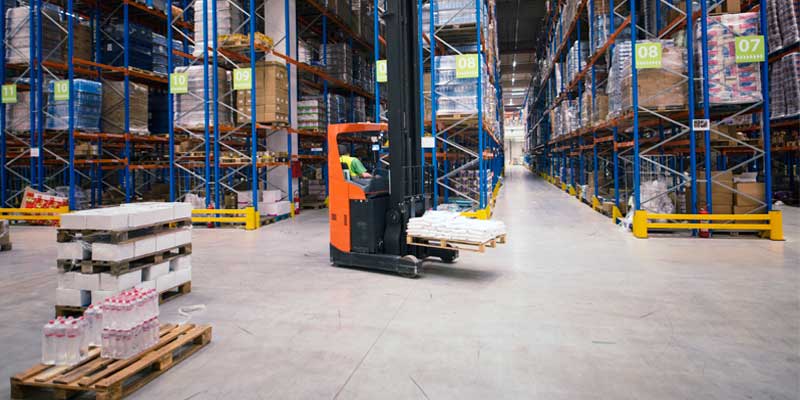
For decades, warehouses were perceived primarily as storage locations — physical spaces where goods were received, stored and dispatched. Their success was measured by parameters such as storage capacity, inventory holding and operational efficiency. However, the role of warehouses is undergoing a fundamental transformation.
Driven by changing customer expectations, shorter delivery timelines, supply chain disruptions and the growing need for real-time visibility, warehouses are evolving into intelligent, connected and automated ecosystems. They are no longer passive storage points but strategic assets that influence business agility, customer experience and supply chain competitiveness.
The emergence of warehouse automation represents a much larger shift than simply installing robots or replacing manual activities. It reflects the transition towards agile supply chain networks where infrastructure, digital technologies, data analytics and human expertise work together to improve efficiency, safety and responsiveness.
This transformation is closely aligned with the evolution of Industry 4.0. As organisations adopt connected systems, robotics, artificial intelligence (AI), Internet of Things (IoT) and advanced analytics, warehouses are becoming critical nodes within digitally integrated supply chains.
The warehouse of the future will not be defined only by its physical size or storage capacity. Instead, its success will depend on its ability to provide real-time visibility, adapt to changing business needs and seamlessly integrate with wider supply chain networks.
Building resilient supply chains through visibility
Modern supply chains operate in an environment shaped by uncertainty. Global sourcing networks, geopolitical developments, fluctuating demand patterns and changing customer expectations have increased complexity for businesses across sectors. For industries such as automotive and engineering, where production schedules depend heavily on the timely availability of components and materials, supply chain resilience has become a strategic priority.
In the context the growing complexity faced by supply chain professionals today, Om Vijayvargiya, Head – SCM & Logistics, Schaeffler India, states, “Nowadays, the situation is so dynamic that every day we are finding that new challenges are arising in our supply chains. Especially global sourcing and demand volatility of the automotive market are really making the job of supply chain managers more difficult.”
According to him, disruptions at one point in the global supply chain can create cascading impacts across regions and industries. One of the most important requirements for improving resilience is visibility. “Visibility of the consignment is one area. If any supply chain manager has real-time visibility of the consignment, then in any kind of delays, or sometimes even early arrival, the supply chain manager can take the right decision,” he explains.
Technology-driven visibility platforms are enabling organisations to monitor material movement across transportation networks and make faster operational decisions. However, visibility alone is not enough. Companies are also focusing on developing alternative sourcing strategies and flexible logistics networks to reduce dependency on single routes or locations.
“Depending on one particular port operation is not a good idea. We have to create different options. If, by any chance, one port is closed, then can we use another port to move or receive the material?” Vijayvargiya says.
Beyond alternate routes, businesses are increasingly exploring near-shoring. “If global sourcing is there, then near-shoring is a very important area where we have to shift our supplier base nearby India so that my risk will be minimised,” he adds.
However, Vijayvargiya emphasises that resilience cannot be achieved through a universal approach. Every organisation needs to evaluate its own requirements and develop strategies according to its business environment.
Warehouse automation is part of a larger transformation taking place across logistics networks. This shift towards Logistics 4.0 focuses on creating connected ecosystems where information flows seamlessly between transportation, warehousing and fulfilment operations.
According to Anil Syal, President, Safexpress Pvt Ltd, transparency and visibility have become essential elements of modern supply chains. “Logistics 4.0 is closely linked to the broader Industry 4.0 movement, which integrates cyber-physical systems, robotics, control systems, instrumentation and interconnected processes. Logistics 4.0, which is basically nothing else but a subset of Industry 4.0, has become extremely relevant. Logistics 4.0 represents the application of these principles across supply chain operations,” Syal explains.
The biggest advantage of this transformation is the ability to track goods throughout their entire journey — whether they are moving through transportation networks, ports or warehouses. This visibility enables better planning, improved asset utilisation and more efficient logistics operations. “Right from the pre-planning stage to production, post-production, all that visibility is transmitted well in advance to transportation systems… which eventually then moves into better planning and better efficient use of assets,” Syal says.
The role of logistics has also evolved significantly. Once considered a supporting function, logistics has now become central to business strategy. “Logistics has now become so omnipresent that businesses can't imagine not aligning themselves strategically with how their goods are going to get planned, when goods are going to get stored and goods are going to get sold,” Syal observes.
Automation readiness
One of the biggest challenges organisations face while adopting warehouse automation is ensuring that existing facilities can support advanced technologies. While every company may not immediately invest in robotics, automated storage and retrieval systems (ASRS) or advanced material handling systems, warehouse facilities need to be designed with future integration in mind.
Highlighting that automation readiness should become a fundamental principle in warehouse planning, Arif Siddiqui, Founder, Coign Consulting, says, “Even if a company is not investing in robotics or ASRS today, the building should be capable to support these installations in the future.”
This requires careful consideration of several infrastructure parameters, including:
- Adequate clear heights to support high-density storage systems
- Larger column spacing for flexible warehouse layouts
- Higher floor loads to accommodate automated equipment
- Availability of sufficient power infrastructure
- Digital connectivity and communication networks
- Layouts that support automated material handling systems
“These aspects need to be considered from a retrofitting perspective,” he explains.
As warehouses become increasingly automated, structural design will play a decisive role in determining how easily organisations can integrate new technologies. A warehouse designed without future requirements in mind may face significant challenges when attempting to introduce automation solutions later. In contrast, facilities designed for adaptability can gradually adopt technologies as business needs evolve.
Automation introduces a new dimension of operational complexity. As warehouses adopt automated guided vehicles (AGVs), autonomous mobile robots (AMRs), conveyors, robotics and high-density storage systems, safety becomes a critical consideration.
According to Siddiqui, safety cannot remain only a compliance requirement. It must become an integral part of warehouse design.
Modern warehouses often involve large-scale structures, high storage systems and the simultaneous movement of people, machines and equipment. “We are seeing several developments with the infusion of machines, mechanical tools and equipment, automated AGVs, ASRS and so many things, especially when you look at heights of warehouses, installations at rooftops at 12, 14, 16 metres and number of vehicles coming in. Smart warehouses cannot succeed without safe warehouses. The increasing complexity of warehouse operations makes safety-by-design essential,” Siddiqui explains.
Safety considerations must include fire protection systems, structural integrity, safe movement of employees and secure movement of equipment. As automation expands, safety will become one of the key differentiators between traditional storage facilities and future-ready intelligent logistics assets.
The modern warehouse is no longer only a physical facility. It is increasingly becoming a digital ecosystem where data continuously flows between systems, machines and decision-makers. “Digital infrastructure is now very important, as physical infrastructure. Warehouses should be designed with robust data networks and data connectivity,” Siddiqui says.
Future warehouses will require IoT readiness, sensor integration and seamless connectivity with warehouse management systems (WMS) and warehouse control systems (WCS). “This is necessary for the enterprise to perform,” he adds.
The objective of a smart warehouse is not limited to storing inventory. Instead, it is about generating operational intelligence. Data generated through sensors, connected systems and warehouse platforms can help organisations understand inventory movement, identify operational bottlenecks, improve fulfilment accuracy and make faster decisions. The warehouse of the future will therefore function as an intelligent decision-making centre rather than a passive storage location.
Summarising the future warehouse design philosophy, Siddiqui says, “Future-ready warehouse designs rest on fundamentally three pillars — future-proofed infrastructure, intra-logistics, which is related to warehouse layout design, digital readiness and human-centric operations. When you get these fundamentals right, automation becomes much easier to adopt.”
Robotics: Moving beyond labour replacement
The adoption of robotics in warehouses is accelerating as organisations look beyond conventional operating models and explore ways to improve speed, accuracy, safety and scalability. Autonomous mobile robots (AMRs), automated guided vehicles (AGVs) and robotic systems are increasingly becoming part of modern warehouses and manufacturing environments. However, industry experts believe that the real value of robotics lies not simply in replacing manual activities, but in creating connected and intelligent operations.
Raghu Venkatesh, Co-founder and CBO, ANSCER Robotics, believes that warehouse automation requirements vary depending on operational objectives and business models. For organisations managing complex supply chains, the ability to adapt quickly during disruptions has become increasingly important. Warehouses must be capable of responding to changing demand patterns, market conditions and unforeseen events. “If there is a scenario of a war and you want to redistribute your whole thing, then you might have to reset up your whole material flow,” he explains.
One of the biggest challenges for organisations adopting automation is integrating new technologies into existing facilities. Many businesses already have significant investments in warehouses and infrastructure, making adaptability a critical requirement.
According to Venkatesh, automation solutions must address both future requirements and current operational realities. This approach is particularly important in India, where warehouses differ significantly in terms of infrastructure maturity, layouts, operational practices and technology adoption levels.
As robotics adoption increases, the role of humans in warehouse operations is evolving. The future is not expected to be defined by machines replacing people, but by collaboration between humans and technology. Warehouses of the future will require environments where employees and robots can work together safely and efficiently.
This shift is changing the way companies evaluate automation investments. Earlier, automation decisions were often driven primarily by labour availability or cost reduction. Today, organisations are considering broader benefits such as productivity improvement, safety enhancement and operational visibility.
The next generation of robotic solutions will focus on improving material movement, enhancing traceability and creating greater visibility across warehouse processes.
For companies managing multiple customers, product categories and complex inventories, traceability will become increasingly important. By combining robotics with digital systems, warehouses can achieve better control over inventory movement, reduce errors and improve operational reliability.

AI applications: Optimising space, efficiency and sustainability
While robotics is transforming physical warehouse operations, artificial intelligence is changing how organisations analyse information and make decisions. Highlighting the growing importance of digital technologies in logistics operations, Om Vijayvargiya says, “Digital technologies such as IoT, analytics and AI are becoming increasingly important in logistics operations. IoT-based visibility solutions are already being widely used across industries.”
While quick commerce has demonstrated the value of real-time tracking for consumers, similar capabilities are now becoming increasingly relevant for industrial supply chains. Earlier, companies often depended heavily on logistics partners for updates once goods left their facilities. Digital integration has changed this approach by enabling organisations to directly access shipment information.
However, according to Vijayvargiya, the next major transformation will come from applying artificial intelligence to analyse operational data. One of the biggest advantages of AI is its ability to analyse large volumes of operational information and identify improvement opportunities that may not be visible through conventional methods.
Vijayvargiya shared an example where AI helped improve warehouse utilisation. “Our 3PL partner was saying warehouse is full and we don't have space available, we have to go for expansion. But with the help of AI, we did complete analysis and found that if we go for consolidation of material at the warehouse, we can create one-third empty positions,” he explains.
The ability to analyse inventory patterns quickly helped identify opportunities for better space utilisation. “AI is giving me, within a few seconds, clear information on which locations can be consolidated based on batch number and weight,” he adds.
Beyond warehouse optimisation, AI is also improving administrative and financial processes. He highlighted invoice verification as another area where artificial intelligence can improve efficiency.
“We are receiving so many invoices every month, and now business is growing. It is not easy to check the data clearly by human beings. There is an AI system available where service providers upload invoices and immediately the system checks everything according to contract details,” he said.
AI-driven optimisation is also contributing to sustainability by helping organisations reduce unnecessary movement, improve route planning and lower emissions. As companies increasingly focus on environmental responsibility, data-driven decision-making will become a key enabler for sustainable logistics operations.
Automation investment: Looking beyond traditional RoI
While technology remains central to warehouse transformation, industry leaders believe that the biggest barrier to automation adoption is not always investment or infrastructure. In many cases, it is the willingness of organisations to change traditional approaches. The transition towards smart warehouses requires businesses to rethink supply chain design, operational practices and decision-making models.
Anil Syal highlighted that building resilient supply chains requires a fundamental shift in organisational thinking. Historically, supply chains in India were often designed around regulatory requirements rather than operational efficiency. The introduction of GST created opportunities for organisations to redesign supply chains based on operational efficiency and business needs.
“When GST came in 2017, it flatlined the requirement of statutory reasons as to where and how you should plan your supply chain. However, many organisations have been slow to completely redesign their networks despite these opportunities,” he explains.
For Syal, the challenge is not only technological but behavioural. “The only reason I can think of is mindset. We are so resistant to change,” he observes.
A future-ready supply chain will therefore require organisations to challenge conventional practices and embrace new operating models.
One of the biggest questions organisations face while adopting automation is measuring the return on investment (RoI). While automation involves upfront investment, industry leaders believe that businesses need to evaluate benefits beyond direct labour savings.
Raghu Venkatesh states that organisations often approach automation with an incomplete understanding of its value. “One of the biggest misconceptions people make when they do automation is that if there are five people working and they have labour shortage, can robots fulfil and get me ROI?” he says.
According to him, automation should not be viewed only as a replacement for human resources. Instead, it should be evaluated based on improvements in productivity, safety, traceability and operational performance, he adds.
Modern warehouses already generate large volumes of operational data through warehouse management systems and connected platforms. Automation enables organisations to use this information more effectively.
By improving visibility into material movement, organisations can optimise inventory levels and reduce unnecessary storage requirements. “We have customers who have reduced their warehouse space up to 20 per cent because they only initially used to hoard excess raw material,” he says.
Improved material flow visibility also enables better production planning and reduces operational delays. “The moment you can track your material flow, you can do improvements,” Venkatesh adds.
The road ahead for smart warehousing
While warehouse automation technologies are advancing globally, India presents unique challenges that require customised solutions. Warehouses across the country vary significantly in terms of infrastructure quality, layouts, operating practices and levels of technology adoption.
According to Venkatesh, automation solutions need to be designed specifically for Indian operating conditions. “One of the things we had to understand was that we have to build robots for general people, not for engineers,” he explains.
Ease of use will become increasingly important as automation expands across different industries and business sizes. Indian warehouses also face challenges related to existing infrastructure limitations. Many facilities may not have standardised layouts, advanced flooring systems or automation-ready designs.
Highlighting the importance of developing adaptable solutions, Venkatesh says, “How do you retrofit robots to existing facilities where they might not even have epoxy flooring, they might have cemented flooring? How do you engineer things for India?”
Such solutions will be critical for expanding automation beyond large, modern facilities and enabling adoption among a wider range of businesses.
The transformation of warehousing is expected to accelerate as businesses increasingly recognise logistics as a strategic capability rather than merely an operational function.
According to Siddiqui, “Ultimately, warehouses for the future will not actually be viewed merely as storage facilities. They will be digitally connected, safe, sustainable and intelligent logistics assets.”
The warehouses that succeed in the coming decade will not necessarily be the largest in terms of physical size. Instead, success will depend on adaptability, transparency, safety and operational intelligence.
“The warehouses that will succeed in the next decade are not necessarily the biggest warehouses in size, but the ones that are safest, smartest, most transparent and most adaptable to change,” Siddiqui explains.
As business models continue to evolve, warehouse infrastructure will need to become increasingly flexible. “Businesses by themselves, in their maturity, will constantly keep changing. Therefore, versatility of the infrastructure will become a key success factor,” he adds.
Warehouse automation is emerging as one of the most important drivers of supply chain transformation in India. However, the future will not be defined by automation alone. The organisations that succeed will be those that effectively combine technology, infrastructure and human capability.
From AI-driven decision-making and robotics-enabled operations to connected infrastructure and predictive analytics, smart warehouses will create faster, safer and more resilient supply chains. Warehouses are no longer simply places where goods are stored. They are becoming strategic business assets that support competitiveness, customer experience and long-term growth.
The next generation of warehouses will belong to organisations that are prepared to adapt, innovate and build for the future.
(This article is based on an online Panel Discussion – titled “Smart Warehouses, Resilient Supply Chains” – organised by Smart Manufacturing & Enterprises and Future Factory Expo 2027)
Smart warehouses
warehouse automation
Logistics 4.0
Industry 4.0
robotics
artificial intelligence
IoT
supply chain resilience
digital transformation
warehouse infrastructure
Anil Syal
Safexpress
Arif Siddiqui
Coign Consulting
Om Vijayvargiya
SCM & Logistics
Schaeffler India
Raghu Venkatesh
ANSCER Robotics
Auto Components
Rakesh Rao
Future Factory Expo
Related Stories
Machine Tools & Accessories
Intelligent Warehouses: Building the Future of Supply Chains
Warehouses are transforming from traditional storage facilities into intelligent, connected and automated ecosystems powered by AI, robotics, IoT and digital infrastructure to create faster, safer a..
Read moreSmart Manufacturing

Bridgestone: Building the Tyres of Tomorrow
As manufacturing enters a digital era, Bridgestone India is transforming its plants through automation, data-driven intelligence and sustainable practices. Ashlin Rajan explores this journey with Ud..
Read moreAuto & Auto Components

Automation boosts control and visibility across production: Rajat Kulshreshtha
As steel manufacturing moves towards smarter, connected operations, Ashlin Rajan speaks with Rajat Kulshreshtha, CBO, BMW Industries Limited, on technology-led transformation in downstream industry.
Read moreRelated Products

Carbide Burrs
ABRASIVES & FINISHING EQUIPMENT
SRT Industrial Tools & Equipments offers a wide range of carbide burrs.

Jamshedji Soil Compactor
ABRASIVES & FINISHING EQUIPMENT
Jamshedji Constro Equip Pvt Ltd offers a wide range of jamshedji soil compactor.

Ground Pins
ABRASIVES & FINISHING EQUIPMENT
Hans Machineries Private Limited offers a wide range of pins, hardened & ground. Read more
latest News
Subscribe to iNoW

For Industry News on WhatsApp, Give a Miss Call on: +91 84228 74016