









Schedule a Call Back


TotalEnergies to invest $300 mn in Adani Green Energy JV for 1 GW RE facility
 Industry News
- Sep 21,23
The focus of the JV will be on the development of infrastructure related to renewable energy, particularly in the domains of solar and wind energy.
TotalEnergies, a French company, is nearing the final stages of an approximately $300 million investment in a new joint venture (JV) with Adani Green Energy. This collaborative endeavour aims to establish a facility with a capacity of nearly 1 GW for renewable energy projects, according to sources familiar with the matter cited by the newspaper.
Ownership of the JV will be evenly divided between the two partners. The focus of the JV will be on the development of infrastructure related to renewable energy, particularly in the domains of solar and wind energy. The report specifies that the assets will encompass 250 MW of operational capacity, 500 MW under construction, and 250 MW in planned projects.
This news is noteworthy as it reflects a change in strategy for the French energy company, especially after it had previously put a $4 billion green hydrogen project on hold with the Adani Group in February. This pause came following the release of a report by Hindenburg Research that raised questions about the Adani Group's credentials.
The Hindenburg report accused the Adani Group of engaging in stock price manipulation of listed companies and accounting irregularities. The Adani Group has vehemently denied these allegations. Nevertheless, the value of Adani Group stocks plummeted after the report's publication and has yet to fully recover.
TotalEnergies will contribute $300 million through equity investment to the JV, while Adani Green will contribute by developing renewable energy assets. Discussions between the two companies are in their final stages, with an official announcement expected in the coming days.
TotalEnergies currently holds a 19.75% stake in Adani Green Energy, making it the second-largest shareholder after the promoters, who maintain control over approximately 56.27% of the company. In addition to Adani Green, Adani Group and TotalEnergies also have a partnership in another publicly listed joint venture, Adani Total Gas.
Despite the challenges, Adani Green Energy's shares have experienced significant fluctuations, losing more than 45% of their value since the beginning of the year. This comes despite a previous climb of nearly 130% from their 52-week low of Rs 439.35 per share in late February, following the release of the Hindenburg report.
Source: Business Standard
Keywords – TotalEnergies, Adani Green Energy, Renewable Energy Projects, $300 Million Investment, Adani Group, TotalEnergies Stake, Adani Total Gas
Section – Power Generations and Energy Conservation
Indian govt mulls wearable production incentives to boost local manufacturing
Intro – The Indian government is considering the implementation of a Production-Linked Incentive (PLI) program aimed at wearable technology, which includes hearing devices, in order to stimulate local production by both domestic and international companies.
A senior official from the Ministry of Electronics and Information Technology, who wished to remain anonymous, mentioned, "We are assessing the necessity for such a scheme. The wearable technology category is experiencing rapid growth among consumer goods. Indian brands have been performing admirably, encompassing design and manufacturing, and they exhibit a high level of competitiveness."
PLI schemes are designed to promote local manufacturing through incentives. They enable companies to supply domestically produced goods to both domestic and international markets. Numerous electronics manufacturing and service companies have already begun exporting smartphones and other electronic devices.
This move to evaluate the need for a PLI scheme for wearables comes after the successful introduction of PLIs for 14 sectors, starting with mobile phones in 2020. These initiatives have led to a surge in exports by major manufacturers such as Apple and Samsung. Other brands have also increased their local production capabilities and the value addition to goods manufactured in India.
While plans for hearables and wearables are in the early stages, industry stakeholders believe that this initiative could significantly enhance localisation efforts for Indian brands. Currently, Indian brands account for 75% of the entire wearable and audio products segment in India, with around 55% of these products being manufactured within the country. This figure is expected to rise to 90% within the next three years, as per industry executives.
Counterpoint Research estimates suggest that the wearables and audio products sector could become an $11 billion industry in India by 2028. The introduction of a PLI scheme is expected to help establish a robust supply chain and alleviate the pressure on the profit margins of popular brands.
A senior executive from a leading wearables company stated, "A PLI for this sector makes sense as it would provide additional incentives for us to increase our production here. This, in turn, would generate more employment opportunities. Even though the direct beneficiaries of the incentives would be contract manufacturers, local assembly would reduce our per-unit costs. This has the potential to reduce import duties on components by up to 5%, further boosting our margins."
The Indian market is currently dominated by local brands such as Fire-Boltt, Noise, and boAt, which collectively hold a 75% share in the smartwatch market. boAt, Boult Audio, OnePlus, Noise, and Mivi are the top five brands in the true wireless stereo (TWS) segment. boAt, as of June, held the third position globally with a 6% share in TWS shipments.
In the smartwatch segment, Indian brands have increased their global market share to 34% as of June, up from 22% in June 2022. Noise alone has a 10% global market share in smartwatches, according to Counterpoint.
Industry experts anticipate that the wearables and hearables market in India, which saw over 100 million units shipped last year with a value of around $4 billion, will continue to grow. By 2028, it is projected to reach $11 billion, primarily driven by increased demand and shipments rather than a significant increase in average selling prices (ASPs).
Key players in the industry have already made substantial efforts towards local manufacturing. Noise mentioned that it manufactures approximately 95% of its products in India, producing over 1 million smartwatches every month. boAt similarly stated that nearly 65% of its earwear products and 90% of wearables are assembled locally.
IDC predicts that 2023 will see 130-140 million wearables shipped, with approximately 70% expected to be earwear. However, due to the lower ASP of wearables compared to smartphones, the overall value of these shipments will be lower, according to Navkendar Singh, Associate Vice-President, India, IDC.
Reports have also indicated that contract manufacturer Foxconn is planning to establish a plant in India to manufacture Apple's AirPods, further contributing to localisation efforts.
Analysts believe that the implementation of the PLI scheme will bolster localisation initiatives in the industry. Given India's robust supply chain for increased local assembly, it could also play a significant role in achieving export targets.
The industry is eagerly anticipating the rollout of the wearable PLI scheme, with numerous Indian brands and manufacturers, including Dixon Technologies, poised to benefit from it.
Source: Mint
Fire-Boltt
Noise
boAt
OnePlus
Noise
Mivi
Boult Audio
Apple's AirPods
Foxconn
Dixon Technologies
Navkendar Singh
true wireless stereo
PLI Scheme
Related Stories
Smart Manufacturing
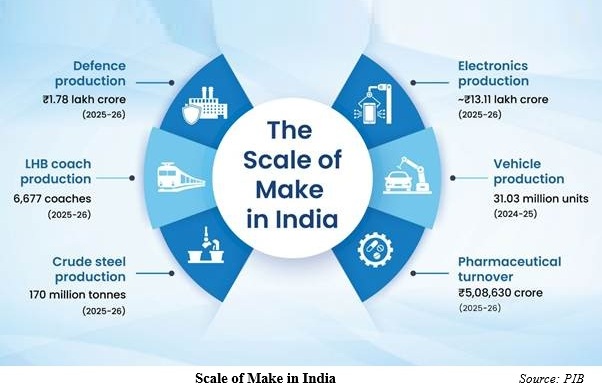
12 Years of Make in India: A look at India’s manufacturing progress
Over the past 12 years, India has expanded manufacturing across key sectors, with the next phase hinging on stronger domestic value addition and increasing global competitiveness.
Read moreElectrical & Electronics

From Modules to Materials: India’s Roadmap for Solar Manufacturing Leadership
India’s solar manufacturing journey is entering a new phase, driven by policy initiatives, domestic demand and global opportunities. The NITI Aayog report outlines the roadmap to build a resilient..
Read moreAuto & Auto Components

India’s PV and CV sales surge as EVs, infrastructure drive growth
India’s passenger and commercial vehicle markets are expanding on policy support, infrastructure growth, rising incomes, exports and faster EV adoption.
Read moreRelated Products
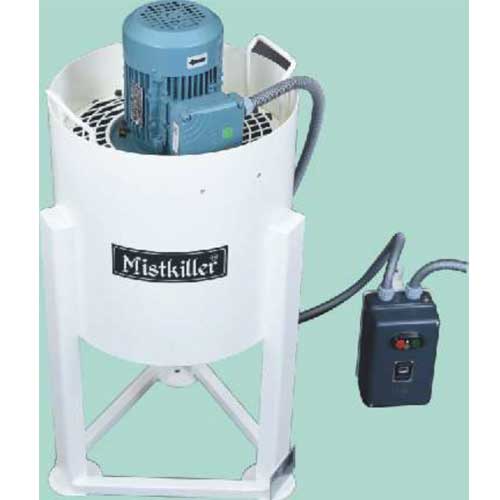
Mistkiller™
Miscellaneous Industrial Supplies
Mistkiller™, is a trademarked, high-efficiency centrifugal mist collector, designed , developed and manufactured for the control of most types of mist , generated by the use of water-based coolants Read more
Dustbag® Reverse-pulsed-jet(Rpj
Miscellaneous Industrial Supplies
Powertech Pollution Controls Pvt Ltd offers a wide range of Dustbag® reverse-pulsed-jet(RPJ).
Read more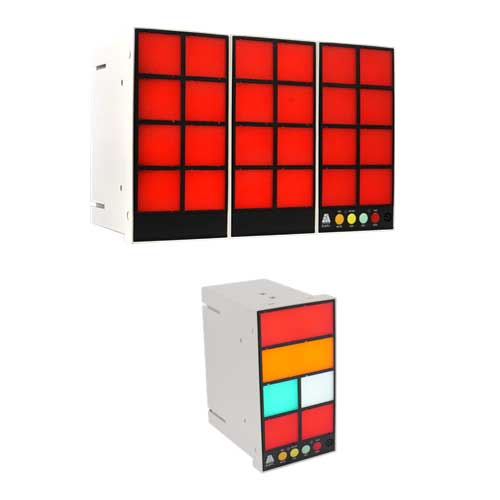
M3 Series Annunciators
Miscellaneous Industrial Supplies
EAPL offers a wide range of M3 Series Annunciators, providing smart fault-monitoring solutions for industrial control panels and delivering advanced engineering solutions for efficient and reliable Read more
latest News
Subscribe to iNoW

For Industry News on WhatsApp, Give a Miss Call on: +91 84228 74016