







Schedule a Call Back


India's Food Processing Boom Drives Demand for Advanced Equipment
 Articles
- Oct 28,26
India's growing food processing industry is driving demand for advanced machinery, automation and efficient packaging technologies.

Driven by changing consumption patterns, expanding organised retail, government incentives and increasing demand for packaged foods, India's food processing industry is entering a new phase of growth. The transformation is also creating opportunities for manufacturers of processing machinery, automation systems and food safety technologies.
Experts believe that India's food processing industry and the equipment market supporting it are poised for sustained expansion in the next five years. While the broader industry is benefiting from rising consumption and investments in value-added products, equipment manufacturers are witnessing growing demand for automation, higher productivity, hygienic processing and efficient packaging solutions.
Moving towards value addition
India's food processing market is estimated to reach $474.7 billion in 2026, compared with $440.7 billion in 2025. According to IMARC Group, the market is projected to expand to $877.8 billion by 2034, registering a compound annual growth rate (CAGR) of 7.72 per cent during 2026-2034.
The industry's expansion reflects a structural shift from traditional, largely fragmented processing activities towards organised, technology-driven manufacturing. Rising urbanisation, changing dietary preferences and growing demand for convenient food products are encouraging manufacturers to invest in processing infrastructure, product development and distribution capabilities.

Packaged foods accounted for 26.8 per cent of the Indian food processing market in 2025, followed by dairy at 21.7 per cent. The increasing popularity of ready-to-eat meals, frozen foods, instant snacks and branded staples has strengthened the position of packaged food manufacturers.
The dairy industry is also evolving beyond conventional milk processing towards higher-value products such as cheese, yoghurt and flavoured milk. Meanwhile, beverages have emerged as one of the fastest-growing segments, supported by rising demand for ready-to-drink products, functional beverages and health-oriented formulations.
Another emerging opportunity is plant-based and alternative-protein foods, including soy-based products and pulse-derived protein alternatives. Although the segment remains relatively small, changing consumer preferences are encouraging product innovation.
Western India accounted for the largest regional share at 32.4 per cent in 2025, followed by North India at 28.7 per cent, South India at 22.6 per cent and East India at 16.3 per cent. Maharashtra's established processing clusters, Gujarat's dairy ecosystem and proximity to major ports contribute to western India's leadership. Eastern India, meanwhile, is emerging as a faster-growing market, supported by food parks, aquaculture development and expanding retail networks.
Government initiatives, including the Production Linked Incentive (PLI) Scheme for Food Processing and mega food parks, are supporting capacity additions and industrial infrastructure development.
Cold chain infrastructure is becoming equally important. IMARC Group valued India's cold chain market at Rs 2,535.87 billion in 2025, reflecting the scale of temperature-controlled storage and distribution requirements.
Export-oriented processing offers another growth avenue, particularly for spices, marine products, packaged foods and ethnic snacks.

Challenges to sustained growth
Despite its potential, the industry faces structural constraints. Inadequate post-harvest infrastructure, fragmented agricultural supply chains and seasonal raw material availability affect production efficiency and input costs. Food safety compliance is another significant consideration. Evolving Food Safety and Standards Authority of India (FSSAI) requirements relating to labelling, additives and residue limits necessitate continued investment in quality systems.
Competition from unorganised processors also places pressure on organised manufacturers, particularly those investing heavily in branding, technology and regulatory compliance. Nevertheless, these challenges are accelerating the need for modern processing infrastructure and strengthening the business case for equipment upgrades.
Automation emerges as a growth driver
The expansion of India's food processing industry is creating demand for machinery capable of supporting higher production volumes, consistent quality and improved operational efficiency.
According to IMARC Group, the Indian food processing equipment market was valued at $1.11 billion in 2025 and is projected to reach $1.55 billion by 2034, registering a CAGR of 3.66 per cent during 2026-2034.
While growth is expected to remain positive, the projected expansion of equipment demand is more moderate than that of the overall processing industry. This highlights the importance of technology differentiation, equipment productivity and application-specific innovation for machinery manufacturers.
Food manufacturers are increasingly adopting automated systems for sorting, grading, filling, sealing, packaging and inspection. Such equipment enables processors to improve throughput, reduce manual intervention and maintain consistent product quality across large production volumes.
Automation is particularly relevant to ready-to-eat foods, frozen products, bakery items, dairy processing and beverage manufacturing, where production efficiency and hygiene are critical. High-speed packaging systems, automated reject mechanisms and integrated quality inspection technologies are becoming increasingly important as manufacturers expand their processing capacities.
Artificial intelligence-based inspection systems and digital traceability technologies are also gaining attention, particularly among export-oriented manufacturers seeking stronger quality assurance.
Packaged foods create machinery opportunities
The rising consumption of packaged and convenience foods is supporting demand for specialised processing equipment. IMARC Group projects India's packaged food market to reach $210.81 billion by 2032, growing at a CAGR of 7.08 per cent during 2024-2032. This expansion is encouraging processors to invest in machinery capable of handling diverse products, packaging formats and production requirements.
Manufacturers increasingly require equipment that combines flexibility, high processing speeds and consistent quality with compliance with food safety standards. Modern processing systems are also becoming important for minimally handled and hygienically packaged foods, reflecting consumers' growing emphasis on product safety.
The expansion of online grocery platforms, food delivery services and quick-commerce channels is influencing investment decisions across food manufacturing. These distribution channels require products with consistent quality, reliable packaging and appropriate shelf life.
Consequently, processors are upgrading production lines and investing in equipment for preservation, sorting and packaging to manage fluctuating order volumes. The increasing online availability of dairy products, frozen foods and convenience snacks is also strengthening demand for specialised machinery and temperature-controlled processing solutions. For equipment manufacturers, this creates opportunities to develop systems that deliver faster production, improved packaging reliability and greater flexibility.
Future opportunities for equipment manufacturers
Looking ahead, India's food processing equipment industry is expected to benefit from increasing formalisation, technology adoption and investment in value-added food manufacturing. Equipment suppliers capable of offering integrated processing lines, automation, hygienic design and reliable after-sales support will be better positioned to address evolving customer expectations.
Demand for advanced inspection systems, energy-efficient refrigeration, automated packaging and digitally connected machinery could create additional opportunities for domestic manufacturers and technology providers. However, equipment affordability, technical capabilities and the investment constraints faced by smaller processors will remain important considerations.
Ultimately, the industry's next phase of development will depend not only on expanding processing capacity but also on improving productivity, maintaining food safety and reducing operational inefficiencies. For equipment manufacturers, the opportunity lies in delivering technologies that enable India's food processors to compete more effectively in domestic and international markets.
Article courtesy: IMARC Group
Indian Food Processing Industry
IMARC Group
Food Processing Equipment
Industrial Automation
Food Processing Machinery
Food Safety
Packaging Technology
Cold Chain Infrastructure
Industry Growth
Related Stories
Automation & Robotics

Reimagining Cable Management in the Age of Smart Manufacturing
As factories become smarter, Srinivas P Kamisetty, MD, Kabelschlepp India, explains how advanced cable management enables reliable automation and efficient manufacturing.
Read moreElectrical & Electronics

Exports doubled from Rs 61 to Rs 124 billion: Yash J Munot
Exports doubled from Rs 61 to Rs 124 billion: Yash J Munot
Read moreMachine Tools & Accessories
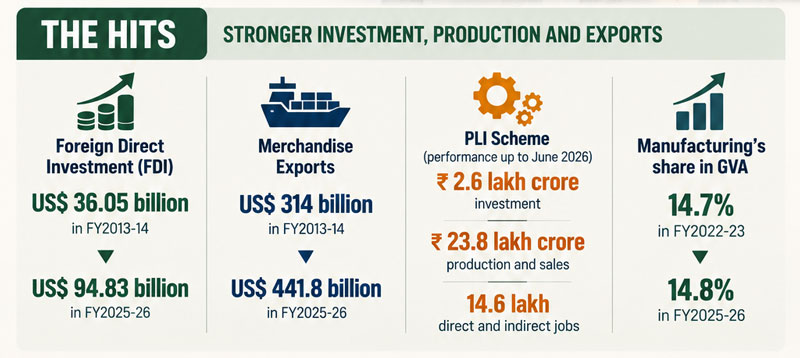
12 Years of Make in India: The Unfinished Agenda
Twelve years on, India is manufacturing more. But is it creating enough of its own technology? Industry leaders examine the gains, gaps and next big test for Make in India, writes Ashlin Rajan
Read moreRelated Products
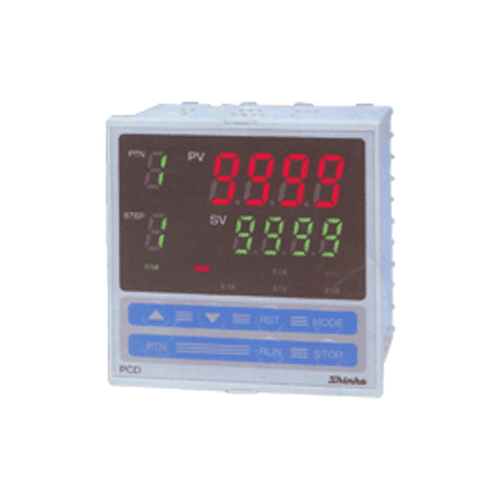
Programmable Controllers - Pcd-33a Series
CHEMICAL PROCESS, FOOD/PHARMA EQUIPMENT & ANALYTICAL INSTRUMENTS
Pro-Med Instruments (P) Ltd offers a wide range of programmable controllers - PCD-33A Series.
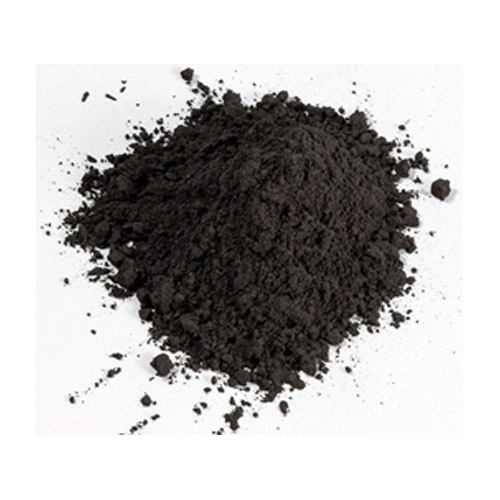
Gasket Graphite Powder
CHEMICAL PROCESS, FOOD/PHARMA EQUIPMENT & ANALYTICAL INSTRUMENTS
Arihant Packing & Gasket Company offers a wide range of gasket graphite powder.
Asahi Kasei expands 3D printing filament sales in North America
CHEMICAL PROCESS, FOOD/PHARMA EQUIPMENT & ANALYTICAL INSTRUMENTS
Asahi Kasei, a leading resin and compounding technology provider, has initiated the sales of 3D printing (3DP) filaments in North America through Asahi Kasei Plastics North America (APNA). The soft la Read more
latest News
Subscribe to iNoW

For Industry News on WhatsApp, Give a Miss Call on: +91 84228 74016