








Schedule a Call Back


How AI is reshaping manufacturing productivity and investments
 Articles
- Sep 03,26
AI is transforming manufacturing by improving productivity, reducing waste and enabling smarter investments through IoT, automation and digital technologies, writes R Jayaraman.

I remember how, some seven or eight years ago, we used the below diagram for representing IoT or IIoT (Industrial IoT) – Figure 1. For those who may have forgotten, IoT stands for Internet of Things.
Figure 1 was also often accompanied by another Figure 2.

Much has happened in manufacturing since these figures were used to represent the status. AI became the leading change-maker, using IoT as the basis and cloud computing as its foundation. AI is characterised by data processing and analysis. This data processing has been enabled through 5G connectivity and cloud computing techniques, supported by data centres.
Although data centres are not new in India – in fact, Tata Communications (VSNL at that time, during 2003–05) had developed this business to a good extent by establishing such centres in Pune and other locations – their capacity, sophistication and functionality have changed and expanded significantly. For example, while the early data centres dealt with streaming and other types of data through television and other media, later versions had to manage larger volumes generated through newer applications, including Machine Learning outputs, increased adoption of AI by factories and banks, and strong demand from rapidly growing retail businesses such as Blinkit, Swiggy and Reliance Retail. The sheer growth in data volumes is a major aspect of this transformation.
According to a study by Fortune Business Insights, India’s cloud computing market size was valued at $ 14.43 billion in 2024. The market is projected to grow from $ 17.22 billion in 2025 to $ 68.66 billion by 2032, exhibiting a CAGR of 21.80 per cent over the forecast period.
The growth in volumes is driven by participation from more industries. According to the same source, based on industry, the market is segmented into BFSI, IT and telecommunications, government, consumer goods, healthcare, manufacturing and others. In India, the IT and telecommunications industries lead the cloud computing market, using cloud services to improve connectivity, manage data more effectively and support digital innovation.
The shift towards 5G (and the soon-to-be 6G era), along with increasing data processing requirements due to higher levels of supply chain monitoring, has contributed to this growing demand.
What are the reasons behind increasing AI adoption in manufacturing? To begin with, AI enables capacity enhancement within a short time frame with relatively low investments. Take the example of the machine tools industry. Where manufacturing was earlier managed by Computer Numerical Control (CNC) machines, the addition of AI-based techniques to closely monitor machining processes has resulted in lower rejection rates and higher output within the same time periods, thereby improving productivity and profitability.
Similarly, the increased use of robotic welding in automotive manufacturing has resulted in higher production efficiency and productivity. These and similar benefits have been achieved with little or no major investments, but through the addition of advanced algorithms and intelligent programming inputs.
Sensors, PLC-based control boards and increasingly connected systems that collect and transfer larger volumes of data have created significant improvements. More and more SCADA systems are being installed and monitored from central locations, reducing costs while increasing throughput.
Better process control is another key advantage, leading to improved quality throughout the production stream and helping maintain uniform and consistent quality standards. In today’s Times of India (pages 1 and 10; dated 26 August 2026), there is a report that the Prime Minister has asked secretaries to “couple speed of execution with uncompromising quality” in public projects. AI can play a major role in achieving this objective, as the project management industry is already familiar with using the latest digital tools such as BIM for faster project planning and execution.
Another important aspect of AI adoption in manufacturing is the significant reduction in waste. Particularly in mass manufacturing, a single mistake at the initial stages of an assembly line can interrupt production, reduce productivity and result in outputs requiring extensive rectification.
This is where lean management principles and methods developed by companies such as Toyota become valuable. Introducing AI-based actions, for example, in managing tool availability at every workstation, can reduce andon-related interruptions.
In fact, using well-developed ChatGPT-based, situation-specific programmes that can be accessed by trained shopfloor workers can reduce errors and improve the speed of restarting halted assembly lines. In the absence of such systems, workers often need to wait for supervisors to identify the reasons for stoppages, after which corrective and preventive actions (CAPA) can be implemented.
Instead, workers can directly refer to AI-enabled systems, identify appropriate corrective actions and resume operations faster. This brings decision-making, work correction and execution closer to the last mile.
A key area of manufacturing where AI can be used intensively is still under development — 3D printing. 3D printing is, in essence, a form of distributed manufacturing, an ideal approach for developing countries that may lack the financial resources required to establish large-scale manufacturing facilities.
For example, some years ago, a company was established in Himachal Pradesh to manufacture an SUV. Although the company later ceased operations, it represented an attempt to develop manufacturing capabilities at a smaller scale.
MSMEs can benefit significantly from 3D printing-based operations. 3D printing enables systematic production at scale with lower investments and fewer machines, supported by locally developed algorithms and digital manufacturing techniques. This approach could be highly suitable for India, as it can create opportunities for many engineering graduates emerging from colleges every year.
Instead of only seeking employment, these graduates could potentially create new enterprises and generate employment opportunities by leveraging 3D printing technologies. The overall impact on productivity — both in manufacturing and in delivering products to end users — could be highly favourable.
Let’s hope this approach gains momentum in India soon.

About the authors:
R Jayaraman is the Head, Capstone Projects, at Bhavan's S P Jain Institute of Management & Research (SPJIMR). He has worked in several capacities, including Tata Steel, for over 30 years. He has authored over 60 papers in academic and techno economic journals in India and abroad. Jayaraman is a qualified and trained Malcolm Baldrige and EFQM Business Model Lead Assessor.
Artificial Intelligence (AI)
Industrial IoT (IIoT)
Manufacturing industry
Cloud computing
Data centres
3D printing
Toyota Production System
BIM technology
R Jayaraman
Related Stories
Smart Manufacturing

Managing outsourced metal finishing to optimise manufacturing timelines
Outsourced metal finishing can impact manufacturing timelines. Better planning of lead times, vendors and processes helps avoid production delays, writes Emily Newton.
Read moreAutomation & Robotics
How AI is reshaping manufacturing productivity and investments
AI is transforming manufacturing by improving productivity, reducing waste and enabling smarter investments through IoT, automation and digital technologies, writes R Jayaraman.
Read moreSmart Manufacturing

Five moves to turn India’s manufacturing confidence into competitive advantage
India’s manufacturers have the confidence and investment intent to lead, but must align strategy, technology, talent and MSME partnerships to convert momentum into long-term competitive advantage,..
Read moreRelated Products
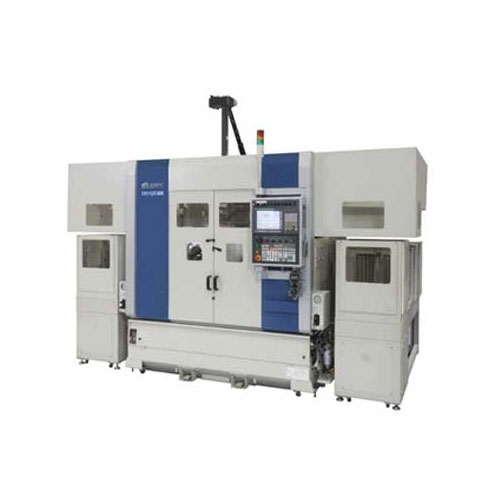
Compact Fmc - Motorum 3048tg With Fs2512
INDUSTRIAL AUTOMATION & TECHNOLOGY CONSULTANCY
Meiban Engineering Technologies Pvt Ltd offers a wide range of Compact FMC - Motorum 3048TG with FS2512.
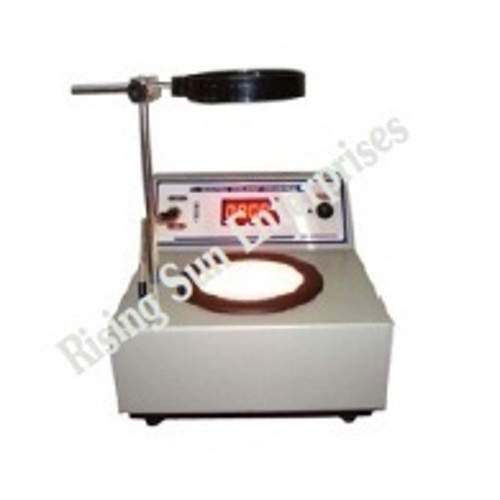
Digital Colony Counter
INDUSTRIAL AUTOMATION & TECHNOLOGY CONSULTANCY
Rising Sun Enterprises supplies digital colony counter.

Robotic Welding SPM
INDUSTRIAL AUTOMATION & TECHNOLOGY CONSULTANCY
Primo Automation Systems Pvt. Ltd. manufactures, supplies and exports robotic welding SPM.
latest News
Subscribe to iNoW

For Industry News on WhatsApp, Give a Miss Call on: +91 84228 74016