







Schedule a Call Back


Five moves to turn India’s manufacturing confidence into competitive advantage
 Articles
- Aug 29,26
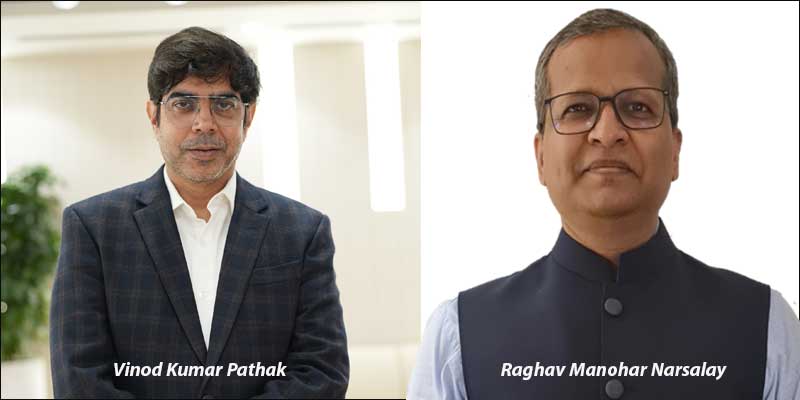
India’s manufacturers have the confidence and investment intent to lead, but must align strategy, technology, talent and MSME partnerships to convert momentum into long-term competitive advantage, write Vinod Kumar Pathak and Raghav Manohar Narsalay
PwC's 2026 Industrial Manufacturing Sector Outlook reveals that Indian industrial manufacturers are approaching the next five years with confidence, backed by commercial momentum. Seventy-one per cent of Indian manufacturers say their workforce is empowered to act on new ideas. Fifty-seven per cent describe their decision-making as agile and data-informed. On every measure, these numbers exceed global averages.
India is one of the fastest-growing large economies in the world. Its industrial manufacturers, largely original equipment manufacturers (OEMs), process manufacturers and component makers, are at the foundation of the nation’s growth ecosystem. The aspiration to build a USD 7.5 trillion manufacturing economy by 2047 is within reach, but only when it travels down the value chain. India's industrial sector is fundamentally a sector of MSMEs whose collective capability determines the sector's growth. No OEM's intelligent product strategy can be realised if its suppliers don’t actively support it.
The question for every CEO is therefore twofold. Are we channelling our confidence into moves that compound into leadership? And are we bringing our supplier ecosystem along to build a future-fit strategy?
The alignment necessity
Fifty-seven per cent of Indian manufacturers identify product design and development as the area seeing the largest investment increase over five years. However, only 16 per cent are strategically anchored in product leadership and innovation. The majority cluster around customer-centricity (45 per cent) and operational excellence (39 per cent).
Compare this with China. Sixty-three per cent of Chinese manufacturers cluster around product leadership, with 76 per cent identifying research and development (R&D) as a top-three financial performance driver. Their strategic orientation and investment intent point in the same direction. That alignment is their advantage.
Indian manufacturers can close this gap. The confidence and intent exist, as seen in our survey. What is now needed is directing capital and talent towards a chosen strategic orientation and staying the course in a consistent and disciplined manner. As the founder of one leading industrial medium-sized enterprise observed in the research, “Technologies alone will not take us ahead. It's how we integrate them into our strategy that matters.”
For MSMEs operating as component and contract manufacturers, alignment means connecting their choices to the strategic direction of the OEMs they serve. And OEMs must act as enablers on this journey to help MSMEs build the trusted supply chain for the future.
The research identifies five actions large industrial manufacturers must take in collaboration with their MSME suppliers.
Five ‘fit-for-future’ moves
The following five moves can help manufacturers translate strategic intent into coordinated action across their organisations and MSME ecosystems.
1. Lock investments to your chosen strategy and align MSMEs with it: A leading Indian intralogistics company chose to build its own warehouse control and execution systems rather than buying third-party software. To achieve this goal, it aligned its product strategy, technology investment and execution. That discipline must now extend into the procurement dimension of the value chain. If an OEM’s or company’s orientation is shifting towards intelligent, connected products, its MSME suppliers must know this and align with it. Thirty-seven per cent of Indian manufacturers identify co-developing products as a collaboration goal. That stability begins with strategic clarity flowing in both directions.
2. Build an intelligent core and extend its data architecture to include key suppliers: Fifty-nine per cent of Indian manufacturers believe AI will be the most critical technology they adopt. By 2030, highly automated production processes are expected to more than double. But the gap will not be defined by which technologies they adopt, but by how coherently they integrate them. Robotics in production, analytics in the supply chain and AI in engineering, when deployed in isolation, can become disconnected islands.
The winning strategy includes building an intelligent core that is a well-bonded architecture of data, AI and decision systems connecting every function. For this core to deliver full value, its data must flow to and from critical MSME suppliers. When an MSME supplier sees real-time quality performance metrics through a shared data layer rather than monthly purchase memos, the entire system becomes more agile and responsive. The OEM that opens its intelligent core to trusted suppliers creates a speed advantage that competitors with arm’s-length relationships will find difficult to match.
3. Use digital engineering to change what you sell and bring suppliers into the design conversation: One major Indian engineering conglomerate re-engineered its pumps and motors into digitally instrumented, AI-ready systems by deploying an IIoT platform for condition-based monitoring and predictive maintenance, enabling these capabilities to be sold as ongoing services. The commercial relationship shifted from transactional equipment supply to a lifecycle partnership anchored in outcomes.
That value migration has profound implications for every supplier to it. When the end product becomes an intelligent system generating continuous data, the components inside must meet specifications in areas such as sensor-readiness and data interoperability, among others, while supporting predictive algorithms. Such components must be co-developed with the supply base and not just with technology partners in adjacent sectors.
4. Collaborate across boundaries by including MSMEs as part of innovation partnerships: Seventy-one per cent of Indian manufacturers plan ecosystem partnerships over the next five years. One automotive manufacturer partnered with a telecom provider and an engineering firm to deploy 5G-based private networks, slashing software flashing turnaround and enabling AI-powered paint defect detection. Future-fit manufacturers recognise that no single firm captures emerging value pools alone. Innovation is distributed outward through structured partnerships.
On many occasions, the entity that is missing from these partnerships is the MSME component maker. Firms supplying 30–40 per cent of the bill of materials are rarely included in innovation conversations despite being the ones that must manufacture the innovation at scale. Large manufacturers that treat their supply ecosystem as a collaboration partner rather than a procurement line item will see their innovation cycles shorten dramatically. Twenty-nine per cent cite gaining access to advanced technologies as a collaboration goal. For MSMEs, that access often comes through their OEM customers, through shared platforms and structured knowledge transfer.
5. Make workforce reinvention a value chain practice: One conglomerate reinvented its shop floor into an employee-centric campus aligned with Industry 5.0 principles, embedding role-based upskilling into daily operations. The outcome proved that workforce reinvention is not a support function for digital transformation but an essential precondition for it.
Forty-one per cent of manufacturers identify skills gaps as a key barrier to value creation. Such gaps multiply across the MSME supply base, where training capital is scarcer and technology exposure more limited. If the supplier's workforce cannot operate to the digital standards, the intelligent transformation at the larger firm stalls. Extending digital learning platforms and capability-building into the industrial supply chain is a competitive necessity.
The collective chapter in the making
Indian industrial manufacturing stands at a point where there is unprecedented alignment among confidence, capital intent and opportunity. But the $ 7.5 trillion economy of 2047 will not be built by large firms alone. It will be built by value chains that move as integrated ecosystems wherein strategy, data and capability flow within and beyond company boundaries, supported by the engagement of suppliers and other partners.
While the industry has gained confidence, it must now make it count with the support of those spanning its value chain.
About the authors
Vinod Kumar Pathak is Partner and Manufacturing Sector Leader at PwC in India, with over two decades of experience in strategy, digital transformation, analytics, cost optimisation and supply chains.
Raghav Manohar Narsalay is a Partner at PwC and Leader of its Research & Insight Hub for India, with over 27 years of experience in transformation, business model innovation and thought leadership.
PwC India
industrial manufacturing
MSMEs
OEMs
artificial intelligence (AI)
Industrial Internet of Things (IIoT)
digital engineering
Industry 5.0
Vinod Kumar Pathak
Raghav Manohar Narsalay
Related Stories
Smart Manufacturing
Five moves to turn India’s manufacturing confidence into competitive advantage
India’s manufacturers have the confidence and investment intent to lead, but must align strategy, technology, talent and MSME partnerships to convert momentum into long-term competitive advantage,..
Read moreSmart Manufacturing
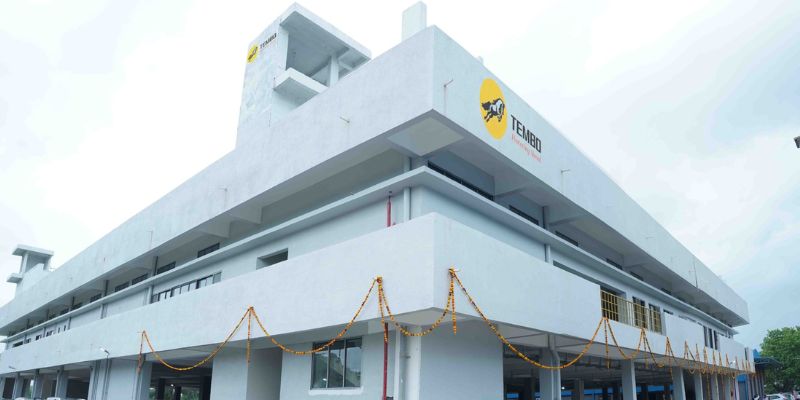
Tembo Global Commissions Vasai Plant to Expand Manufacturing Capacity
Tembo Global Industries has commissioned a new Vasai facility, increasing annual production capacity from 18,000 MTPA to 1,00,000 MTPA to support future growth.
Read moreAutomation & Robotics
AI Emerges as Key Growth Driver for Indian Manufacturing Sector: PwC
PwC study reveals 59 per cent of Indian manufacturers see AI as key to strategic growth over the next five years.
Read moreRelated Products
Fanless Industrial Pc for Smart Manufacturing
Smart Manufacturing
CONTEC Launches BX-M4600 Series - Fanless Industrial PC for Smart Manufacturing.
latest News
Subscribe to iNoW

For Industry News on WhatsApp, Give a Miss Call on: +91 84228 74016