







Schedule a Call Back


The New Manufacturing Engine of Indian Aerospace
 Articles
- Sep 28,26
: India’s aerospace sector is moving beyond assembly, building indigenous capabilities in precision engineering, avionics and advanced manufacturing to compete globally, writes Ashlin Rajan.
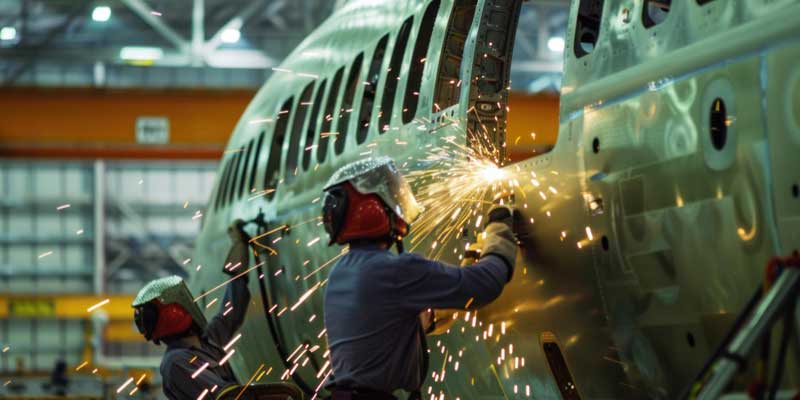
Every aircraft that takes to the sky is the visible outcome of an enormous invisible manufacturing system. Behind every reliable flight sits a chain of precision engineering, specialised components, advanced materials, avionics, software, testing, certification and quality control. As India’s aerospace ambitions expand across defence, unmanned systems, commercial aviation and space, that chain is entering a new phase. The opportunity is no longer simply to assemble aircraft or supply individual components. It is increasingly about designing, engineering, manufacturing and exporting the technologies that make modern flight possible.
Beyond assembly
Aerospace manufacturing has always carried exceptionally high barriers to entry. Tight tolerances, stringent quality requirements, long qualification cycles and demanding certification mean that capability cannot simply be switched on when demand arrives. It has to be built through engineering development, testing, validation and repeat production.
India’s ecosystem is now moving towards deeper participation, with greater emphasis on indigenous design, subsystem development and advanced manufacturing. Defence modernisation, unmanned systems, commercial aviation and space are creating opportunities across the value chain. Yet the most significant shift is happening beneath the aircraft itself.
The real manufacturing opportunity lies in the components, electronics, avionics, sensors, propulsion systems, structures, embedded software and specialised processes that make a platform work. This creates multiple entry points for Indian manufacturers and SMEs, allowing companies to build capability around specific technologies before moving further up the value chain.
Gaurav Achha, Co-Founder & Co-CEO, BonV Aero, said, “However, genuine self-reliance goes beyond assembling systems within India.”
That distinction is becoming increasingly important. Import substitution alone does not create manufacturing depth. The stronger opportunity lies in developing the engineering knowledge, production processes and intellectual property required to make strategically important systems domestically.
But entering aerospace is only the first step. The harder task is producing consistently.
Ravi Yadav, Founder and Director, Mirai Aerospace, said, “Aerospace-grade systems require precision manufacturing in controlled environments, deep multidisciplinary engineering, and rigorous quality processes aligned with global standards.”
The discipline extends across material selection, process control, testing, traceability and validation. A product that works as a prototype must ultimately become a repeatable manufacturing process capable of delivering consistent performance.
That transition from demonstration to dependable production remains one of the industry's biggest challenges.
Vamsi Vikas Ganesula, Founder and Managing Director, Raghu Vamsi Aerospace Group, observed, “While such solutions generally function effectively within a laboratory setting, implementing those solutions in the field itself can be a difficult process.”
The difference between a successful prototype and an aerospace-grade production system is therefore not simply technology. It is manufacturing maturity.
Engineering becomes the differentiator
Modern aerospace manufacturing is increasingly multidisciplinary. Aerodynamics, structural engineering, avionics, propulsion, flight control, embedded systems and systems integration have to function as an interconnected whole.
This is particularly visible in unmanned systems. A drone is no longer simply an aircraft controlled remotely. Its effectiveness increasingly depends on how flight controls, sensors, navigation, communications, computing and mission software operate together.
The same convergence is reshaping avionics. Artificial intelligence and machine learning, advanced sensors, high-performance embedded computing, secure connectivity and modular architectures are changing how aerospace systems are designed, upgraded and operated.
Yadav explained, “Avionics today is much more than instruments in the cockpit; it is the integrated suite of electronics, computers, sensors, and software that controls navigation, communication, flight management, and mission functions.”
For manufacturers, this convergence changes the capabilities required on the shop floor. Mechanical engineering now sits alongside electronics, software, data, automation and systems engineering. Advanced sensors such as LiDAR, radar and electro-optical and infrared systems add further layers of complexity, particularly as platforms become more autonomous.
AI and edge computing are also shifting the emphasis from remotely controlled platforms towards systems capable of processing information and making decisions closer to the point of operation.
The strategic value is consequently moving towards companies that control their technology stack rather than simply integrating imported subsystems.
Achha said, “Companies that own their technology stack rather than merely integrating imported subsystems will define the future of the sector.”
But technological sophistication has to translate into operational reliability. Ganesula explained, “Finally, there has been a shift in the focus from peak performance to operational reliability. The key criteria of new technologies include their readiness for deployment, where engineering takes precedence over innovation.”
That shift from technology demonstration to dependable deployment has major implications for manufacturing. Production processes, testing, configuration control and quality systems become as important as the underlying innovation.
The factory gets a digital thread
The next transformation is happening inside the factory, and increasingly, before anything is physically manufactured.
Historically, aerospace programmes have often followed a sequential model: design teams developed the product, manufacturing engineers created production processes and quality teams validated the output. As products became more complex, late engineering changes could lead to delays, rework and disruption.
Digital manufacturing is beginning to change that model by connecting engineering, manufacturing, production, quality and certification through a common digital foundation.
This is where the digital thread becomes important. Instead of treating design models, manufacturing plans, tooling information, inspection records and engineering changes as separate datasets, a connected digital environment can maintain continuity across the product lifecycle.
A small design modification, for example, can affect tooling, work instructions, inspection requirements and certification records. When those relationships are digitally connected, the implications of a change can be assessed earlier and with greater visibility.
The value of the digital thread is therefore not simply that it creates more data. It creates continuity and traceability.
Digital engineering and digital twins extend this capability further. Engineers can simulate assembly processes, validate tooling, assess factory layouts and optimise production sequences before committing physical resources. Problems can be identified in the virtual environment before they become expensive production problems.
Artificial intelligence can add another layer. AI can support the analysis of production data, identify quality trends, review technical documentation and assist with engineering-change assessments. The objective is not to remove engineers from the process, but to reduce repetitive work and allow them to focus on more complex decisions.
Advanced manufacturing technologies complement this digital transformation. Automation can improve consistency and reduce manual errors. Additive manufacturing can support complex geometries and faster prototyping, while composites can deliver lightweight structures where required.
For UAV components, this technology base can include five-axis CNC machining, precision turning and milling, laser cutting, specialised forming, welding and, where required, composite and additive manufacturing.
Sanjay Patel, Managing Director, Tembo Global Industries, said, “Producing UAV components to international aerospace and defence standards will require advanced manufacturing capabilities such as 5-axis CNC machining, precision turning and milling, laser cutting, specialised forming, welding and, where required, composite manufacturing and additive manufacturing.”
The technology, however, only delivers value when embedded within disciplined processes.
Coordinate Measuring Machines, non-destructive testing, material traceability, Statistical Process Control, calibration management and digital production monitoring can provide the quality foundation needed for repeatable production.
Agnishwar Jayaprakash, Founder and CEO, Garuda Aerospace, noted, “Aerospace also requires significant investment in R&D, testing infrastructure, advanced manufacturing capabilities, and skilled talent.”
The factory of the future is therefore not simply more automated. It is more connected — linking engineering decisions to manufacturing processes, quality records and production outcomes.
From prototype to production
This digital and physical transformation becomes most important when aerospace technologies move towards scale.
India continues to face dependence on imported critical components, fragmented supplier capabilities and gaps in testing and certification infrastructure. In drones, dependence remains in areas such as sensors, electronics, propulsion and secure communications, even as airframes and mechanical components have been localised.
Localisation is consequently a gradual process. Systems integration capability can provide the starting point, followed by the development of strategically important subsystems as engineering and testing capabilities mature.
The challenge is compounded when a manufacturer moves from prototype quantities to serial production. A product may perform successfully during development but require entirely different levels of process validation, configuration control, supplier coordination and quality management when produced repeatedly.
This is where testing infrastructure becomes critical. Field validation can expose issues that controlled development environments cannot, while structured test-bedding can help manufacturers build the evidence needed to move from development towards operational deployment.
Technology transfer can also accelerate this transition when engineering knowledge moves from development organisations into industrial production. The objective is not simply to acquire a technology, but to absorb the capability required to manufacture and support it at scale.
For manufacturers, scale therefore means more than adding machines. It means creating a controlled production system in which materials, processes, engineering changes, inspections and final outputs remain consistent.
Ganesula said, “In the end, success will come not through pilots, but via sustained program participation and large-scale deployments.” That is particularly relevant to the unmanned systems sector, where moving from experimentation to sustained procurement can create the demand visibility required for manufacturers to invest in production capacity, supplier development and localisation.
The SME opportunity
This transition creates a significant opportunity for Indian SMEs.
Aerospace participation does not necessarily have to begin with a complete aircraft or drone. Companies can enter through specialised components, electronics, avionics, precision engineering, sensors, navigation, embedded systems, propulsion-related systems, software and advanced payloads.
Unmanned systems are widening that opportunity further across defence reconnaissance and logistics, industrial inspection and hazardous-environment applications. As customers move from pilots towards operational deployment, reliability, lifecycle support and repeatability become increasingly important differentiators.
The opportunity is therefore to become part of a larger manufacturing architecture.
Jayaprakash noted, “Rather than focusing only on complete platforms, building capabilities across the aerospace supply chain can allow more Indian companies to participate in both domestic and global markets.” This also changes the role of manufacturing itself. It is no longer merely the final step after product development.
Manufacturing capability can influence product design, materials, engineering decisions, quality systems and ultimately the competitiveness of the technology.
The workforce must evolve accordingly. Precision machining, metrology, advanced manufacturing processes and aerospace-quality standards require specialised skills.
At the same time, increasingly digital factories demand greater collaboration between mechanical engineering, production, software, automation and data teams. The ability to connect these disciplines could become as important as expertise within any single discipline.
The next manufacturing altitude
India’s aerospace opportunity ultimately depends on how effectively it can connect design, engineering, manufacturing, testing, certification and supply-chain development.
Cost competitiveness will remain relevant, but global markets demand more than cost. Quality, reliability, traceability, certification and technology ownership will determine whether Indian manufacturers can become long-term participants in global aerospace supply chains.
The same principle applies to unmanned systems. The airframe is only one part of the proposition. Autonomy, navigation, communications, sensing, embedded computing and mission software increasingly determine the platform's capability.
This makes the industry's transformation larger than a factory upgrade. It is a change in how aerospace products are conceived, engineered, industrialised, validated and supported.
Yadav said, “The next phase will be about moving from technology integration to indigenous product development, manufacturing and global exports.”
The goal, ultimately, is to move beyond being a manufacturing and sourcing base towards becoming a developer and exporter of aerospace technologies.
Jayaprakash said, “Ultimately, India’s competitiveness will depend on moving from being primarily a manufacturing and sourcing base to developing and exporting aerospace technologies, components, and complete systems.” That ambition will require deeper supplier networks, skilled talent, advanced production, rigorous testing and a digital foundation that connects engineering with manufacturing.
The aircraft may be what passengers see. The factory is where the capability is built.
And increasingly, the most important part of that factory may be invisible: the digital thread connecting a requirement to a design, a design to a production process, a production process to a quality record, and ultimately a manufactured system to reliable operation.
That is where India’s next aerospace manufacturing advantage could take shape.

Agnishwar Jayaprakash
Garuda Aerospace
Ravi Yadav
Mirai Aerospace
Gaurav Achha
BonV Aero
aerospace manufacturing
avionics manufacturing
unmanned systems
advanced manufacturing
precision engineering
aerospace supply chain
indigenous aerospace technology
aerospace SMEs
Ashlin Rajan
Related Stories
Smart Manufacturing
The factory of tomorrow is drawn on today's engineering desk
India’s manufacturing future will depend on integrating product engineering, digital tools and factory design to build smarter, flexible operations, writes Kamakshya Prasad Prusti, VP, Integrated ..
Read moreSmart Manufacturing
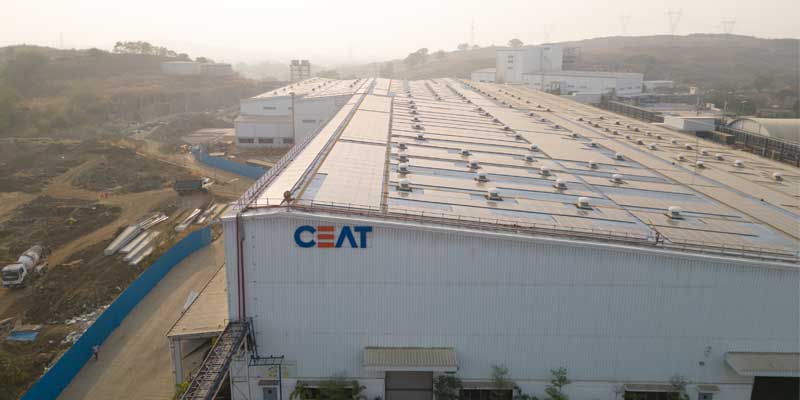
CEAT Ambernath Drives Smarter Tyre Manufacturing
CEAT’s Ambernath plant combines AI, automation, digital traceability and lean manufacturing to produce over 1,200 tyre variants, even efficiently handling an minimum order quantity of one.
Read moreSmart Manufacturing

India has real depth in manufacturing: Matthias Lapp
India’s growing role in LAPP’s global manufacturing strategy comes into focus as Matthias Lapp, CEO, LAPP Group, speaks to Ashlin Rajan about the Bhopal expansion, automation, technology and eme..
Read moreRelated Products
Troop Comforts revolutionises military gear with indigenous innovations
Aerospace & Defence
Troop Comforts Ltd (TCL), a state-owned defence corporation, has recently received a request for proposal (RFP) from the Northern Command of the Indian Army for its indigenously developed military gea Read more
latest News
Subscribe to iNoW

For Industry News on WhatsApp, Give a Miss Call on: +91 84228 74016