






Schedule a Call Back


Data is transforming manufacturing leadership: Abhay Ghirnikar
 Interviews
- Aug 29,26
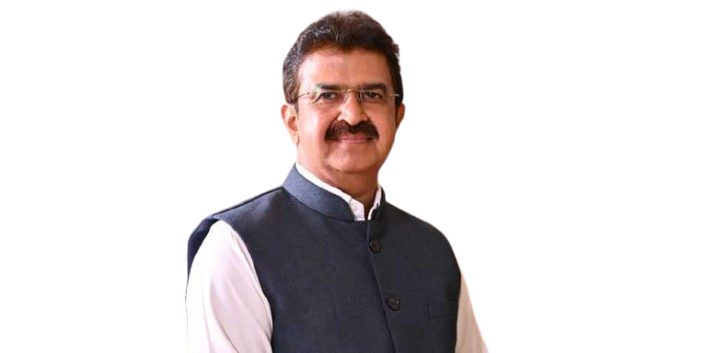
India’s manufacturing sector is accelerating towards digitally enabled, automated and resilient operations, with growing emphasis on productivity, supply-chain agility, sustainability and workforce capability. In this interaction with Rakesh Rao, Abhay Ghirnikar, Director – Manufacturing, TKIL Industries, outlines the priorities shaping future-ready industrial manufacturing
As Industry 4.0, automation and digitalisation reshape Indian manufacturing, which trends do you believe will have the greatest impact on the sector over the next few years?
The biggest shift is manufacturing moving from automation-driven productivity to digitally enabled, intelligent manufacturing. Industry 4.0, IoT, AI and advanced analytics will enable a shift from reactive to predictive decision-making, improving safety, quality, productivity and delivery. At the same time, localisation, supply-chain resilience and advanced manufacturing capabilities will be critical as India strengthens its position as a global manufacturing hub.
At TKIL, our philosophy is clear: technology must create business value. We will adopt technologies that improve safety, quality, delivery, cost and customer responsiveness. Ultimately, sustainable manufacturing excellence will come from combining technology, robust processes and skilled, engaged people.
TKIL Industries caters to sectors such as cement, mining, energy and industrial infrastructure. How are you strengthening manufacturing capabilities to address evolving customer expectations and increasingly complex project requirements?
TKIL businesses operate across various sectors with complex, project-specific requirements, requiring a balance between standardisation and flexibility. We are strengthening manufacturing through advanced infrastructure, digital planning, traceability, process standardisation, capacity optimisation and stronger project execution.
The objective is not simply to manufacture faster, but to consistently deliver the right quality, at the right time and cost, while maintaining the highest standards of safety. This integrated approach is central to TKIL’s manufacturing philosophy and our commitment to delivering greater value to customers.
Automation is becoming increasingly important for productivity, consistency and safety. In heavy engineering, which processes offer the greatest potential for automation, and where does human expertise remain indispensable?
In heavy engineering, automation offers the greatest opportunity in precision machining, welding, material handling, inspection and repetitive operations, improving productivity, consistency and safety. However, engineered-to-order manufacturing involves complexity and variation where human expertise remains critical for engineering judgement, problem-solving and decision-making.
Our philosophy is simple: “Automate where it creates value, empower people where judgement matters.” The future is not about man versus machine, but about the right combination of technology, skilled people and robust processes to achieve sustainable manufacturing excellence.
As AI, IoT, advanced analytics and connected systems gain ground, how is data-driven decision-making transforming shop-floor operations and the role of manufacturing leaders?
Data is transforming manufacturing leadership from experience-led to evidence-based decision-making. Real-time visibility into productivity, quality, machine performance, downtime, inventory and delivery enables leaders to move from asking “What happened?” to “Why did it happen?” and “What will happen next?”
For TKIL, digitalisation is not about dashboards alone; it is about creating visibility, accountability and enabling faster decisions. The manufacturing leader of the future must combine shop-floor experience, business understanding and data-driven insights to make the right decisions at the right time.
Where are digital technologies and automation currently delivering the most visible improvements across TKIL Industries in areas such as productivity, quality, efficiency and turnaround time?
TKIL’s digital transformation journey is not dependent on one large technology project, but on multiple focused improvements working together. This reflects TKIL’s philosophy of continuous improvement and operational excellence, creating sustainable gains across every process.
The most visible gains for us have come in quality and safety. Digital inspection tools and better process traceability through our SAP-integrated systems have improved first-time-right rates and reduced rework.
On the safety side, our systems have helped us build the kind of discipline that earned both our Pimpri and Hyderabad plants five-star ratings from the British Safety Council. We are also seeing turnaround times improve on complex fabrication jobs because planning and scheduling are now far more accurate. It is not one big transformation; it is several smaller, consistent improvements adding up across the plant.
Recent supply-chain disruptions have reinforced the need for greater agility and resilience. What should manufacturers prioritise in localisation, supplier development, inventory planning and sourcing strategy?
The key lesson from recent disruptions is that efficiency and resilience must go together. Localisation is critical for supply security, responsiveness and competitiveness, supported by structured supplier development to strengthen quality, capability and delivery.
Inventory planning should be risk-based, with differentiated strategies for critical and long-lead components. Our focus is to build a resilient ecosystem through qualified alternative sources, stronger suppliers, better demand visibility and appropriate inventory policies.
The objective is simple: a supply-chain disruption should never become a customer-delivery disruption.
Sustainability is becoming integral to manufacturing strategy. How can companies reduce energy use, material waste and emissions while maintaining productivity, quality and cost competitiveness?
I don’t see sustainability and productivity as competing objectives. In many cases, an inefficient process is also wasteful and unsustainable.
Reducing material waste, improving yield, optimising energy consumption, reducing rework and improving equipment efficiency can simultaneously strengthen cost competitiveness and sustainability.
Technology can accelerate this through energy monitoring, process optimisation and data-driven identification of losses, while the foundation remains Lean thinking and operational discipline.
At TKIL, we integrate sustainability into our manufacturing processes rather than treating it as a separate initiative. Our goal is to create operations that are productive, responsible, efficient and sustainable for the long term.
As factories become more automated and technology-led, how must workforce capabilities evolve? Which skills will become increasingly important for shop-floor teams and manufacturing leaders?
The workforce of the future must be technically skilled and digitally capable. Operators and technicians will need to understand automation, machine data, digital tools, analytics and connected systems, while retaining strong engineering and technical fundamentals.
Leaders must combine technology, data and business understanding with a strong connection to the shop floor.
At TKIL, we believe technology transformation must go hand in hand with people transformation. Continuous learning, multi-skilling, problem-solving and ownership will be critical. Ultimately, technology provides the capability; people create the transformation.
Looking ahead, what are your key priorities for building future-ready manufacturing operations at TKIL Industries, and how can technology-led manufacturing excellence support sustainable industrial growth?
Our vision is to build manufacturing operations that are safe, reliable, competitive, digitally enabled and adaptable to customer needs. Our priorities include strengthening manufacturing capabilities, accelerating value-driven digitalisation and automation, improving productivity and quality, building supply-chain resilience, optimising working capital and developing our people.
Safety remains non-negotiable. We aim to integrate safety, quality, delivery, cost and customer satisfaction through a culture of continuous improvement, ownership, innovation and operational discipline. Ultimately, future-ready manufacturing will enable TKIL to deliver better quality, faster response times and greater customer value, while contributing to India’s global manufacturing ambitions.
TKIL Industries
Abhay Ghirnikar
smart manufacturing
Industry 4.0
automation
digitalisation
artificial intelligence
supply-chain resilience
sustainable manufacturing
Rakesh Rao
Related Stories
Smart Manufacturing
Lights-Out Manufacturing: The Future of Intelligent Circular Sawing
In this article, Prakhar Jain, CEO of the Indore-based ITL Industries Ltd, explains how the company is transforming metal cutting through smart automation.
Read moreSmart Manufacturing
Clean manufacturing is key to India’s future growth: Yash Kashyap
Yash Kashyap, India Lead, Industrial Transition Accelerator, shares insights with Ashlin Rajan on industrial decarbonisation, clean manufacturing, green technologies and India’s transition towards..
Read moreSmart Manufacturing
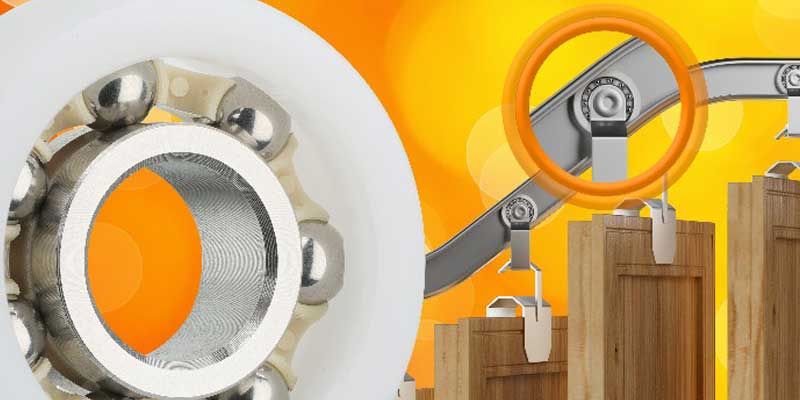
Igus Launches Hybrid Ball Bearings For Reliable, Dust-Resistant Conveyors
Igus develops maintenance-free hybrid ball bearing from the xiros series for dirt-resistant operation.
Read moreRelated Products

Fanless Industrial Pc for Smart Manufacturing
Smart Manufacturing
CONTEC Launches BX-M4600 Series - Fanless Industrial PC for Smart Manufacturing.
latest News
Subscribe to iNoW

For Industry News on WhatsApp, Give a Miss Call on: +91 84228 74016