







Schedule a Call Back


Clean manufacturing is key to India’s future growth: Yash Kashyap
 Articles
- Aug 29,26
Yash Kashyap, India Lead, Industrial Transition Accelerator, shares insights with Ashlin Rajan on industrial decarbonisation, clean manufacturing, green technologies and India’s transition towards a low-carbon future.

What does industrial transition mean in the manufacturing context, and what is ITA's approach to accelerating this?
Industrial transition is about enabling carbon-intensive industries to continue growing and remain competitive as the global economy moves towards lower-carbon production.
For sectors such as steel, cement and chemicals, this requires changes not just in technology, but also in investment approach, shared infrastructure, policy and regulatory frameworks and markets.
The Industrial Transition Accelerator was set up precisely to close this gap. It focuses on making that transition happen at scale by supporting clean industrialisation tech with a focus on deep decarbonisation first- mover projects. We work across industry, government and finance to address the barriers faced by these clean-industry projects and accelerate their journey towards investment and implementation.
In India, the opportunity is particularly significant: to build the next generation of industrial capacity in a way that supports economic growth, energy security and exports, while preparing Indian industry for a lower-carbon global economy.
What is ITA's involvement in India, and how is it working with industry, government and other stakeholders to advance industrial decarbonisation?
In India, we work closely with industry players, policymakers, and financiers to identify and support clean industrial projects that have real potential to scale.
Through the ITA India Project Support Programme, we are now supporting 11 commercial-scale projects from seven project developers including Jindal Steel Limited, JSW Steel, ACME Group, Yamna, Circular Urban Energy and ReNew, among others, representing more than USD 18 billion in potential investment and over 7.8 million tonnes of annual carbon abatement potential.
Our approach is deliberately hands-on, with a focus on addressing the policy, market and financing barriers that can support projects from reaching FID. This spans projects across sectors like green ammonia, green methanol, low-emissions steel, sustainable aviation fuel and industrial CO? value chains.
How are climate change and sustainability reshaping manufacturing in India, and why is decarbonisation becoming increasingly important for Indian industry?
Indian manufacturing is at an inflection point. Global supply chains are increasingly pricing in carbon, through mechanisms like the EU's Carbon Border Adjustment, through customer procurement standards, and through investor expectations.
Indian manufacturers exporting into these markets can no longer treat decarbonisation as optional; it is increasingly becoming a factor in maintaining competitiveness and accessing international markets.
At the same time, India’s growth ambitions mean industrial output, and industrial emissions, will rise significantly over the coming decades if nothing changes. For industry, however, the immediate push to decarbonise is also coming from changing market requirements and business priorities, including CBAM compliance and reducing import dependence for products such as ammonia.
Acting now, while new capacity is being built, can help India avoid costly changes later and build cleaner industrial capacity as global demand for low-carbon products grows.
Which manufacturing sectors in India are likely to be most impacted by the transition towards low-carbon production, and how do you see this transformation unfolding?
The transition will be particularly visible across steel, chemicals including fertiliser and ammonia, aluminium, aviation and shipping, which are among the most energy- and carbon-intensive sectors and, along with cement, form the core sectors of ITA's mandate.
Each faces a different decarbonisation challenge, so there will not be a single pathway or technology that works across all sectors.
As a result, the transformation will require a mix of solutions rather than a single technology. These include electrification and renewable energy, green hydrogen and its derivatives, process innovation, energy efficiency, carbon capture and new approaches to circularity.
The pace will vary by sector depending on technology readiness, cost, infrastructure and the availability of low-carbon energy.
As green manufacturing gains momentum, how can small and medium-sized manufacturers participate in this transition alongside larger companies?
This is one of the most important questions in the industrial transition conversation, because SMEs make up a huge share of India's manufacturing base but typically lack the balance sheets to absorb the upfront cost of clean technology adoption.
A few things need to come together: aggregation models that let smaller manufacturers access shared clean infrastructure like common green hydrogen or renewable energy facilities rather than each building their own; blended finance structures that de-risk early investment; and anchor demand from larger companies further up the value chain who are willing to pay a green premium.
SMEs shouldn't be expected to lead this transition alone, but they do need a clear pathway into the transition, designed around their needs.
For SMEs, access to affordable finance, shared infrastructure and reliable demand will be particularly important. As clean industrial value chains develop, connecting smaller manufacturers into these emerging ecosystems can help broaden participation in the transition.
How can India align its Make in India ambitions with global sustainability and decarbonisation trends, particularly in the context of the agenda advanced through COP28?
Make in India and the global decarbonisation agenda are increasingly converging around the same question: what industries and capabilities does India want to build for the next 20–30 years? India had 283.46 GW of installed non-fossil capacity as of March 2026, including 274.68 GW of renewable capacity.
At the same time, the National Green Hydrogen Mission is targeting 5 million tonnes of green hydrogen production annually by 2030, with the government estimating more than Rs 8 trillion of investment potential.
These developments are creating new opportunities for India to build low-carbon industrial value chains from renewable energy and electrolysers to green hydrogen, ammonia and other clean industrial technologies. COP28 was significant because it moved the global conversation on industrial decarbonisation from principle to implementation which is also where ITA was launched.
For India, thefocus now needs to be on translating that ambition into commercial-scale projects and investment. Aligning with that agenda means making clean manufacturing an integral part of "Make in India", building capacity in green steel, green ammonia, and low-carbon cement now, so India is a supplier of choice as global demand shifts.
This also means ensuring that India's clean industrial projects can compete in international markets by addressing demand, financing, certification and trade-related barriers.
ITA's India portfolio includes projects in areas such as green ammonia, green methanol and other clean industrial technologies. What potential do these hold for India's manufacturing sector?
Green ammonia and green methanol matter because they sit at the intersection of two of India's biggest opportunities: renewable energy abundance and export potential.
India has some of the most competitive solar and wind resources in the world, which puts it in a strong position to produce these low-carbon fuels and feedstocks at scale, for domestic uses such as fertiliser production and shipping fuel, as well as for export to markets like Europe and Japan that are actively seeking green fuel imports.
The latest ITA-supported portfolio includes projects across green ammonia, green methanol, low-emissions steel, sustainable aviation fuel and industrial CO? value chains. More than 70 per cent of the selected portfolio is focused on green ammonia and green methanol, highlighting the role these green molecules can play in India's emerging clean industrial economy.
The opportunity now is to convert this project pipeline into bankable projects and operating assets by strengthening demand certainty, mobilising finance and addressing the certification and market-access requirements of international buyers.
Cement is one of India's major energy- and carbon-intensive industries. What are the key challenges and opportunities in decarbonising cement manufacturing, and how do you see the sector evolving?
Cement is a particularly tough sector because a large share of its emissions comes from the chemical process itself the calcination of limestone not just from the energy used to fuel production.
That means efficiency improvements and renewable power alone can't get us to zero; we need alternative fuels, clinker substitution, and eventually carbon capture to close the gap.
India already has significant experience with blended cement, which provides a foundation for further emissions reduction. What's needed now is scaling up alternative fuel use, accelerating adoption of lower-carbon cement formulations, and building the financing and offtake structures that make first-of-a-kind low-carbon cement plants viable.
Over the next several years, I expect to see a handful of demonstration projects prove the model, followed by faster scale-up as costs come down and government procurement particularly for infrastructure starts to favour lower-carbon materials.
For cement, as with other hard-to-abate sectors, the focus will need to be on creating the conditions that allow commercially viable projects to reach FID and scale.
industrial decarbonisation
clean manufacturing
green hydrogen
low-carbon industry
sustainable manufacturing
green technologies
India energy transition
Yash Kashyap
Industrial Transition Accelerator
ITA
Ashlin Rajan
Related Stories
Smart Manufacturing
Clean manufacturing is key to India’s future growth: Yash Kashyap
Yash Kashyap, India Lead, Industrial Transition Accelerator, shares insights with Ashlin Rajan on industrial decarbonisation, clean manufacturing, green technologies and India’s transition towards..
Read moreConstruction Equipment
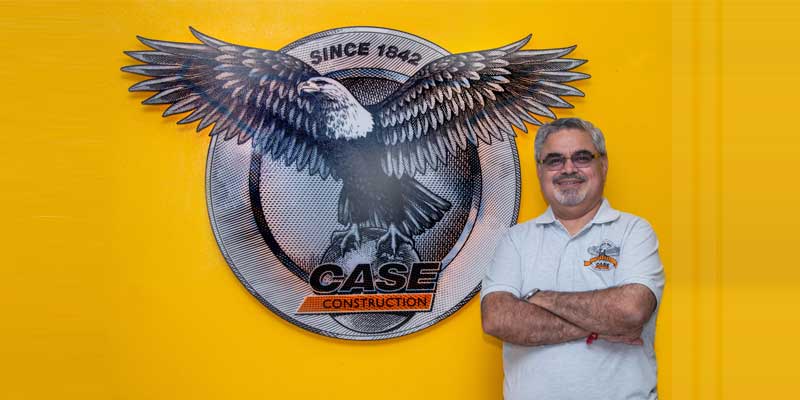
Future factories will integrate mechanical and digital tech: Sachin Tare
With manufacturing becoming increasingly technology-driven, Sachin Tare, Director – Manufacturing, CASE Construction Equipment, shares his perspective with Ashlin Rajan on automation, digitalisati..
Read moreMachine Tools & Accessories
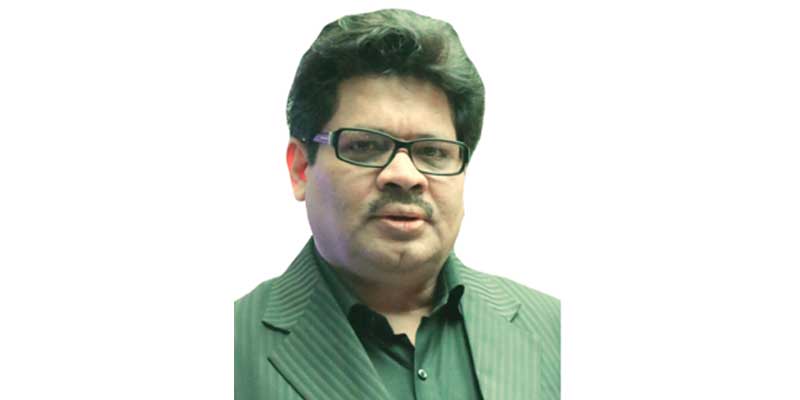
Safcon ensures product integrity with high performance security seals
In this interview, Rajesh Banka, Managing Director, Safcon Seals Pvt Ltd, highlights the company’s focus on innovation, automation and global expansion to strengthen its presence in the advanced s..
Read moreRelated Products

Fanless Industrial Pc for Smart Manufacturing
Smart Manufacturing
CONTEC Launches BX-M4600 Series - Fanless Industrial PC for Smart Manufacturing.
latest News
Subscribe to iNoW

For Industry News on WhatsApp, Give a Miss Call on: +91 84228 74016