






Schedule a Call Back


Why Bearings Are Becoming Strategic Assets in Smart Manufacturing
 Articles
- Aug 29,26
Bearings are evolving from simple machine components into strategic assets that support predictive maintenance, improve reliability and enable smarter manufacturing. With advanced technologies, they are helping industries reduce downtime and strengthen operational efficiency, states Mukesh Jain, MD, Bearing Traders India Pvt Ltd.
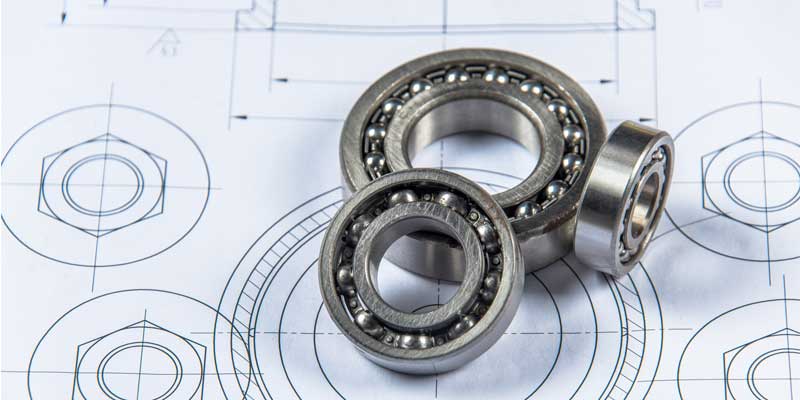
Every machine has one small component hidden deep inside large industrial equipment that quietly carries the weight of its performance. Bearings have always been those essential components that keep machines running smoothly. However, in modern manufacturing, their role has expanded far beyond being just components used to reduce friction and ensure smooth operation.
The reason behind this shift is that the cost of unexpected downtime has become too high to ignore. The top 500 largest manufacturers in the world lose about $1.4 trillion because of unplanned downtime. It accounts for around 11% of their total revenue. Additionally, 82% of manufacturers have experienced unexpected shutdowns in the last three years, with 80% of those incidents linked to equipment failures.
Today, factories are becoming more connected, maintenance is becoming smarter, and manufacturers no longer want to react to failures; instead, they are focusing on preventing them. In this new system, bearings are becoming strategic assets that directly influence machine reliability, production continuity, maintenance planning, reduce downtime and keep production moving.

How small components keep the entire industry moving
Bearings have been considered simple mechanical parts for years, used to reduce friction and help rotating equipment move smoothly. They were stored on maintenance shelves, replaced whenever they wore out and rarely discussed outside the maintenance department. However, what has been overlooked for a long time is that if one machine suddenly stops because of a bearing failure, the impact is not limited to that machine alone.
A single failure can affect overall production, slow down operations, force maintenance teams into emergency repairs, disrupt delivery schedules and put customer commitments under pressure.
That is why manufacturers have started looking beyond the purchase price of a bearing. They are beginning to recognise the much bigger value it creates every day by keeping machines running reliably.

From spare parts to business-critical assets
One of the biggest reasons why bearings are becoming strategic assets is their direct connection with machine reliability. Every manufacturer closely monitors factors such as Overall Equipment Effectiveness (OEE), machine availability, Mean Time Between Failures (MTBF) and Mean Time to Repair (MTTR).
These may appear to be maintenance metrics, but they are actually business metrics because they determine how efficiently a factory performs.
Healthy bearings improve all of these parameters. When they last longer and perform consistently, machines remain available for production instead of sitting idle for repairs. Fewer breakdowns automatically improve MTBF, while planned maintenance and readily available spare inventory help reduce MTTR. These improvements together increase overall equipment effectiveness and help manufacturers produce more without investing in additional machinery.
In simple terms, a bearing is not merely a supporting component of a machine; it also helps businesses operate more efficiently.
Smarter maintenance is the biggest change
For a long time, maintenance teams had only two choices: repair a machine after it failed or replace parts according to a fixed schedule. However, neither approach was completely ideal. The first usually resulted in expensive downtime, while the second often meant replacing perfectly healthy components before they had reached the end of their useful life.
In smart manufacturing, instead of waiting for a machine to stop, manufacturers prefer to receive early warning signs before a failure occurs. Modern bearings, combined with vibration sensors, temperature monitoring, acoustic analysis and lubrication tracking, make this possible. They do not simply support a rotating shaft but can also continuously provide information about its condition.
Even small changes in vibration or temperature can indicate that a problem is developing, giving maintenance teams enough time to plan repairs instead of dealing with expensive emergency shutdowns.
Many manufacturers are now connecting this information with Industrial IoT platforms and digital twins that continuously analyse equipment performance. Instead of relying on guesswork, engineers can monitor bearing health in real time, estimate remaining equipment life and schedule maintenance only when it is actually required.
This shift from reactive maintenance to predictive maintenance is one of the biggest reasons bearings are no longer viewed as passive components. They have become important sources of operational intelligence.

Bearings are evolving along with smart manufacturing
The role of bearings is expanding because manufacturing itself is becoming more intelligent. With this change, different production environments now demand bearings that can do much more than simply support rotating equipment.
For example, factories that rely heavily on predictive maintenance are increasingly adopting sensor-integrated or smart bearings because these solutions help continuously monitor parameters such as vibration, temperature and rotational speed. This allows maintenance teams to identify wear and performance issues weeks before they turn into costly breakdowns.
Active magnetic bearings (AMBs): AMBs are best suited for machinery used in industries such as semiconductors, pharmaceuticals and other cleanroom environments. These bearings operate without physical contact. As there is no contact, they do not create friction and do not require lubrication, helping maintain cleaner operations while reducing maintenance requirements.
Ceramic and hybrid bearings: Electric vehicles, industrial robots and automated production spaces are growing rapidly. Machines used in these applications require bearings that can handle higher speeds, reduce friction and provide electrical insulation. For such applications, ceramic and hybrid bearings are well suited for high-performance motors and precision-driven equipment.
Self-lubricating bearings: Self-lubricating bearings require minimal maintenance and reduce the risk of contamination. They are ideal for food processing, pharmaceuticals and other hygiene-sensitive industries where cleanliness and uninterrupted production are equally important.
Mechatronic linear bearings: CNC machining and robotics are high-precision automation industries that are increasingly using mechatronic linear bearings. These bearings help machines achieve the accuracy and repeatability that modern manufacturing demands by combining mechanical precision with intelligent motion control.
This evolution and availability of different types of bearings based on industry requirements demonstrate that bearings are being designed to address specific manufacturing challenges, whether improving machine intelligence, supporting predictive maintenance, reducing energy losses or enabling highly automated production systems.
Buying bearing is no longer just a procurement decision
A bearing that performs well in a clean production environment may not survive in a dusty mining site. A component designed for moderate speeds may struggle inside high-speed machinery. Similarly, equipment operating under heavy loads or high temperatures requires bearings designed specifically for those conditions.
That is why manufacturers are paying closer attention to the complete operating environment before making a choice. Load, speed, operating temperature, contamination, lubrication requirements and expected service life have all become important factors in the selection process.
Quality has also become increasingly important as counterfeit industrial components, including recycled bearings presented as new or lower-quality bearings sold as original products, continue to pose a major challenge for industries across global supply chains. Such issues can lead to downtime and make reliability and traceability more important than ever.
Many businesses now prefer sourcing bearings from trusted and authorised suppliers because they understand that a small compromise in quality can eventually become a much larger operational problem. For them, spending slightly more on the right bearing often saves significantly more in maintenance costs, emergency repairs and production losses over the life of the machine.
Smart decisions the future of manufacturing
When we imagine the future of industries and factories, it is likely to be shaped by robots, artificial intelligence and fully automated production lines. These technologies are certainly transforming modern manufacturing, although their success still depends on reliable machines that continue to perform day after day.
Bearings may never be the largest or most expensive components inside a factory, but they are steadily becoming some of the most valuable. They improve machine availability, support predictive maintenance, reduce energy losses, strengthen production continuity and help manufacturers make better operational decisions.
Perhaps that is why the perception of bearings among people working in and supporting factories is changing so quickly. They are no longer just spare parts waiting on a shelf for replacement; they have become strategic assets that quietly support smarter factories, stronger operations and more resilient manufacturing every day.
About the author:
Mukesh Jain is the Managing Director of Bearing Traders (India) Pvt Ltd with over two decades of experience in industrial bearings, power transmission products and engineering solutions for diverse manufacturing sectors.
Bearing Traders (India)
Mukesh Jain
Industrial bearings
Smart manufacturing
Predictive maintenance
Industrial IoT
Digital twins
Power transmission products
Automation industries
Related Stories
Smart Manufacturing

Data is transforming manufacturing leadership: Abhay Ghirnikar
India’s manufacturing sector is accelerating towards digitally enabled, automated and resilient operations, with growing emphasis on productivity, supply-chain agility, sustainability and workforc..
Read moreMachine Tools & Accessories

Kabelschlepp India Highlights the Role of Motion Infrastructure in Automation
At IMTMA’s Automation & Robotics 2026 symposium, Kabelschlepp India highlighted how reliable motion infrastructure supports machine availability, productivity and connected manufacturing.
Read moreMachine Tools & Accessories
Why Bearings Are Becoming Strategic Assets in Smart Manufacturing
Bearings are evolving from simple machine components into strategic assets that support predictive maintenance, improve reliability and enable smarter manufacturing. With advanced technologies, they..
Read moreRelated Products
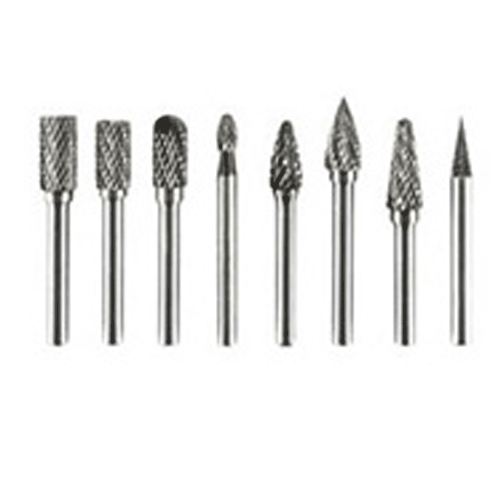
Carbide Burrs
ABRASIVES & FINISHING EQUIPMENT
SRT Industrial Tools & Equipments offers a wide range of carbide burrs.
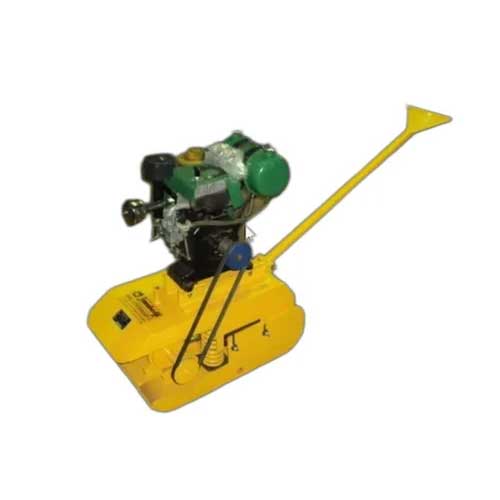
Jamshedji Soil Compactor
ABRASIVES & FINISHING EQUIPMENT
Jamshedji Constro Equip Pvt Ltd offers a wide range of jamshedji soil compactor.
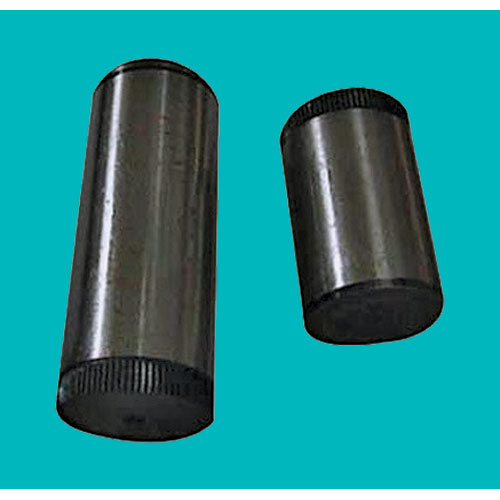
Ground Pins
ABRASIVES & FINISHING EQUIPMENT
Hans Machineries Private Limited offers a wide range of pins, hardened & ground. Read more
latest News
Subscribe to iNoW

For Industry News on WhatsApp, Give a Miss Call on: +91 84228 74016