







Schedule a Call Back


Overcoming end-of-line bottlenecks in continuous high-volume logistics
 Articles
- Aug 25,26
Automation, advanced packaging solutions and workforce adaptation can help manufacturers overcome end-of-line bottlenecks, improve throughput and build more efficient high-volume logistics operations, writes Emily Newton.
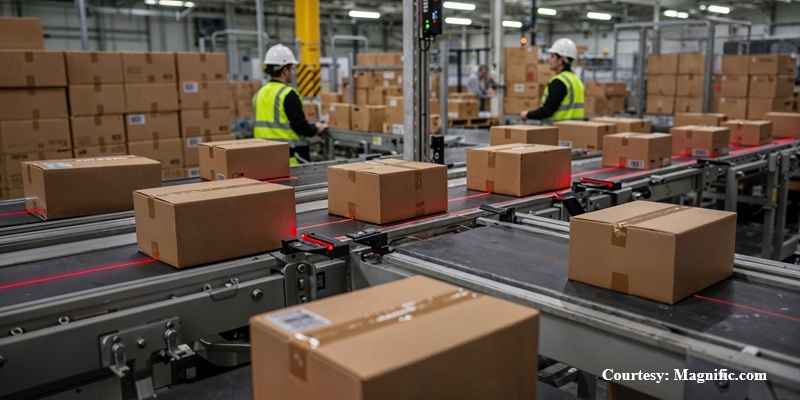
Modern logistics operations must scale production without compromising cycle times or product integrity. When upstream processes run efficiently but finished goods accumulate at the end of the line, the bottleneck limits facility output.
End-of-line constraints often stem from outdated manual processes or insufficient integration between packaging stages. Implementing reliable high-volume packaging solutions, like automatic strapping systems and shrink-wrapping equipment, can eliminate these hurdles and restore throughput capacity.
Understanding the root causes of production bottlenecks
High-volume SKU growth forces facilities to manage more product variations through the same packaging infrastructure. When upstream production outpaces downstream case packing and palletizing capacity, mismatched equipment speeds create logjams. Brief stoppages at critical nodes compound the problem, rippling backward through the entire line. At palletizing and strapping stations, manual handling creates persistent constraints that cannot match automated upstream operations.
Labor pressure at these stages has pushed facilities to view automation as a mandatory staffing solution rather than an optional efficiency enhancement. Across continuous operations, small delays accumulate and reduce daily throughput by percentages that translate into substantial lost capacity. Tracking cycle times and equipment utilisation helps operations teams locate constraints before committing capital to additional capacity that may not address the actual limitation.
Workforce challenges and the automation learning curve
Facilities must maintain operational efficiency while managing the workforce transition that accompanies new technology. Choosing systems that employees can operate, troubleshoot and maintain without excessive complexity becomes critical to implementation success.
Bridging the technical skills gap
Advanced robotics deployment creates a significant skills gap that many facilities struggle to address through existing training programs. The advancement of robotics necessitates a workforce equipped with automation skills, while automated strapping and pallet-handling equipment assumes repetitive end-of-line tasks that previously required manual labor.
Despite staffing fluctuations, automation helps facilities maintain consistent cycle times across multiple shifts. It redirects employees toward inspection and maintenance responsibilities that leverage human problem-solving capabilities. This dual benefit addresses the technical skills gap and employee concerns about displacement.
Balancing implementation costs against operational efficiency
More than equipment purchases, successful scaling demands process redesign and integration planning. Supply chain leaders must carefully balance the efficiency benefits of automation against up-front implementation costs and necessary organisational realignment.
Rather than focusing on the initial purchase price alone, evaluating the total cost of ownership against throughput gains and maintenance expenses provides a clearer picture of long-term value. Facilities that track measurable improvements, like packages processed per hour and reduced downtime, gain data-driven insight. They know which high-volume packaging solutions deliver the strongest return on capital deployed.
Reliable high-volume packaging solutions
For continuous operations, packaging equipment must handle sustained production rates rather than intermittent workloads. When selecting machinery, reliability, integration flexibility, and vendor technical assistance become essential factors. EAM-Mosca Corp. offers strapping machines, integrated solutions, and field technician networks for warehouse and logistics applications where downtime directly impacts revenue.
Through solutions ranging from drop-in strapping units to fully customized end-of-line automation, the company's complete approach delivers increased productivity and lower total cost of ownership.
Optimising uptime and daily throughput
Real-world implementations demonstrate how the right equipment choices translate theoretical efficiency gains into measurable operational improvements. HANSA-FLEX AG faced an inefficient and physically demanding pallet preparation process. Employees had to prepare around 250 heavy pallets for shipping daily using labor-intensive methods that created bottlenecks.
The company implemented a fully automated end-of-line solution from Mosca featuring the KZV-111 pallet strapping machine along with conveyor integration, weighing and labeling. The results demonstrate automation's impact on labor requirements and throughput.
"Before the new packing line was commissioned, three of our employees worked full-time to get pallets ready for dispatch. Now one or two colleagues can do it in half a day," says Felix Kaufmann, head of Central Warehouse South at HANSA-FLEX. This reduction freed personnel for other value-added tasks while maintaining the same daily output.
Simplifying legacy system integration
When complex integration delays automation projects or limits effectiveness, facilities need flexible alternatives. EAM-Mosca provides high-volume packaging solutions with controls ranging from basic zone management to sophisticated package-coordination platforms. This includes stand-alone strapping machines to customized assemblies integrated into larger production lines.
Working with original equipment manufacturers and integrators, the company offers flexible machine designs, product handling options and integrated controls. With these solutions, facilities can automate end-of-line packaging without replacing functional upstream equipment.
Streamlining technical training and ongoing support
Automated packaging equipment requires employees who understand operation, basic troubleshooting and routine upkeep. Role-specific instruction for operators and technicians proves more effective than uniform programs. "EAM-Mosca provides excellent support and training. We knew that if we had any issues, we could simply call them, and they would respond," says Richard Lesniak, a maintenance, repair and operations technical buyer.
Hands-on demonstrations and standardized troubleshooting procedures shorten the learning curve. Vendor considerations, like spare parts availability and preventive service programs, also determine how quickly facilities can resolve issues and return to production.
Frequently asked questions
Here are some common questions on overcoming production bottlenecks.
How does automated strapping compare to shrink wrapping for high-volume applications?
Automated strapping uses tensioned straps to secure cartons and palletized loads with consistent tension while resisting stock shifting during shipment. Shrink wrapping surrounds products with film and applies heat to create protective containment. Both methods suit high-volume applications, but strap-based securing offers faster cycle times and greater sustainability compared to stretch or shrink film, particularly when using PET material.
Which automated packaging solutions can handle rapid production scaling?
Modular conveyors and automatic strapping machines accommodate rapid scaling. Rather than sizing equipment only for current volumes, buyers should consider maximum cycle rates and additional production shifts. Installations with flexible controls and expandable capacity allow facilities to add throughput without replacing core machinery.
Future-proofing logistics operations
Even when upstream processes operate efficiently, end-of-line bottlenecks restrict total production capacity. Scalable automation and effective workforce training must combine to support continuous high-volume logistics operations. Planning for integration challenges and future capacity expansion helps manufacturers improve throughput while adapting to changing production demands.
About the author:
Emily Newton is a tech and industrial journalist and the Editor-in-Chief of Revolutionized magazine. Subscribe to the Revolutionized newsletter for more content from Emily.
Image Courtesy: Magnific.com
Emily Newton
Automation
End-of-Line Bottlenecks
High-Volume Logistics
Packaging Solutions
Supply Chain Efficiency
Industrial Automation
Throughput Optimisation
Smart Manufacturing
Related Stories
Electrical & Electronics
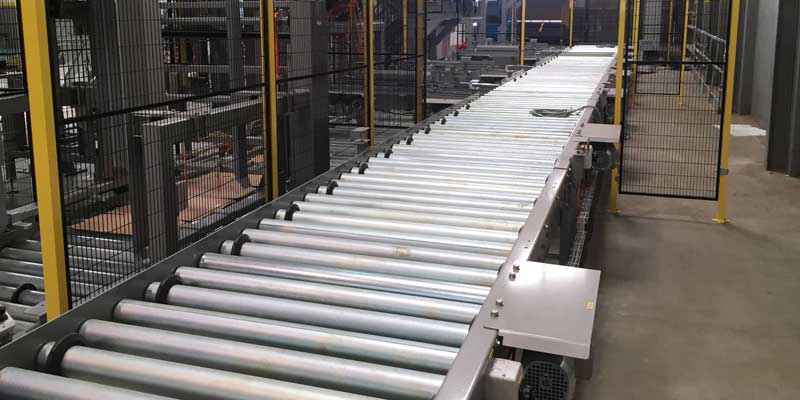
SICCO Engineering: Powering Industrial Material Movement
With over four decades of experience, SICCO Engineering Works is advancing industrial material handling through customised conveyor systems, automation solutions and high-quality roller technologies..
Read moreSmart Manufacturing

Lights-Out Manufacturing: The Future of Intelligent Circular Sawing
In this article, Prakhar Jain, CEO of the Indore-based ITL Industries Ltd, explains how the company is transforming metal cutting through smart automation.
Read moreSmart Manufacturing
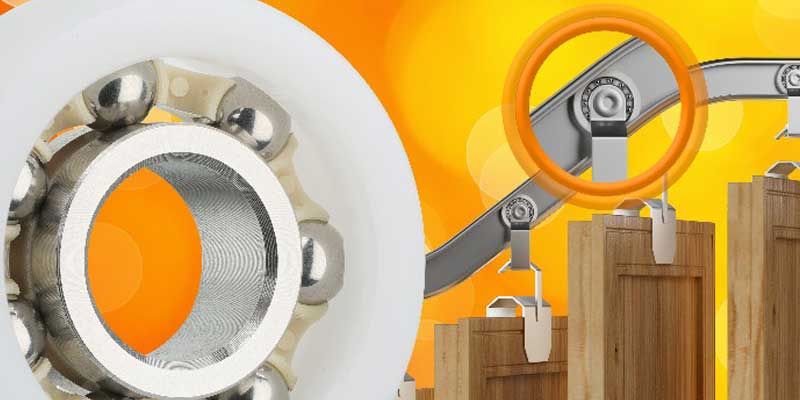
Igus Launches Hybrid Ball Bearings For Reliable, Dust-Resistant Conveyors
Igus develops maintenance-free hybrid ball bearing from the xiros series for dirt-resistant operation.
Read moreRelated Products
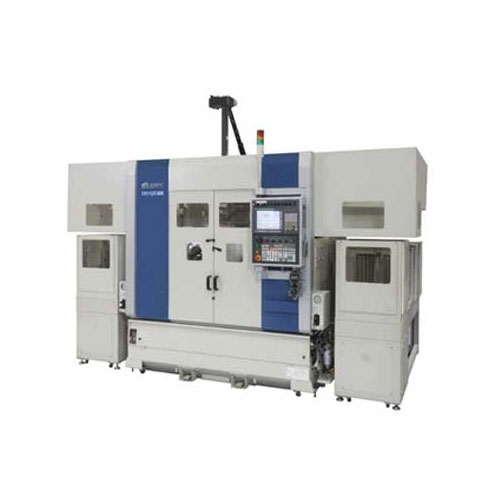
Compact Fmc - Motorum 3048tg With Fs2512
INDUSTRIAL AUTOMATION & TECHNOLOGY CONSULTANCY
Meiban Engineering Technologies Pvt Ltd offers a wide range of Compact FMC - Motorum 3048TG with FS2512.
Digital Colony Counter
INDUSTRIAL AUTOMATION & TECHNOLOGY CONSULTANCY
Rising Sun Enterprises supplies digital colony counter.

Robotic Welding SPM
INDUSTRIAL AUTOMATION & TECHNOLOGY CONSULTANCY
Primo Automation Systems Pvt. Ltd. manufactures, supplies and exports robotic welding SPM.
latest News
Subscribe to iNoW

For Industry News on WhatsApp, Give a Miss Call on: +91 84228 74016