








Schedule a Call Back


IIT Madras, UAE University develop electro-hydrodynamics based cooling solutions
 Industry News
- Aug 30,23
Scientists from the Indian Institute of Technology Madras (IIT Madras) and Khalifa University, UAE together work on electro-hydrodynamics based method for effective cooling of electronic devices with the help of Onsager-Wien Effect.
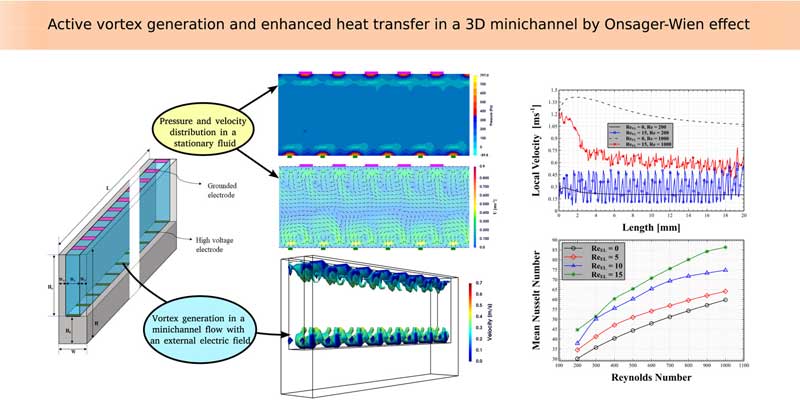
Researchers from the Indian Institute of Technology Madras (IIT Madras) and Khalifa University, UAE, have achieved noteworthy progress in enhancing heat management for miniature electronic devices, with a specific focus on applications in the field of space technology.
The researchers’ latest breakthrough in mini-channel heat exchangers has been published in the reputed peer-reviewed journal Applied Thermal Engineering*.
Professor S Vengadesan from the Department of Applied Mechanics and Biomedical Engineering at IIT Madras, together with his research student R Vishnu, collaborated on the research paper. They were joined by Dr Ahmed Alkaabi and Dr Deepak Selvakumar from Khalifa University as co-authors.
Technological Innovation
India's second space era has been characterised by remarkable technological advancements and the miniaturisation of electronic components, enabling sophisticated functionalities as evident in the ongoing Chandrayaan-3 mission. However, the widespread utilisation of these miniaturised electronic components, both in space missions and consumer electronics, gives rise to notable heat generation.
Cutting-edge high-performance computing processors can produce as much as 200-250 W or even more power, resulting in heat loads of up to 1 kW, thereby demanding efficient heat management solutions. Among these solutions, liquid-cooling systems, particularly micro/mini-channel heat sinks, are considered exceptionally suitable for effectively dissipating heat in such intricate systems.
The research undertaken by the team from IIT Madras aims to introduce a disruptive element into the smooth flow within these mini-channels through the incorporation of plate electrodes.
Elaborating on the significance of this research, Professor S Vengadesan, Department of Applied Mechanics and Biomedical Engineering, IIT Madras, said, "The new design developed by this research team uses thin plate electrodes that introduce swirling flows inside mini-channel fluids, which result in the formation of vortices at the boundaries, which in turn facilitates better heat transfer."
To validate the proposed design, the researchers employed computational techniques to simulate fluid dynamics in three dimensions. Through these simulations, they observed how the introduction of chaotic swirling flows effectively disrupted the otherwise smooth flow along the channel walls, thereby significantly improving heat transfer efficiency. This disruption is achieved through the induction of vortices at the boundary layer, a phenomenon attributed to the Onsager-Wien effect.
The implementation of a weak electric field to induce swirling flows in minichannels ensures operational safety and low power consumption. The potential applications of this study in electronic thermal management, especially within the realm of space technology, are extensive. Moreover, the flow vortices generated by the electrically charged electrodes eliminate the need for additional geometric alterations. Operating without any moving components, this design not only runs without vibration but also requires minimal maintenance.
Additionally, its electrically driven nature allows for intelligent control and rapid responsiveness. The research team intends to refine the design by exploring various electrode positions and orientations. Furthermore, the mechanism unveiled in this study holds promise for enhancing thin-film boiling processes, and the team envisions extending the application of this design to two-phase heat transfer systems.
*https://doi.org/10.1016/j.applthermaleng.2023.121064
IIT Madras
UAE University
electro-hydrodynamics
cooling solutions
Onsager-Wien Effect.
IIT Madras
Applied Thermal Engineering
Professor S Vengadesan
Chandrayaan-3 mission
Cutting-edge high-performance computing processors
space technology
two-phase heat transfer systems
Related Stories
Aerospace Defence
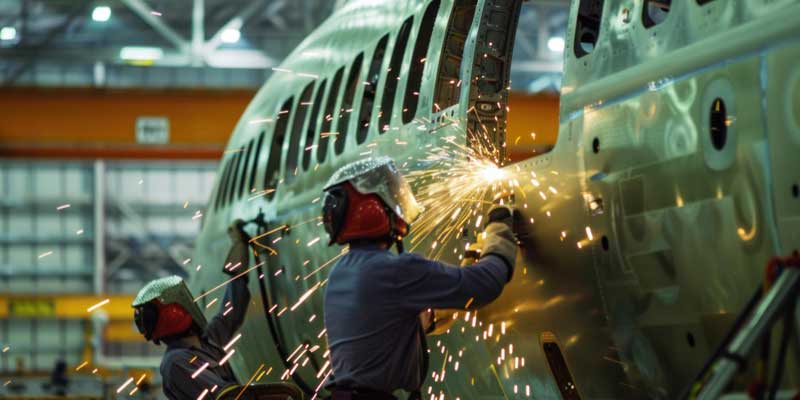
The New Manufacturing Engine of Indian Aerospace
India’s aerospace sector is moving beyond assembly, building indigenous capabilities in precision engineering, avionics and advanced manufacturing to compete globally, writes Ashlin Rajan.
Read moreAerospace Defence
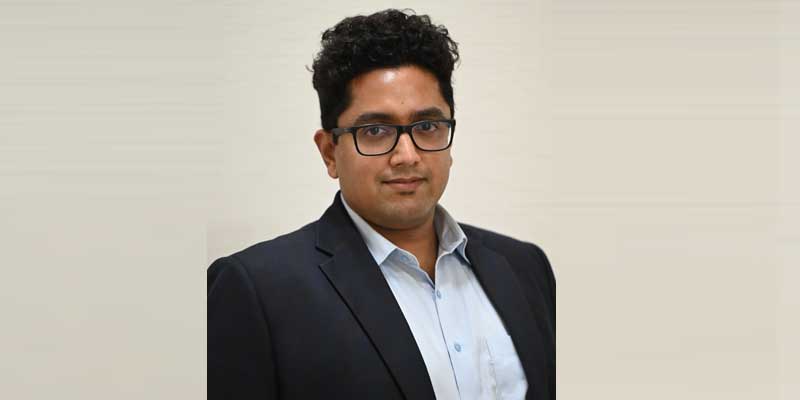
India must move from sourcing to aerospace exports: Agnishwar Jayaprakash
Agnishwar Jayaprakash, Founder and CEO, Garuda Aerospace speaks to Ashlin Rajan on India’s aerospace manufacturing, indigenous technology, advanced systems and the road to global competitiveness.
Read moreAerospace Defence
Aeron Systems raises Pre-Series B funding to expand deep-tech capabilities
Aeron Systems secures Pre-Series B funding to scale manufacturing, accelerate R&D and strengthen its aerospace, defence and industrial technology solutions.
Read moreRelated Products

Inbuilt Heat Exchanger
Heating and Drying Equipment & Accessories
Economode Food Equipment (India) Private Limited offers inbuilt heat exchanger.
Read more
Dryer
Heating and Drying Equipment & Accessories
Vincitore Solutions & Equipment LLP's offers a wide range of dryer.
< Read more
Waste Heat Recovery Module
Heating and Drying Equipment & Accessories
Thermodyne Engineering Systems offers a wide range of waste heat recovery module.
latest News
Subscribe to iNoW

For Industry News on WhatsApp, Give a Miss Call on: +91 84228 74016