






Schedule a Call Back


How smart machines are transforming the future of Indian manufacturing
 Articles
- Nov 27,26
Intelligent machining, Smart manufacturing, Industrial automation, Artificial intelligence (AI), Industrial Internet of Things (IIoT), Industrial robotics, Predictive maintenance, Digital twins, Physical AI, Industry 4.0
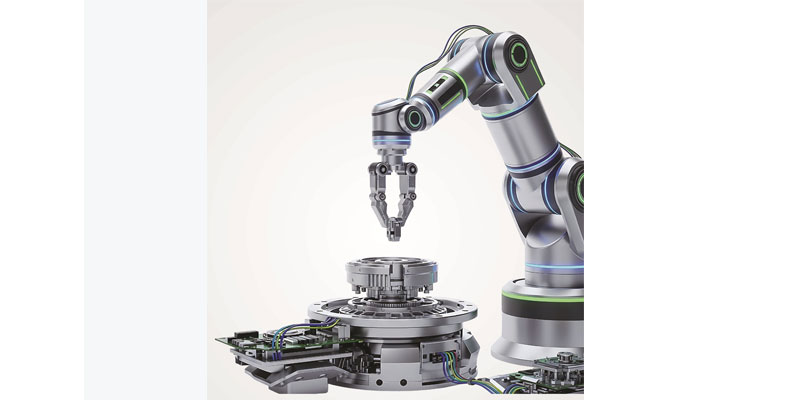
The manufacturing industry is undergoing a fundamental transformation. Machines are no longer merely programmed to perform repetitive operations; they are increasingly capable of sensing conditions, interpreting information, communicating with other systems and responding to changing production requirements. This shift towards intelligent, connected and adaptive manufacturing is redefining how factories operate, how companies evaluate investments and how manufacturers prepare for the future.
At the centre of this transition is the emergence of smart machines, which combine automation with sensing capabilities, data processing, machine vision, artificial intelligence (AI) and the Industrial Internet of Things (IIoT). Unlike conventional equipment that operates within predefined parameters, smart machines can provide real-time operational insights, identify abnormalities, support predictive maintenance and, in certain applications, adjust processes automatically.
For Indian manufacturers, the implications extend well beyond improving machine speeds. The transition offers opportunities to reduce downtime, enhance product quality, accommodate changing production requirements, optimise resource utilisation and strengthen global competitiveness. However, realising these benefits requires more than installing sophisticated equipment. It demands a structured approach to technology adoption, system integration, workforce development and long-term operational planning.

From automation to intelligent manufacturing
The transition from conventional automation to intelligent manufacturing begins with a fundamental requirement: understanding what is happening on the shopfloor. Traditionally, manufacturers have relied heavily on operator experience, historical records and manual observations to assess machine performance and resolve production problems. Although these approaches remain useful, they often limit the speed and accuracy of operational decisions.
According to Chandrashekar Bharathi, MD, AceMicromatic Manufacturing Intelligence Technologies Pvt Ltd (AceMicromatic MIT), the shift towards connected manufacturing is driven by the business priorities that have always mattered to manufacturers, irrespective of their size. “They are driven by a few key factors that determine business performance, such as productivity, quality, cost, delivery and safety. Conventional, unconnected machines offer limited visibility into actual production conditions, leaving decisions dependent on individual judgement and past experience,” he explains.
The evolution towards intelligent manufacturing, he notes, follows five stages. The first involves making machines connectable and bringing them onto a common network. The second provides real-time visibility into machine operations, while the third focuses on understanding why particular events or deviations occur.
The fourth stage introduces predictive capabilities, enabling manufacturers to anticipate operational developments. The fifth represents a closed-loop manufacturing environment in which machine data is continuously processed and used to improve operational parameters.
“This is truly a closed-loop virtuous cycle in which data generated by machines is processed. This progression marks an important distinction between collecting production data and using it to influence manufacturing outcomes,” Bharathi states.
A connected machine may report its operating condition, production output or downtime. An intelligent manufacturing system can analyse that information, establish patterns, identify emerging problems and recommend or initiate corrective action. The industry is entering a significant phase of technology adoption. Early experimentation is giving way to wider acceptance as manufacturers begin to recognise measurable business benefits.
Bharathi indicates, “Some manufacturers are realising returns on their investments within weeks or months, while certain applications are generating substantial annual returns. Although the extent of these benefits varies by application, the growing emphasis on measurable outcomes is strengthening the case for connected manufacturing.”
Another important development is the changing relationship between machines and enterprise decision-making. Historically, information from production equipment was often confined to machine operators, maintenance personnel or individual departments. Connected technologies can make this information accessible across production planning, procurement, logistics and management functions.
This creates opportunities for manufacturers to respond more effectively to changes in demand, machine availability, delivery schedules and quality requirements. Bharathi stresses that the eventual objective is not simply to connect machines but to establish an intelligent operational ecosystem in which data supports continuous improvement.
For manufacturers, therefore, Industry 4.0 is increasingly becoming a practical business proposition rather than an abstract technological concept. However, the availability of connected equipment alone does not guarantee an intelligent factory. Manufacturers must also understand their operational objectives, select relevant technologies and build the capabilities required to interpret and act upon the information generated.

Building India's indigenous smart machine capabilities
As India seeks to strengthen its manufacturing ecosystem, the ability to design, develop and maintain intelligent machines domestically is becoming increasingly important. While imported equipment provides access to established technologies, long-term competitiveness also depends on building indigenous engineering capabilities, developing multidisciplinary talent and creating solutions suited to Indian manufacturing requirements.
Emphasising that smart machine development is inherently multidisciplinary, Dr Nagahanumaiah, Director, Central Manufacturing Technology Institute (CMTI), states, “A modern intelligent machine combines mechanical design, manufacturing process knowledge, electronics, controls, software, data processing and communication technologies. More advanced applications may require expertise in optics, materials science, laser technology and computer vision.”
He cites metal additive manufacturing equipment as an example of this complexity. Developing such machines requires not only mechanical design and testing capabilities but also an understanding of optics, material behaviour, laser-material interactions, control systems and software. These requirements make collaboration across engineering disciplines essential.
For India, Dr Nagahanumaiah outlines three broad approaches to acquiring advanced manufacturing capabilities. Companies can purchase equipment from established international suppliers, develop partnerships or licensing arrangements with technology leaders, or invest in developing their own technologies. Each approach has advantages and limitations. However, he argues that long-term technological self-reliance requires the creation of domestic engineering capabilities, regardless of the initial route adopted.
Importantly, indigenous capability does not necessarily mean that every component or technology must be developed within one organisation. It involves building a wider ecosystem of designers, researchers, manufacturers, technology providers and skilled professionals capable of developing, customising, operating and maintaining advanced equipment.
Dr Nagahanumaiah believes international partnerships are important for Indian companies, but they must also focus on developing their own technical strengths.
Designing for flexibility and adaptability
The changing nature of manufactured products is also posing a challenge. Modern products are becoming smaller, more complex and increasingly multifunctional. Product lifecycles are shortening, while manufacturers are often required to produce smaller batches and respond to changing specifications.
Under these conditions, investing in rigid, highly specialised equipment can become economically challenging. Dr Nagahanumaiah, therefore, advocates modular and reconfigurable machine architectures that can accommodate changing production requirements without extensive reconstruction or replacement. Such an approach could allow manufacturers to extend equipment life, reduce modification costs and improve adaptability.
Developing domestic capabilities can reduce dependence on external service networks and create local expertise for equipment maintenance, modification and upgrading. “Machines built in India are definitely more economical,” Dr Nagahanumaiah observes.
However, cost advantages alone will not establish a competitive domestic smart machine industry. Indian manufacturers must also develop reliable technologies, demonstrate consistent performance and create an ecosystem that supports continuous innovation. This requires coordinated investment in research, engineering education, prototyping, technology commercialisation and industrial partnerships.
Smart automation reshaping production and packaging
The benefits of intelligent machines are becoming particularly visible in production environments where manufacturers must handle greater product variety, shorter production runs and increasingly demanding delivery schedules. For industries such as packaging, consumer goods and automotive components, conventional automation is often constrained by frequent changeovers, unplanned stoppages and variations in production flow.
Improving productivity involves much more than increasing the rated speed of a machine. “Productivity is not only about improving machine speed but also about controlling other hidden losses,” stresses Krunal Kantale, Co-Founder & MD, Alligator Automations India Pvt Ltd.
A machine designed to manufacture ten products per minute does not necessarily deliver 600 finished products every hour. Actual output depends on several factors, including minor stoppages, manual interventions, equipment faults, line balancing, material availability and changes in stock-keeping units (SKUs). Smart automation addresses these losses by providing better information about operating conditions and enabling production systems to respond more intelligently.
Kantale illustrates this through the example of a robotic palletising line. In a conventional arrangement, a delay in removing completed pallets can cause upstream equipment to stop, interrupting the entire production sequence. An intelligently designed system can instead generate alerts, utilise accumulation capacity and adjust operating speeds to maintain production until the downstream interruption is resolved. The result is not necessarily a faster individual machine but a more efficient overall production line.
Flexibility is another major advantage. Traditional manufacturing equipment often requires operators to adjust mechanical guides, change machine heights or manually configure operating parameters whenever a new product is introduced. These activities consume production time and create opportunities for errors.
Connected robotics, servo systems, machine vision and software-controlled adjustments can significantly simplify the process. “Flexibility is essentially about moving from manual adjustments to software-driven controls,” Kantale explains.
He describes how a vision-enabled system could identify whether an incoming product weighs 250 g or 500 g and adjust machine parameters or robotic handling arrangements accordingly. Rather than depending entirely on manual changeovers, the system can respond to the characteristics of the product being processed.
This is becoming increasingly relevant for packaging manufacturers dealing with different product dimensions, packaging configurations, pallet patterns and batch sizes. Kantale notes that packaging requirements are changing rapidly as manufacturers introduce more product variants, smaller batches and customised packaging.
Robotics offers the physical flexibility to handle these variations, while machine vision helps identify products and assess their condition during production. IoT-enabled systems provide information about overall equipment effectiveness (OEE), production losses and machine performance. AI-based analytics can further support line balancing, predictive maintenance and operational planning.
Together, these technologies allow manufacturers to make informed decisions rather than simply react to breakdowns. “With conventional machines, operators need to physically inspect the equipment to identify faults whenever a machine stops. Modern connected equipment, by contrast, can provide information about why it stops, how frequently the problem occurs and how much productivity is lost. This reduces the time required for fault identification and allows maintenance personnel to prioritise interventions more effectively,” Kantale explains.
Highlighting a significant development, he says, “Real transformation happens when the entire connected production line becomes smarter, rather than individual pieces of equipment.”
In such environments, machines will increasingly communicate with upstream and downstream systems, coordinating their activities to maintain production flow. A change in the output rate of one machine could trigger appropriate adjustments across the connected line.
The importance of this development becomes evident in high-speed industries. Subba Bangera, Chairman, Active Biz Solutions Pvt Ltd, draws on his experience in the beverage industry to illustrate the remarkable evolution of automated production. He recalls that, in 1994, a requirement for a bottling machine producing 1,000 bottles per hour was considered significant. By 2013, the industry witnessed bottling lines operating at 60,000 bottles per hour. “We have almost 27 smart machines in each line. Everything has to communicate with each other,” he says.
At such speeds, even minor interruptions or quality deviations can create substantial losses. Consequently, intelligent inspection, coordinated control and automated rejection systems become essential. Bangera explains, “High-speed cameras can identify unsuitable inputs before processing, while additional inspection systems check the output before it moves to the next machine. This helps prevent defective products from progressing through successive manufacturing stages.”
For manufacturers, however, the broader lesson is that productivity gains arise from coordination across the entire manufacturing system rather than from isolated improvements in machine speed.
Making robotics investments deliver real value
Although robotics adoption is expanding, investing in advanced automation does not automatically guarantee operational improvements. Successful implementation depends on identifying the right applications, understanding existing production constraints and ensuring that the technology can be operated and maintained throughout its lifecycle.
Naresh Nagarwal, CEO, CNN Robotics, emphasises that manufacturers should begin their automation journey by examining the problems they want to solve. “Where is your pain point? Why do you need automation at this stage of your process?” he asks.
He cautions against investing in robotics simply because competitors have automated their operations or because robots are perceived as technologically advanced. A company may be facing inconsistent product quality, excessive cycle times, frequent manual interventions, safety concerns, labour shortages or fluctuations in demand.
Each problem requires a different technological response. Importantly, automation does not always mean installing a robot. In some circumstances, changing the production layout, introducing a special-purpose machine or improving material handling may produce better results at a lower cost.
Nagarwal stresses the importance of establishing a clear operational baseline before selecting an automation solution. Manufacturers should evaluate current cycle times, OEE, rejection rates, downtime, changeover requirements, safety performance and production costs.
These measurements provide a basis for defining realistic improvement targets and evaluating the benefits of automation after commissioning. They also help establish clear expectations between manufacturers and system integrators. Without agreed performance requirements, companies may encounter disagreements over system capabilities, commissioning schedules and return on investment.
Another important consideration is the stability of the existing manufacturing process. “Unless your process is stable and tolerances are correct, automation does not work effectively,” Nagarwal states. The underlying message is that automation cannot compensate for fundamentally unreliable production processes.
If incoming components vary excessively in dimensions or quality, even a sophisticated robotic system may struggle to deliver consistent output. Manufacturers must, therefore, address process variation before attempting to automate it.
Nagarwal also warns that simulation models do not always reflect the full complexity of actual manufacturing environments. A robotic system may perform effectively in design software but encounter difficulties when integrated with existing programmable logic controllers (PLCs), production equipment, inspection systems, material-handling arrangements and IT infrastructure. These factors must be considered during system design rather than after installation.
Future flexibility is equally important. Manufacturers should assess whether an automation system can accommodate changes in product dimensions, variants, production volumes and operating requirements. A solution that performs well for one product today may become restrictive if market demand changes.
Beyond capital expenditure
Beyond technical design, Nagarwal places considerable emphasis on maintenance and workforce readiness. “A one-time capital investment is easy, but what about critical spare parts? What about training?” he asks.
Equipment purchases represent only the initial investment. Long-term performance also depends on operating expenditure, maintenance capability, software support, spare-parts availability and employee training. Changes in personnel can create additional challenges when operational knowledge is concentrated among a small number of individuals.
If experienced operators or maintenance personnel leave without transferring their knowledge, the manufacturer's ability to operate sophisticated equipment may suffer. For this reason, Nagarwal advocates involving production teams in automation planning and system development.
Operators and maintenance personnel should understand the objectives, capabilities and limitations of the technology before it is handed over for regular production. He also recommends a phased approach. “Do not go for full automation. Start with a small block,” he advises.
Starting with a limited application allows manufacturers to validate the technology, train employees, establish operational performance and identify integration challenges before expanding automation across the factory. This reduces implementation risks and helps build confidence among the workforce.
The importance of measuring operational performance is reinforced by Nagarwal's experience of investigating delayed customer deliveries. Different departments offered different explanations for the same production problem, revealing the absence of a common and reliable information base.
Smart systems can help address this problem by creating greater operational transparency. For manufacturers, the priority should, therefore, be to develop reliable systems that solve clearly defined business problems rather than pursuing automation for its own sake.
Connecting machines, data and industrial intelligence
As more manufacturing equipment becomes connected, the challenge shifts from generating data to integrating it meaningfully across the factory. Modern industrial environments may contain CNC machines, robots, coordinate measuring machines, digital gauges, special-purpose equipment, utilities and multiple generations of control systems.
These technologies frequently use different communication protocols, software platforms and data structures. Ensuring that they can exchange information is essential for creating an integrated manufacturing ecosystem.
Chandrashekar Bharathi identifies technological interoperability as a critical requirement. “You need to have an architecture and a platform that can seamlessly integrate any machine, any controller and any application,” he states.
He argues that manufacturers need technology-agnostic platforms capable of collecting information from diverse equipment and processing it according to operational requirements. The challenge is not simply the volume of information generated but also its speed, variety and intended use.
Some data requires immediate action, particularly when it relates to machine safety, process control or operational deviations. Other information can be processed periodically to support maintenance planning, production optimisation or management decisions.
Historical data may be stored for long-term analysis, performance benchmarking and AI model development. Bharathi also emphasises the importance of integrating shopfloor information with enterprise applications. Manufacturers commonly use enterprise resource planning (ERP), supply chain management (SCM) and customer relationship management (CRM) systems.
Connecting these platforms with production equipment can create a more complete digital record of manufacturing activities. Information can then flow between procurement, planning, production, quality, maintenance and logistics.
This interconnected environment provides the foundation for what Bharathi describes as a digital thread running across business processes. It can also reduce dependence on knowledge held by individual employees by making critical operational information more widely accessible.
However, integration must be flexible enough to accommodate changing business requirements. A manufacturer may need one application today and an entirely different capability in the future.
Rigid digital architectures can restrict such changes, while modular systems can enable new use cases to be introduced more easily. For AI to deliver sustained value, it must be supported by relevant operational information and integrated into everyday manufacturing processes. This requires connected data sources across production, maintenance, design, procurement and other business functions. The potential applications are extensive.
Predictive analytics can identify patterns associated with equipment deterioration. Machine vision can inspect products and support robotic handling. Intelligent planning systems can analyse production constraints and recommend adjustments to schedules.
Naresh Nagarwal highlights the importance of predictive maintenance. “Traditionally, manufacturers have often scheduled equipment maintenance at fixed intervals, irrespective of actual operating conditions. However, machines running three shifts experience different levels of utilisation from those operating only one shift. Condition monitoring and predictive analytics can help manufacturers assess equipment usage, anticipate maintenance requirements and prepare for servicing before critical production periods,” he says.
This is especially important in high-speed manufacturing environments, where even brief interruptions may affect substantial production volumes. Intelligent maintenance planning can also support spare-parts management, particularly when replacement components must be imported.
Looking ahead, Nagarwal identifies digital twins as an important opportunity. Virtual representations of equipment and production lines could allow manufacturers to test process changes, evaluate alternative configurations and assess potential improvements without repeatedly interrupting physical production.
Together, IIoT, AI, machine vision, predictive analytics and digital twins are creating the foundation for more autonomous manufacturing systems. Yet the effectiveness of these technologies will ultimately depend on the quality of integration and the reliability of the data supporting them.
Sustainability, collaboration and the next generation
The rise of smart machines is also changing how manufacturers approach sustainability, workforce development and long-term competitiveness. Intelligent equipment can contribute to resource efficiency through more precise process control, reduced rejection rates, better energy management and improved equipment utilisation.
Subba Bangera highlights the transition from hydraulic and hydromechanical machine systems towards electrically driven equipment using servo motors. “We are using mostly servo motors, which results in tremendous energy savings. Such developments can reduce energy consumption while providing greater control over machine operations. Smart manufacturing also creates opportunities to examine how energy is used across different stages of production,” he explains.
Bangera refers to plastic-processing applications in which equipment must repeatedly heat and cool materials or moulds. By analysing these requirements, manufacturers can identify opportunities to reduce energy losses and improve process efficiency.
Quality control is another important contributor to sustainability. Defective inputs, process variations and rejected finished products increase material consumption and operational waste. Intelligent inspection systems can help identify unsuitable material before processing and detect defects before products move downstream.
Bangera emphasises that controlling inputs and outputs is central to reducing waste. “If the input is bad, I do not feed it into the machine,” he states. This approach highlights the role of intelligent quality assurance in improving both production efficiency and resource utilisation.
Bangera recalls the challenges faced by machine manufacturers during the COVID-19 pandemic, when international travel restrictions made installation, commissioning and servicing difficult. These circumstances accelerated the adoption of remote technical support and encouraged greater collaboration between equipment manufacturers and service personnel. The experience demonstrated that connected technologies could support not only machine operations but also equipment servicing across geographical boundaries.
Beyond sustainability, the development of smart manufacturing will depend heavily on innovation partnerships. Dr Nagahanumaiah argues that no single organisation can independently develop every capability required for advanced manufacturing systems. “Cooperation and collaboration are always the best mantra,” he states.
He describes an innovation ecosystem in which manufacturers identify practical problems, academic institutions contribute scientific knowledge and research organisations provide facilities and expertise for developing and validating technologies.
Industry participation is particularly important when converting laboratory demonstrations into commercially viable solutions. A technology that performs successfully under controlled research conditions may encounter significant challenges in actual production environments.
For India's manufacturing sector, collaboration could play an important role in making advanced technologies accessible to companies that lack the resources to develop them independently. This is particularly relevant for micro, small and medium enterprises (MSMEs) and lower-tier suppliers.
Nagarwal observes that while large original equipment manufacturers (OEMs) and Tier 1 suppliers often possess advanced manufacturing systems, automation adoption remains uneven across Tier 2, Tier 3 and Tier 4 companies.
He argues, “Technology providers and system integrators must develop solutions that meet the financial and operational requirements of smaller manufacturers. We have to develop cost-competitive technologies that meet the requirements of SMEs and Tier 2, Tier 3 and Tier 4 suppliers.”
Without broader adoption across supply chains, the benefits of intelligent manufacturing could remain concentrated among larger organisations. Affordable automation, modular equipment and phased implementation models could help bridge this gap.
Physical AI and the road to autonomy
Looking towards the next five years, Krunal Kantale identifies physical AI as a potentially significant development. He envisages machines becoming increasingly sensor-driven and adaptive, with robots capable of interpreting tasks and determining appropriate actions rather than depending entirely on predefined movement sequences. “Physical AI should be the next thing we look at,” he says.
He suggests that future robotic systems could use camera inputs and natural-language instructions to understand production requirements. Instead of programming every movement between fixed positions, operators might describe the required task, allowing intelligent systems to plan suitable actions within defined operating constraints. “The new programming language would be English,” Kantale remarks.
While this remains an emerging direction rather than an established capability across industrial robotics, it highlights the potential for AI to make advanced automation more accessible and adaptable. Nagarwal also points towards increasingly autonomous factories, particularly for operations involving hazardous materials.
However, Dr Nagahanumaiah cautions against focusing exclusively on individual emerging technologies. Manufacturers should remain receptive to multiple innovations and evaluate them according to their practical contribution to operational improvement.
Dr Nagahanumaiah stresses that technology cannot deliver meaningful progress without people who possess the skills, knowledge and motivation to use it effectively. “Be open and embrace technology that makes your tomorrow better than yesterday,” he advises.
Smart manufacturing is ultimately a combination of technology, engineering capability, organisational readiness and human expertise. For India, the opportunity lies in developing an industrial ecosystem where intelligent manufacturing is not limited to a small number of advanced factories but becomes increasingly accessible across sectors, regions and company sizes.
Rise of smart machines
The rise of smart machines marks a decisive shift in manufacturing, moving factories from isolated automation towards connected, adaptive and increasingly intelligent production systems. As industry experts emphasise, the benefits of this transformation depend not merely on technological sophistication but on measurable improvements in productivity, quality, flexibility, sustainability and operational efficiency. For Indian manufacturers, indigenous technology development, affordable automation, interoperability, collaborative innovation and workforce readiness will be essential to expanding adoption across the industrial ecosystem.
Emerging capabilities such as physical AI, digital twins and autonomous production systems promise to extend the boundaries of intelligent manufacturing, but their success will depend on practical implementation and clearly defined business objectives. Ultimately, the factories that succeed will be those that combine smart technologies with sound engineering, skilled people and a long-term strategy for continuous improvement.
Intelligent machining
Smart manufacturing
Industrial automation
Artificial intelligence (AI)
Industrial Internet of Things (IIoT)
Industrial robotics
Predictive maintenance
Digital twins
Physical AI
Industry 4.0
Related Stories
Smart Manufacturing
How smart machines are transforming the future of Indian manufacturing
Intelligent machining, Smart manufacturing, Industrial automation, Artificial intelligence (AI), Industrial Internet of Things (IIoT), Industrial robotics, Predictive maintenance, Digital twins, Phy..
Read moreGears, Motors & Drives

Ashoka Bearing: Five Decades of Trust and Industrial Excellence
Trusted by businesses across the country, Ashoka Bearing Enterprises sees considerable potential in leveraging its experience, product portfolio and customer relationships to support Indian industri..
Read moreSmart Manufacturing

Moving AI From Pilots to Dependable Decisions on the Factory Floor
AI is spreading across manufacturing, but few plants have scaled it. From smarter quality control to adaptive robots, success depends on clean data, workforce readiness and disciplined deployment, e..
Read moreRelated Products
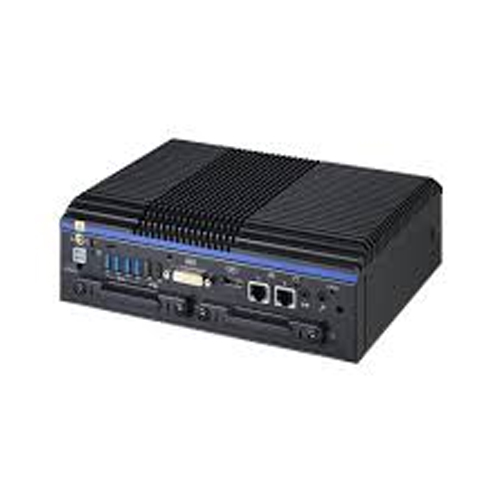
Fanless Industrial Pc for Smart Manufacturing
Smart Manufacturing
CONTEC Launches BX-M4600 Series - Fanless Industrial PC for Smart Manufacturing.
latest News
Subscribe to iNoW

For Industry News on WhatsApp, Give a Miss Call on: +91 84228 74016