






Schedule a Call Back


Future Factory Expo Roundtable Discusses Blueprint To Upgrade Indian Factories
 Articles
- Aug 29,26
During the roundtable, hosted by Future Factory Expo (FFE), industry leaders discuss how automation, AI, engineering excellence and digital transformation can help Indian factories achieve global benchmarks in productivity, quality and competitiveness
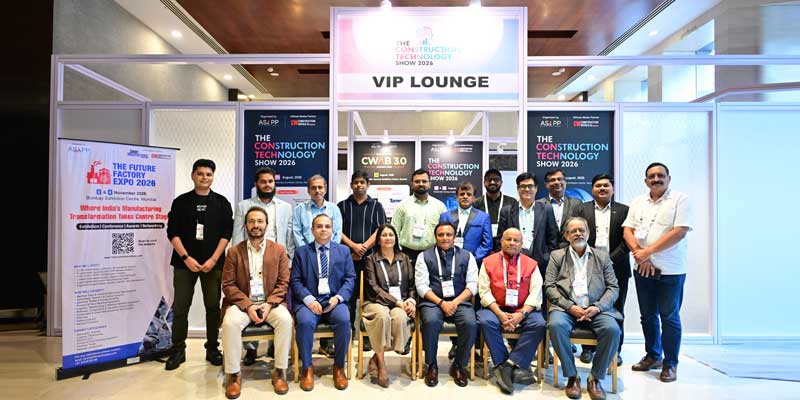
India stands at a defining moment in its manufacturing journey. With its scale, engineering talent and expanding market opportunity, the country has the potential to emerge as one of the world’s leading manufacturing hubs. However, achieving globally benchmarked levels of productivity, quality, sustainability and operational resilience will require a deeper transformation across technology, processes, people and supply chains.
To explore the roadmap for this transformation, Smart Manufacturing & Enterprises (SM&E), in association with The Future Factory Expo 2027, organised a roundtable on “Elevating Indian Factories to Global Standards” on August 19, 2026, at NESCO, Goregaon, Mumbai. The discussion served as a precursor to the two-day Future Factory Expo 2027, scheduled to be held in March 2027 at NESCO, Mumbai.
The roundtable brought together industry leaders, technology providers and manufacturing experts to discuss the challenges preventing Indian factories from reaching global levels of efficiency and competitiveness, while exploring the role of automation, artificial intelligence (AI), Industrial IoT, digitalisation and advanced engineering practices in shaping the future of manufacturing.
Setting the context for india’s manufacturing transformation
In his welcome address, Pratap Padode, Managing Director, ASAPP Info Global Group & Editor-in-Chief, SM&E, highlighted that the future of manufacturing will depend on how effectively companies adopt technology, automation and smarter processes to improve productivity, quality and compliance.
He emphasised that while larger organisations with revenues of ?2,000–3,000 crore or more are generally better positioned to identify technology and machinery requirements, the larger opportunity lies among small and medium-sized manufacturers. For companies in the ?50 crore to ?200 crore and ?200 crore to ?600–700 crore segments, the key challenge is understanding where to invest, which processes to automate, what benefits can be achieved and how quickly returns can be realised.
According to Padode, smart manufacturing does not necessarily require a complete replacement of existing systems. Instead, manufacturers can begin with targeted interventions, modernise gradually and achieve measurable improvements in productivity, quality and competitiveness. As customer expectations, export requirements, government standards and sustainability norms become more demanding, technology adoption will increasingly become essential.
Overcoming the barriers to global competitiveness
One of the key themes emerging from the discussion was that technology alone cannot transform manufacturing. Strong engineering fundamentals, process discipline, standardisation and data-driven decision-making must form the foundation of industrial progress.
Vijayanand Choudhary, CEO, ShreeTech Data Ltd, reflected on his experience across AI, automation, IoT, VLSI design and manufacturing, stating, “It can be done.” He stressed the need for India to focus more strongly on core engineering, product development, indigenous design and intellectual property creation.
“Let us focus on ensuring the core is good,” he said, highlighting that India’s manufacturing growth must move beyond providing talent and towards owning the design, technology and know-how behind products. He added that foreign investment in advanced manufacturing and semiconductors should result in meaningful technology transfer and domestic capability building. “Evolution does not happen in five days,” he noted, underlining the need for sustained effort and long-term thinking.
Manish Poudwal, Chairman & Managing Director, Subtronics (India) Pvt Ltd, pointed towards the need for Indian SMEs to strengthen standardisation, automation, data utilisation, quality systems and process discipline. “Automation does not have to begin with Industry 4.0; it can start with the step-by-step automation of individual processes,” he said.
He explained that automation creates value by improving consistency, repeatability, quality and control. He also highlighted that “quality does not begin in the QC department; it begins with vendor selection and continues through every stage of the process.” According to him, Indian businesses must become process-driven rather than individual-driven, supported by stronger systems, standards and certifications.
Prasad Marudkar, Director, Arcraft Plasma Equipment India Pvt Ltd, reinforced the importance of strengthening engineering fundamentals. “Engineering does not begin with automation. It begins with understanding the fundamentals,” he said.
While acknowledging India’s achievements in software and digital technologies, he cautioned that core engineering knowledge must remain central to industrial development. “Software should support engineering talent, not replace the understanding behind it.” He added that advanced technologies such as automation, CNC systems and semiconductor manufacturing can deliver greater impact when supported by strong foundational knowledge. “If you understand the fundamentals, you can use sophisticated technology far more effectively.”
Building data-driven and AI-ready factories
The discussion also highlighted that digital transformation must begin with reliable systems and data foundations before manufacturers move towards AI-driven operations. Akash Patil, Practice Lead – Enterprise AI, Manufacturing, Findability Sciences, noted that Indian manufacturers are currently at different levels of digital maturity, making standardisation a challenge. He pointed out that many organisations aim to become AI-centric without first becoming technology- and data-centric.
“If one side of your factory is not talking to the other side, AI cannot solve the problem,” he said. According to Patil, the manufacturing journey must progress from domain-centric operations to technology-centric, data-centric and finally AI-centric systems. With the right SOPs, technology infrastructure and skills, Indian manufacturers can build capabilities to produce for global markets.
Innovation, Intellectual Property and Future Growth
Beyond technology adoption, experts highlighted the importance of innovation and intellectual property creation for India’s long-term manufacturing competitiveness. Subba Bangera, President, Active Biz Solutions, noted that while patents can be challenging, companies should not view them as barriers. “We should not be afraid of these obstacles; we need to find ways to overcome them,” he said.
Drawing from examples of companies holding multiple patents and successfully exporting to global markets, Bangera emphasised that Indian start-ups and manufacturers need better guidance on protecting, developing and commercialising innovations. With stronger awareness, mentoring and determination, companies can convert ideas into successful businesses.
Other experts who participated in the roundtable discussion included Saber Sayyed, Director – BD, Burak Metering Pvt Ltd; Salman Lanjekar, CMO, Burak Metering Pvt Ltd; Mohan Suryawanshi, Consultant, Sainterview Tech Pvt Ltd; Dr Sharmila Amin, Managing Director (South Asia India), Bertling Logistics India Pvt Ltd; Harshvardhan Pagare, Key Account Manager, Honeywell; Girish Aralikatti, Principal Consultant, Aum Universal; Yallaling J, Regional Sales Manager, PULS Power; ND Mhatre, Director General (Tech), ITAMMA (Indian Textile Accessories and Machinery Manufacturers Association); Aniket Munshi, Founder & CEO, Perfaktry; and Vikramjeet Dhingra, AVP – Sales, Wika Process Solutions India Pvt Ltd, among others.
Future Factory Expo: Enabling the Next Manufacturing Leap
The roundtable reinforced the importance of platforms that connect manufacturers, technology providers, consultants and industry experts to accelerate practical adoption of smart manufacturing solutions. Future Factory Expo 2027 will provide such a platform by bringing together stakeholders focused on automation, robotics, AI, Industrial IoT, digital transformation, manufacturing excellence and future-ready operations.
As Indian manufacturers seek to compete globally, the path forward will depend on combining technology adoption with engineering excellence, skilled talent, strong processes and innovation-driven thinking. The transition towards global-standard factories will not happen overnight, but through continuous improvement, collaboration and focused investments, India can build a manufacturing ecosystem capable of competing with the best in the world.
Smart Manufacturing
Future Factories
Indian Manufacturing
Industry 4.0
Automation
Artificial Intelligence
Industrial IoT
Digital Transformation
Manufacturing Excellence
Factory Automation
Operational Efficiency
Vijayanand Choudhary
ShreeTech Data
Manish Poudwal
Subtronics
Prasad Marudkar
Arcraft Plasma Equipment
Akash Patil
Findability Sciences
Honeywell
Related Stories
Smart Manufacturing
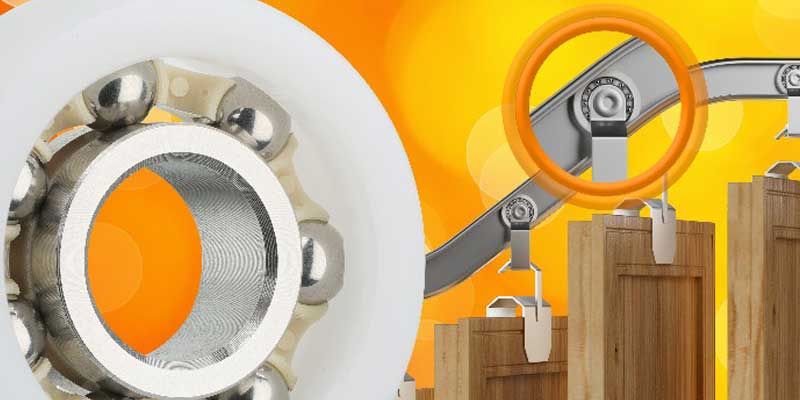
Igus Launches Hybrid Ball Bearings For Reliable, Dust-Resistant Conveyors
Igus develops maintenance-free hybrid ball bearing from the xiros series for dirt-resistant operation.
Read moreConstruction Equipment
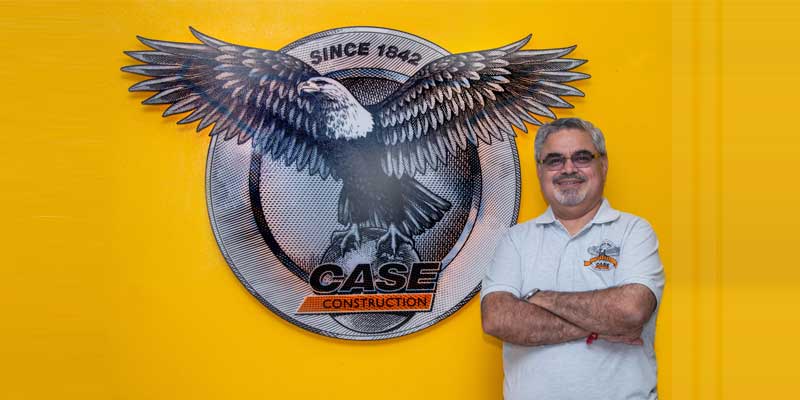
Future factories will integrate mechanical and digital tech: Sachin Tare
With manufacturing becoming increasingly technology-driven, Sachin Tare, Director – Manufacturing, CASE Construction Equipment, shares his perspective with Ashlin Rajan on automation, digitalisati..
Read moreMachine Tools & Accessories
Safcon ensures product integrity with high performance security seals
In this interview, Rajesh Banka, Managing Director, Safcon Seals Pvt Ltd, highlights the company’s focus on innovation, automation and global expansion to strengthen its presence in the advanced s..
Read moreRelated Products
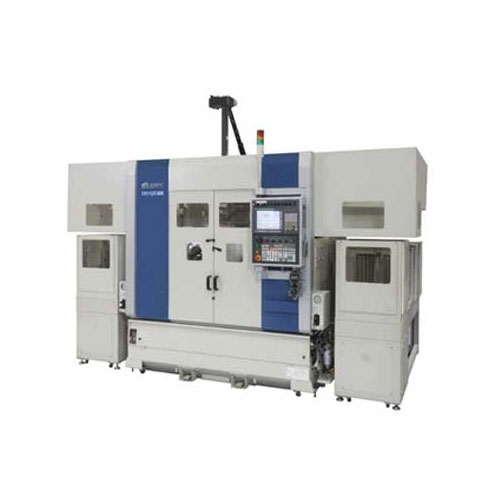
Compact Fmc - Motorum 3048tg With Fs2512
INDUSTRIAL AUTOMATION & TECHNOLOGY CONSULTANCY
Meiban Engineering Technologies Pvt Ltd offers a wide range of Compact FMC - Motorum 3048TG with FS2512.
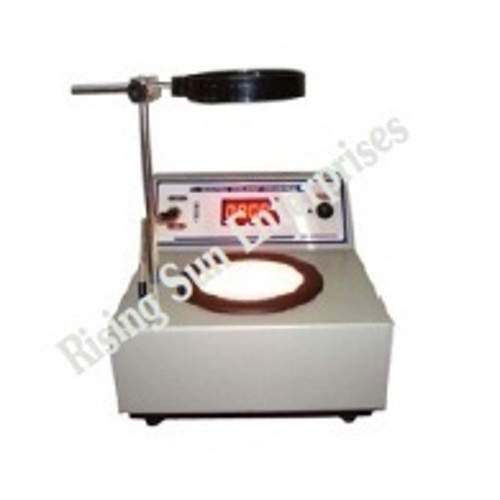
Digital Colony Counter
INDUSTRIAL AUTOMATION & TECHNOLOGY CONSULTANCY
Rising Sun Enterprises supplies digital colony counter.

Robotic Welding SPM
INDUSTRIAL AUTOMATION & TECHNOLOGY CONSULTANCY
Primo Automation Systems Pvt. Ltd. manufactures, supplies and exports robotic welding SPM.
latest News
Subscribe to iNoW

For Industry News on WhatsApp, Give a Miss Call on: +91 84228 74016