








Schedule a Call Back


Moving AI From Pilots to Dependable Decisions on the Factory Floor
 Articles
- Nov 25,26
AI is spreading across manufacturing, but few plants have scaled it. From smarter quality control to adaptive robots, success depends on clean data, workforce readiness and disciplined deployment, explains Dijam Panigrahi, Co-founder and COO, GridRaster.

Manufacturers have embraced artificial intelligence faster than they have operationalised it. A 2026 survey of 1,200 manufacturing leaders found that 72 per cent have adopted AI in some form while only 10 per cent have done so at scale, a sign that many organisations are still collecting pilots rather than building capabilities. Workforce pressure raises the stakes, since 1.9 million manufacturing jobs could go unfilled through 2033 if skills and applicant gaps persist. Together these conditions are shifting attention from isolated software experiments toward systems that can recommend, decide, and act inside production, and the plants that manage that shift deliberately are likely to gain the most over the next 12 to 18 months. This article looks at where AI is delivering value, where it is stalling, and what disciplined scaling looks like in practice.
Quality moves upstream and corrects itself
Some of the highest return applications sit at the very start of the product life cycle, since more than 70 per cent of a part’s cost is locked in once its design is finalised, long before sourcing and manufacturing teams have much room to respond. AI tools that read part geometry can flag thin walls, undercuts, and tolerances tighter than the application requires, then estimate cost drivers before tooling is quoted. That sequence turns an expensive tooling revision into an inexpensive design conversation, and for plants quoting dozens of new part numbers each month, it also shortens quoting cycles and frees experienced engineers for harder problems.
On the shop floor, attention is moving from detecting defects after a process finishes to preventing them while it runs. Closed loop quality control sends measurements from vision systems, metrology, and sensors back to the machine controller, which can adjust feed rates, thermal limits, or injection pressures as conditions drift. The strongest implementations define limits on what the system may change, allow operator override, and log every adjustment, which preserves the traceability that regulated sectors such as aerospace and medical devices require. Without those guardrails, an automated correction can mask a developing equipment problem rather than reveal it, so quality teams increasingly treat the correction history itself as a diagnostic signal.
Spatial AI extends the digital twin
Static digital twins have served planning well, but they tend to be rule driven, expensive to build, and brittle when conditions change. Spatial AI addresses part of that gap by assembling a continuously updated 3D model of the plant from cameras and LiDAR, so operations leaders can test a schedule change or layout adjustment against live floor conditions instead of last quarter’s survey. Because the model updates as equipment moves and aisles fill with work in process, simulation stays closer to reality, which supports faster decisions about line balancing and material flow.
The same perception capability matters for mobile robots in older plants, where cracked floors, uneven lighting, and tight aisles often lead manufacturers to assume that beacons or reflectors must be installed before automation can work. Navigation that relies on on-board sensing rather than floor infrastructure weakens that assumption, which opens automation to facilities once considered impractical. Intent prediction adds another layer by anticipating where a forklift or worker is headed, allowing robots to yield smoothly in shared aisles rather than stopping at every obstacle and slowing the flow they were meant to improve.
Physical AI takes on variable work
Conventional robot cells perform well when parts and fixtures never change, which explains why automation has struggled in high mix, low volume production, where much of manufacturing value is created. Advances in physical AI aim to close that gap with adaptive robotics that handles part variation through perception and learned behaviour rather than a new programming project for every changeover. Foundation models trained on large volumes of manipulation data give these systems a starting level of competence that integrators then tune for a specific plant, shortening the path from installation to productive work.
Early trials show the direction of travel. In one pilot at a US automotive plant, a humanoid robot spent about 10 months handling more than 90,000 components while positioning sheet metal parts for welding. Executives involved describe such systems as support for ergonomically demanding and safety critical tasks rather than as replacements for workers, and analysts continue to question cost, scalability, and operational complexity compared with conventional robotic arms. These deployments remain bounded and carefully supervised, so they are best read as evidence that adaptive systems can work in spaces designed for people rather than proof that general purpose robots are ready for every task.
Why scaling stalls
The technology is advancing faster than the foundations beneath it, since 54 per cent of industrial respondents name data quality and availability as their top challenge and 48 per cent cite legacy system integration and data silos as another. Most plants run a mix of old and new equipment with inconsistent data formats, and models trained on incomplete or mislabelled signals tend to produce recommendations that operators learn to ignore.
Cost adds friction as well, with 40 per cent of manufacturers naming high implementation costs as a barrier, which makes early projects difficult to justify without a clear baseline. Skills compound the problem, because 45 per cent of manufacturers cite internal skill gaps as a major challenge when integrating new systems, and operators who supervise autonomous systems need different capabilities than those who chase alarms.
Security belongs in the same conversation since systems that write to machine parameters expand the attack surface. Manufacturing accounted for 35.5 per cent of ransomware victims between April 2025 and March 2026, more than any other industry, and production environments that tightly connect IT and operational technology give attackers more routes to disrupt output.
A practical path from pilot to production
Manufacturers that scale successfully tends to begin with one line that has measurable scrap or changeover pain, which gives the project a baseline and a clear owner. Clean, time stamped machine data comes next, because models are only as reliable as the signals feeding them, and standardising tag names, sampling rates, and units across lines is slower up front but far less costly than retrofitting after several models are live. Teams then decide in advance what each system may adjust on its own, what requires human approval, and who is accountable when a decision goes wrong.
Measurement deserves the same care as design. Tracking first pass yield, scrap, unplanned downtime, and changeover time before and after deployment lets finance and operations leaders judge results using shared numbers rather than anecdotes, and it exposes pilots that look impressive but do not move plant level performance. Workforce planning runs alongside this work, with operators, maintenance technicians, and quality engineers learning how to interpret model outputs, challenge them, and escalate exceptions. Plants that involve those groups during design tend to see fewer workarounds after launch.
Security reviews follow the same logic, with segmentation between IT and operational networks, access controls on any system able to write to a controller, and tested recovery procedures put in place before expansion rather than after an incident. Holding a narrow deployment stable for several months before extending it to additional lines then produces the evidence needed to build a repeatable operating model instead of a one off success.
Looking ahead
Taken together, these shifts point to a factory that treats data as an input to action rather than a record of what already happened. Manufacturers that connect design intelligence, spatial awareness, and adaptive machines on a stable data foundation will be better positioned to absorb labour constraints and demand swings, while those that keep piloting in isolation risk watching the gap widen. The differentiator is unlikely to be access to AI, which is spreading quickly, but the discipline to govern it, measure it, and scale it where the evidence supports doing so.
About the author
Dijam Panigrahi is Co-founder and COO of GridRaster, a spatial computing platform for industrial enterprises and manufacturers.
Artificial intelligence
manufacturing
smart factories
industrial automation
quality control
digital twins
adaptive robotics
workforce skills
Dijam Panigrahi
GridRaster
AI
Related Stories
Electrical & Electronics

Karnataka Clears Pixxel's Rs. 3.5 bn Satellite Project
Pixxel to Set Up Rs. 3.5 bn Satellite Facility in Bengaluru
Read moreAuto & Auto Components

Saint-Gobain to Invest Rs. 110 bn in India, Make It APAC Hub
Saint-Gobain plans Rs. 110 bn investment to build India into an Asia-Pacific manufacturing hub.
Read moreSmart Manufacturing

Practical tips for Indian manufacturers to build a global competitive edge
Indian manufacturers must prioritise quality, innovation, operational efficiency and reliability to strengthen their global export competitiveness, says Aayaan Bery, Director (Sales and Global Marke..
Read moreRelated Products
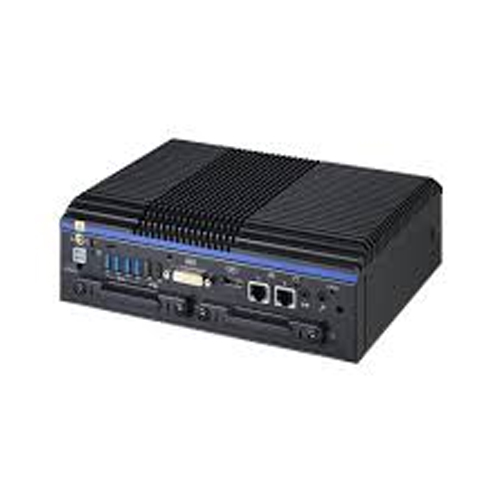
Fanless Industrial Pc for Smart Manufacturing
Smart Manufacturing
CONTEC Launches BX-M4600 Series - Fanless Industrial PC for Smart Manufacturing.
latest News
Subscribe to iNoW

For Industry News on WhatsApp, Give a Miss Call on: +91 84228 74016