








Schedule a Call Back


Managing outsourced metal finishing to optimise manufacturing timelines
 Articles
- Sep 03,26
Outsourced metal finishing can impact manufacturing timelines. Better planning of lead times, vendors and processes helps avoid production delays, writes Emily Newton.

Manufacturers can maintain tight control over machining, fabrication and assembly, yet still face delivery delays once parts leave the facility for outsourced finishing. Understanding how to outsource metal finishing effectively requires accounting for polishing, blasting and other operations that can make transit and queue time difficult to see in an internal production schedule.
The question becomes how manufacturers can account for these external lead-time variables when building realistic production roadmaps.
The hidden bottleneck in the manufacturing supply chain
Outsourced finishing often becomes the final-stage constraint that determines when completed parts can return to production. Finishing operations represent a scheduling variable that can affect when completed parts are available for assembly, inspection or shipment.
Unlike in-house processes, where production managers control queue time and capacity allocation, external finishing routes parts through a vendor's workflow, where visibility into actual processing status remains limited. This can create scheduling uncertainty that becomes particularly acute when multiple production runs depend on finished components arriving within narrow delivery windows.
Why external routing disrupts baseline schedules
Outsourcing finishing often makes economic and manufacturing sense because finishing equipment is capital-intensive and subject to environmental requirements. Many manufacturers lack in-house finishing equipment or the expertise to operate blasting cabinets, wheel blast systems and chemical treatment tanks while managing associated permitting requirements.
Specialized job shops have emerged to provide these services without requiring manufacturers to invest in dedicated infrastructure.
External routing introduces fixed variables that internal operations do not. Transportation adds pure transit days in both directions, while queue time depends on the vendor's current workload and the availability of process setups required for specific finishes. Additionally, return shipment introduces a second transportation cycle.
The accumulating costs of production delays
Finishing delays can propagate through production schedules, affecting throughput, inventory commitments and delivery dates. Research modeling the economic impact of supply chain disruptions found that a 21-day increase in foreign-input delivery delays could lead to a 2.6 per cent drop in total output and a 0.4 per cent increase in consumer prices.
The Atlanta Fed's working paper on supply chain shocks to retail prices demonstrates how delivery shortfalls translate into cost increases. When finishing delays compress delivery windows, manufacturers face decisions about expedited shipping, overtime assembly or rescheduled customer commitments.
Managing variables in subcontracted finishing
Total outsourced finishing lead time comprises several measurable components:
- Geographic distance adds pure transit days.
- Vendor queue time depends on the current workload and the availability of required media or process setups.
- Batch processing for unique finishes can create additional queue time compared with standardised work.
Manufacturers evaluating metal polishing and blasting services should plan around the total elapsed time from outbound shipment through completed parts returning to production. The difference between processing time and total cycle time often represents the largest source of scheduling variance.
Standardisation of media and processes
Standardised finishing specifications help parts enter a finisher's established workflow without waiting for special chemical setups or unusual media.
For example, Finishing Systems works with a wide range of media, including glass beads and aluminum oxide, and has both air and wheel blasting equipment. A job shop with a large media inventory and diverse equipment can allow manufacturers to specify standard finishing processes that do not require special setups.
Strategies to align finishing with the master production schedule
Manufacturers should use historical actual lead times as the planning baseline instead of optimistic estimates. Comparing quoted turnaround against actual delivery performance identifies recurring variation that should inform production routing buffers. Production routings should account for transit, queue and processing time as discrete line items.
Vendor selection ties directly to scheduling reliability. When evaluating how to find a job shop to handle polishing and blasting for a project, manufacturers should assess capacity, turnaround consistency and process capabilities. Questions like how much it costs to have parts professionally blasted and polished should be addressed through transparent pricing that accounts for media type, surface area and specifications. A vendor with available capacity and standardised processes can reduce scheduling disruptions.
Frequently asked questions
Manufacturers often have specific questions about vendor selection, timelines and cost structures when planning for outsourced finishing. The following answers address common concerns production planners encounter when incorporating external finishing into their schedules.
How does a manufacturer find a job shop to handle polishing and blasting for a project?
Manufacturers should evaluate providers based on capacity, turnaround consistency and process capabilities. Facilities with a ready inventory of standard blasting media and both air and wheel blasting equipment can reduce setup-related delays. Compare quoted turnaround against historical actual lead times and delivery performance to build realistic routing buffers into the production schedule.
What key factors influence total lead time for outsourced finishing?
Total lead time is more than just the processing time. Manufacturers must account for several variables, including round-trip transportation time, the vendor's current queue time given their workload, and any additional delays caused by non-standard processes that require special media or unique chemical setups.
How does outsourcing metal finishing affect production costs?
Outsourcing eliminates capital expenditures for blasting equipment and environmental compliance infrastructure but adds transportation costs. Pricing depends on media type, surface area and finishing specifications.
Keep manufacturing operations on track
Outsourced finishing introduces unavoidable external variables, particularly transportation, queue time and process-specific requirements. Realistic lead-time data, standardised processes and a high-capacity job shop can reduce avoidable scheduling disruptions. Manufacturers who incorporate finishing into the master production schedule as a planned manufacturing operation build more accurate delivery forecasts and maintain tighter control over total cycle time.
About the author:
Emily Newton is a tech and industrial journalist and the Editor-in-Chief of Revolutionized magazine. Subscribe to the Revolutionized newsletter for more content from Emily.
Image Courtesy: Magnific.com
Emily Newton
Smart Manufacturing
Metal finishing
Manufacturing industry
Supply chain management
Outsourcing
Polishing and blasting
Production scheduling
Finishing Systems
Industrial manufacturing
Related Stories
Smart Manufacturing
Managing outsourced metal finishing to optimise manufacturing timelines
Outsourced metal finishing can impact manufacturing timelines. Better planning of lead times, vendors and processes helps avoid production delays, writes Emily Newton.
Read moreAutomation & Robotics

How AI is reshaping manufacturing productivity and investments
AI is transforming manufacturing by improving productivity, reducing waste and enabling smarter investments through IoT, automation and digital technologies, writes R Jayaraman.
Read moreAutomation & Robotics
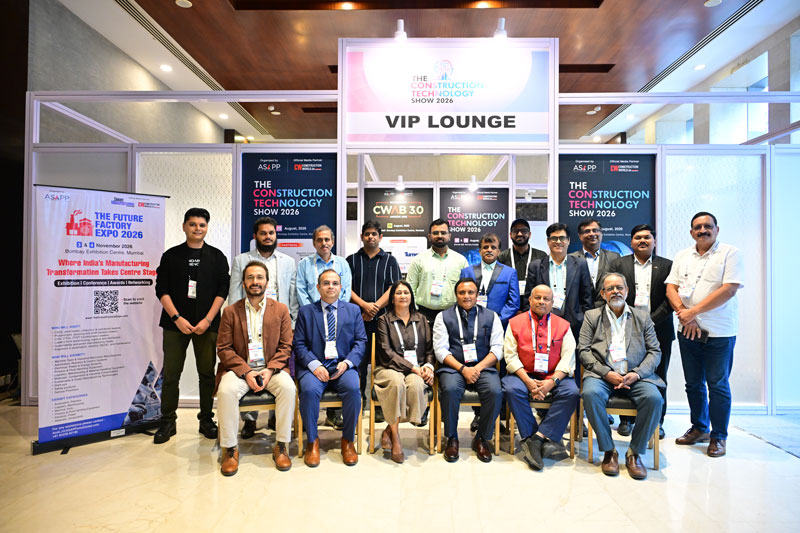
Future Factory Expo Roundtable Discusses Blueprint To Upgrade Indian Factories
During the roundtable, hosted by Future Factory Expo (FFE), industry leaders discuss how automation, AI, engineering excellence and digital transformation can help Indian factories achieve global be..
Read moreRelated Products

Fanless Industrial Pc for Smart Manufacturing
Smart Manufacturing
CONTEC Launches BX-M4600 Series - Fanless Industrial PC for Smart Manufacturing.
latest News
Subscribe to iNoW

For Industry News on WhatsApp, Give a Miss Call on: +91 84228 74016