









Schedule a Call Back


From Modules to Materials: India’s Roadmap for Solar Manufacturing Leadership
 Articles
- Sep 26,26
India’s solar manufacturing journey is entering a new phase, driven by policy initiatives, domestic demand and global opportunities. The NITI Aayog report outlines the roadmap to build a resilient PV ecosystem.
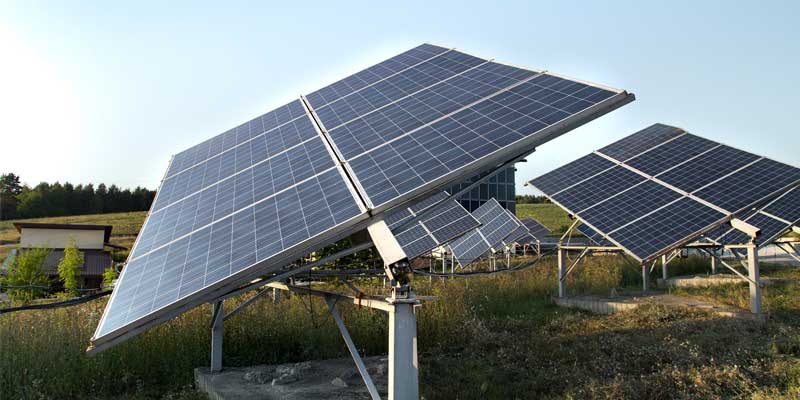
India’s renewable energy ambitions are creating a significant opportunity for the country’s solar photovoltaic (PV) manufacturing sector. As global economies accelerate their transition towards clean energy, solar power has emerged as one of the most important technologies supporting decarbonisation and energy security.
According to the NITI Aayog report on “Key Sectors to Position India as a Global Manufacturing Hub”, solar PV is among the 12 strategic sectors where India can realistically aspire to achieve global leadership. The report highlights that manufacturing growth in strategic sectors will be critical to strengthening exports, creating employment, enhancing technological capabilities and integrating India deeper into global value chains.
The solar manufacturing sector represents a major opportunity for India, supported by rising domestic demand, policy interventions and increasing global interest in supply-chain diversification. However, achieving global competitiveness will require India to move beyond module assembly and develop capabilities across the complete solar PV value chain.
A growing global solar opportunity
Renewable energy adoption is accelerating worldwide, with solar and wind expected to play a central role in increasing the share of renewable energy in electricity generation. The NITI Aayog report notes that the share of renewable energy in global electricity generation is expected to increase from 30 per cent in 2023 to 46 per cent by 2030, driven largely by solar and wind power.
This growth has created a strong demand environment for solar PV manufacturing. Countries are increasingly focusing on building resilient supply chains to reduce dependence on concentrated manufacturing ecosystems.
China currently dominates the global solar PV manufacturing landscape, accounting for more than 85 per cent of global supply capacity. Its leadership has been built through early industry development, large-scale manufacturing capacity, policy support, access to low-cost finance, research and development investments, tax incentives, skilling initiatives and extensive trade networks.
China’s integrated presence across polysilicon, wafers, cells and modules has enabled manufacturers to achieve significant economies of scale and cost competitiveness.
India’s solar manufacturing growth story
India has made considerable progress in developing its solar manufacturing ecosystem over the past decade.
Solar module manufacturing capacity enlisted under the Approved List of Models and Manufacturers (ALMM) increased to 100 GW by August 2025 from approximately 2.3 GW in 2014. Solar cell manufacturing capacity also expanded to 25 GW by March 2025 from less than 1.2 GW in 2014.
This growth has been supported by government initiatives aimed at encouraging domestic manufacturing, including the Production Linked Incentive (PLI) scheme and domestic sourcing requirements under ALMM.
India’s domestic demand provides a strong foundation for further expansion. The country had installed 106 GW of solar capacity by March 2025 and needs to add approximately 174 GW to achieve its target of 280 GW of solar capacity by 2030.
The domestic PV market, valued at around Rs 324 billion ($3.7 billion), is expected to grow at a CAGR of 17–20 per cent between FY2023 and FY2030, supported by utility-scale solar projects, rooftop solar, open-access projects and green hydrogen-related demand.
The value chain challenge
While India has achieved significant progress in solar module and cell manufacturing, the country’s solar ecosystem remains concentrated in downstream activities.
The solar PV value chain consists of four major stages:
- Polysilicon production
- Ingot and wafer manufacturing
- Solar cell fabrication
- Module assembly
The NITI Aayog report highlights that value-chain integration is important because companies operating across multiple stages are better positioned to manage supply disruptions and raw-material price volatility.
At present, India has limited capabilities in upstream manufacturing. The country remains heavily dependent on imports for critical inputs such as polysilicon and wafers. Import dependence remains close to 100 per cent for polysilicon, above 90 per cent for wafers, above 60 per cent for cells and above 40 per cent for modules after exports.
Building upstream manufacturing capacity will therefore be critical for India to establish a resilient and self-sufficient solar ecosystem.
Reducing dependence on global supply chains
China’s dominance remains the biggest challenge for countries attempting to develop domestic solar manufacturing capabilities.
In 2024, China accounted for 93–98 per cent of installed and new polysilicon production capacity, 95 per cent of wafer capacity, 91 per cent of cell capacity and 82 per cent of module capacity globally.
India’s solar exports have improved significantly, increasing eight times between FY2018 and FY2025, driven by growth in cell-to-module manufacturing capacity supported by policy initiatives. However, exports remain geographically concentrated, with the US accounting for 97 per cent of India’s PV exports in FY2025.
Diversifying export markets and strengthening domestic manufacturing capabilities will be important for long-term competitiveness.
Policy support driving solar manufacturing
The Indian government has introduced multiple measures to strengthen domestic solar manufacturing.
The Production Linked Incentive (PLI) scheme aims to encourage high-efficiency solar PV module manufacturing. The scheme has two tranches, with a combined outlay of Rs 240 billion and has awarded 48 GW of integrated PV manufacturing capacity.
The Approved List of Models and Manufacturers (ALMM) has also played an important role in promoting domestic production by encouraging the use of approved Indian-manufactured solar components in renewable energy projects.
India has also implemented tariff measures, including Basic Customs Duty (BCD), to support domestic manufacturers and create a more level playing field against imported products.
These interventions have helped Indian manufacturers scale capacity and improve competitiveness.
Despite rapid growth, the solar manufacturing sector faces several challenges.
One key challenge is limited access to capital goods, many of which are controlled by international suppliers. The NITI Aayog Report notes that delays in establishing polysilicon, wafer and cell manufacturing facilities could impact expansion plans and increase continued dependence on imports.
The sector also faces workforce challenges. Lower employee productivity compared with global players, rapid technology evolution and the need for specialised skills in research and development remain areas requiring attention.
Developing a skilled workforce, strengthening R&D capabilities and encouraging innovation will be essential for India to move towards advanced solar manufacturing.
The road ahead
India’s solar PV manufacturing sector stands at an important stage of development. The country has successfully expanded downstream manufacturing capacity, created a strong domestic demand base and established policy frameworks to support industrial growth.
However, the next phase of growth will depend on deeper value-chain integration, technology development, workforce readiness and expansion into global markets.
The opportunity extends beyond producing solar modules. India must build capabilities across materials, equipment, advanced manufacturing processes and innovation to create a globally competitive ecosystem.
The NITI Aayog Report highlights that India’s manufacturing ambitions must move beyond expanding production alone and focus on building globally competitive enterprises, strengthening domestic capabilities and integrating deeper into global production networks.
With sustained policy support, industry collaboration and investment in technology, India has the opportunity to establish itself as a major global hub for solar PV manufacturing.
As the world transitions towards cleaner energy systems, India’s ability to manufacture the technologies powering this transition will play a crucial role in shaping its position in the global manufacturing landscape.
Solar PV manufacturing
NITI Aayog
photovoltaic cells
Production Linked Incentive
PLI scheme
ALMM
renewable energy
solar modules
India manufacturing
Related Stories
Electrical & Electronics
From Modules to Materials: India’s Roadmap for Solar Manufacturing Leadership
India’s solar manufacturing journey is entering a new phase, driven by policy initiatives, domestic demand and global opportunities. The NITI Aayog report outlines the roadmap to build a resilient..
Read moreElectrical & Electronics

Alpex Solar commissions 2.2 GW TOPCon solar cell manufacturing facility in UP
Alpex Solar has inaugurated its 2.2 GW G12R TOPCon PV solar cell manufacturing facility in Mathura, strengthening its backward integration strategy and renewable energy manufacturing capabilities.
Read moreAerospace Defence

Mirai Aerospace, GreenValley Sign MoU for LiDAR Manufacturing in India
Mirai Aerospace has partnered with GreenValley International to strengthen India’s geospatial and LiDAR manufacturing ecosystem through local assembly, technical support and AI-driven applications..
Read moreRelated Products
Computer And Laptop
ELECTRICAL & ELECTRONIC EQUIPMENT
SICCO Engineering Works offers a wide range of computer and laptop.
Read more
Test Terminal Block Utility Plus - Jttbu Plus
ELECTRICAL & ELECTRONIC EQUIPMENT
JVS Electronics Pvt Ltd offers a wide range of test terminal block utility plus - JTTBU plus.
Read more
Kusam-meco Handheld Thermal Camera Model- Km 300
ELECTRICAL & ELECTRONIC EQUIPMENT
KUSAM-MECO, the innovators of new products in the Test and Measurement field, have added a new Thermal Imager with Camera.
Read morelatest News
Subscribe to iNoW

For Industry News on WhatsApp, Give a Miss Call on: +91 84228 74016