









Schedule a Call Back


India’s Manufacturing Edge: Intelligence, Not More Automation
 Articles
- Aug 27,26
India’s manufacturing edge will depend on turning connected factory data into faster, smarter operational decisions, writes Rajat Srivastava, Founder, CEO & CPO, Df-OS.

India's manufacturing story is no longer just about how much capacity the country can build. It is about whether that capacity can be trusted to deliver consistent quality, hold lead times, absorb shocks, use resources well, and respond quickly when global requirements change. The next real advantage will not come from adding more machines to the shop floor. It will come from helping the people and systems already there make better operational decisions, faster.
This shift matters because India is entering a tougher phase of industrial competition. The Economic Survey 2025-26 describes global manufacturing as moving away from simple cost arbitrage towards strategic indispensability in global value chains, with competitiveness increasingly tied to technology, productivity, innovation and resilience. It reports that manufacturing gross value added (GVA) grew 7.72 per cent in the first quarter and 9.13 per cent in the second quarter of FY2025-26, with medium- and high-technology activities now accounting for 46.3 per cent of India's manufacturing value added.
The scale of the opportunity is equally significant. The Annual Survey of Industries 2023-24 recorded 2,60,061 factories, 19.6 million persons engaged, and manufacturing GVA of Rs 24.58 trillion at current prices, up 11.89 per cent over the previous year. These are the numbers of a sector gaining real momentum. The question worth asking is whether that momentum converts into globally reliable, continuously improving operations or stays confined to volume.

From capacity to competitiveness
India's ambition is to move from being a participant in global value chains to holding real strategic weight within them. NITI Aayog's roadmap for advanced manufacturing frames this shift around higher total-factor productivity, resilient supply chains, globally recognised brands, skilled employment and value innovation with a pathway for manufacturing to rise from its historical 15-17 per cent share of GDP towards 25 per cent, supported by frontier technologies, industrial infrastructure, R&D, skills and MSME enablement.
Capacity is necessary, but on its own it is not enough. A new production line increases potential output; it does not guarantee that the right product gets made at the right time, with the right material, quality and cost. Competitiveness is the sum of thousands of smaller decisions across production planning, maintenance, quality, energy, inventory and supplier coordination. The factory that wins will not simply be the most automated one. It will be the one that can sense what is happening on its floor, understand why, anticipate what comes next, and coordinate the right response.
The hidden digital gap
Most Indian factories have already invested in enterprise software, sensors, machines, quality systems, laboratory systems, maintenance tools and dashboards. But digital equipment does not automatically create digital intelligence. Information often stays divided between the ERP, the MES, SCADA systems, spreadsheets, maintenance logs, quality records, shift handovers, and the memory of individual supervisors.
This creates a familiar paradox: a factory can have more data than ever, and still lack a shared picture of what is going on. Walk into most Indian factories today and you will find that the same problem looks completely different depending on who is looking at it: a production manager may have missed a plan, while maintenance is dealing with a machine alarm on the same line, quality is watching a defect trend start to climb, and procurement is trying to work around a delayed component. And because each of these is a genuinely accurate view of a small part of what is happening, nobody is technically wrong, yet nobody has the full picture either.
That is precisely why organisations end up moving so slowly: not because the information doesn't exist, but because it exists in four different places, in four different forms, and it takes far too long for anyone to connect it into a single, actionable understanding of what is actually going on.
The problem is rarely the absence of dashboards; it is the absence of context. The same reading can mean entirely different things depending on the situation surrounding it.
For instance, a deviation in a key process parameter, might be routine in one set of conditions and a serious warning sign in another, depending on which product is running, which specification or recipe is in use, what state the machine or line is in, which material batch is involved, which shift is on the floor, and what step in the process immediately preceded it.
Operational information only becomes genuinely useful, then, when these surrounding relationships are captured alongside the raw signal itself and made available together at the exact moment someone has to act on it; rather than sitting as an isolated number that could mean almost anything on its own.
Resilience is an operating capability
Manufacturing resilience tends to get discussed as a supply-chain issue. But a great deal of resilience is also built inside the plant itself. When demand shifts, a supplier misses a delivery, energy availability fluctuates, a machine behaves abnormally, or a customer changes a specification, the factory has to re-plan and respond without losing control of quality, safety or cost.
A resilient operation is not one that never faces disruption. It is one that detects disruption early, works out its consequences, identifies the options that are actually feasible, and learns from what happened. That takes a shared operating model connecting planning, production, maintenance, quality, logistics and decision rights, so everyone works from the same understanding of the situation.
R&D and innovation, skills, and MSME scaling as structural pillars of competitiveness. But these pillars only work together if information moves between them.
Operational intelligence is what turns resilience from a reactive scramble into a genuine organisational capability, helping teams answer the questions that matter in the moment: Which orders are at risk right now? Which constraint is creating the biggest downstream impact? Is this quality deviation isolated, or systemic? Which maintenance job should take priority? What is the safest way to recover the schedule?
Beyond visibility
Visibility is an important first step. A dashboard can show output, downtime, scrap, energy use or on-time performance clearly. But visibility alone does not explain why something happened, or recommend what to do about it. The next step is operational intelligence: combining real-time signals with historical patterns, process knowledge, business priorities and human expertise to actually support a decision.
Consider a production shortfall. A dashboard might report that a line is running at 78 per cent of its planned rate. An intelligent operating layer would go further: connect that loss to a sequence of short stops, notice they follow a particular material changeover, compare the pattern against previous shifts, and suggest a prioritised response. The goal is never to replace the supervisor but to shrink the gap between recognising a problem and acting on it with confidence.
That is a shift from descriptive metrics to a working decision loop: sense reliable signals from machines, people, materials and workflows; contextualise each signal against the product, process, asset, order, shift and quality context around it; interpret the patterns, causes and trade-offs at play; act by recommending or triggering the next step, with human approval where needed; and learn by capturing what happened so the next decision improves on the last. The real asset here is not the dashboard. It is the closed loop between operational events, decisions and outcomes.
AI needs context, not just data
Artificial intelligence can genuinely help manufacturers predict failures, catch defects earlier, optimise schedules, forecast demand and spot process anomalies before they become problems. But an AI model trained on disconnected or poorly labelled data can produce answers that sound confident and are operationally weak. The real challenge is rarely model accuracy alone; it is whether the model understands the factory's language and constraints in the first place.
Contextual data includes asset hierarchies, bills of material, recipes, work instructions, process parameters, quality specifications, maintenance history and operator observations as well as the reasons behind decisions: why a line was slowed, why a batch was held, why a supplier was substituted.
NITI Aayog's advanced manufacturing roadmap names AI and machine learning, digital twins, advanced materials and robotics as priority frontier technologies, describing AI/ML as an orchestration layer across production, logistics, design and product interfaces, with applications including predictive maintenance, defect triage and prescriptive guidance. All of these depend on a connected operational foundation. AI cannot orchestrate what an organisation cannot consistently represent in the first place.
This is also why manufacturers should be cautious about treating AI as a collection of isolated pilots. A predictive-maintenance model that cannot see the production schedule may recommend an intervention at exactly the wrong time. Intelligence has to be judged against the whole operating system, not a single use case in isolation.
Technology built for factory teams
None of this works without the people on the floor, and this is the part that gets underestimated most often. India's factories employ millions of people across very different levels of technical training, language, experience and comfort with digital tools. Technology that adds reporting effort, throws up unexplained alerts, or forces a separate workflow on top of existing ones will struggle to create lasting value, however sophisticated it is.
Human-centric industrial technology has to meet workers where the work happens. It should surface the next relevant action rather than another screen full of numbers, work in local terminology and on the shop floor, and offer recommendations that can actually be explained. It should also capture operator knowledge as a first-class input, not treat it as informal data just because it did not come from a sensor.
The goal is augmentation, not technological theatre. An operator should record an observation once and have it become part of the shared operational record, rather than repeating it across three systems. A supervisor should see the exceptions that genuinely need attention, instead of manually searching for them.
This approach can also make the transformation more inclusive. If intelligence is delivered through tools that are modular and affordable, smaller suppliers get a real chance to participate in higher-value ecosystems, rather than being priced out of the transformation entirely.
What a mature Indian factory looks like
A mature Indian factory will not necessarily be the one with the most robots or the biggest technology budget. It will be the one that brings its physical assets, digital systems and people together around an operating model that keeps improving.
It will be connected, with production, quality, maintenance, planning, materials, energy and supply-chain information linked through common definitions rather than isolated silos. It will be intelligent, with data converted into explanations, predictions and recommended actions instead of sitting trapped in reports nobody has time to read closely. It will be responsive, with teams detecting emerging constraints early and adjusting plans without losing traceability or control. It will be human-centred, with operators and supervisors remaining active participants, supported by tools that respect the practical knowledge they carry. And it will be continuously improving, with every deviation and intervention adding to the organisation's process knowledge rather than being forgotten once the shift ends.
India has already put important foundations in place: industrial investment, digital infrastructure, policy support, and steadily expanding technology adoption. The advantage from here will come from making those foundations actually work together. More automation can make a single process faster. Operational intelligence determines whether the entire factory knows what to do next and how quickly it learns from what just happened.
That is the capability that will turn India's manufacturing capacity into lasting global competitiveness.
About the author:
Rajat Srivastava is the Founder & CEO of Df-OS, where he is building manufacturing-first technologies for the factories of tomorrow. With more than 7.5 million factories worldwide, he is developing Df-OS to serve a global manufacturing ecosystem that is rapidly evolving towards smarter, more connected and human-centred operations.
Operational Intelligence
Smart Manufacturing
Factory Automation
Industrial AI
Data Integration
Manufacturing Resilience
Digital Transformation
Human-Centric Manufacturing
Rajat Srivastava
Df-OS
Related Stories
Automation & Robotics
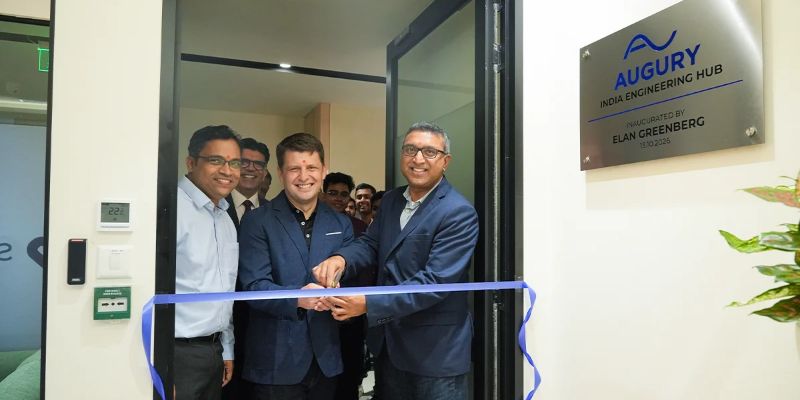
Augury Opens Bengaluru Engineering Hub to Advance Industrial AI Agents
Augury has established an engineering hub in Bengaluru with SecondHQ to expand India-based R&D and advance AI agents for manufacturing reliability, maintenance and operations.
Read moreMachine Tools & Accessories
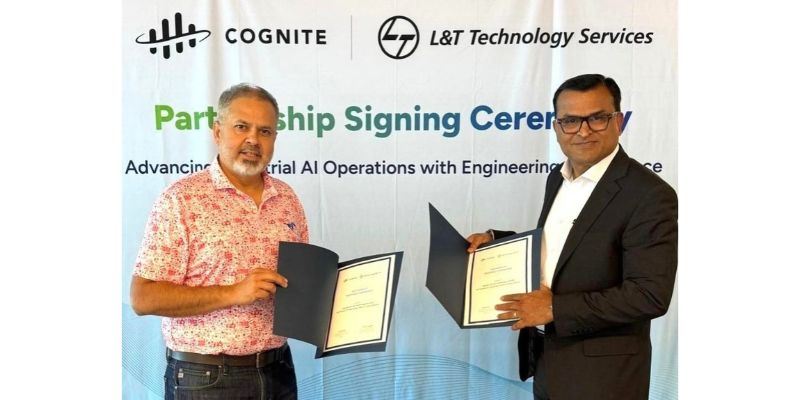
LTTS, Cognite Partner to Scale Industrial AI Across Global Industries
LTTS and Cognite have partnered to scale industrial AI, digital twins and predictive maintenance, with LTTS establishing a Centre of Excellence and certifying 50+ engineers.
Read moreSmart Manufacturing
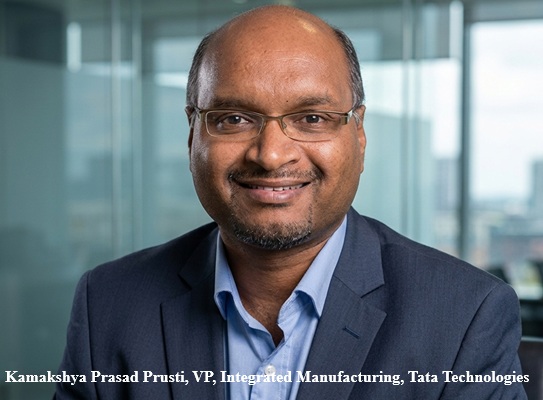
The factory of tomorrow is drawn on today's engineering desk
India’s manufacturing future will depend on integrating product engineering, digital tools and factory design to build smarter, flexible operations, writes Kamakshya Prasad Prusti, VP, Integrated ..
Read moreRelated Products
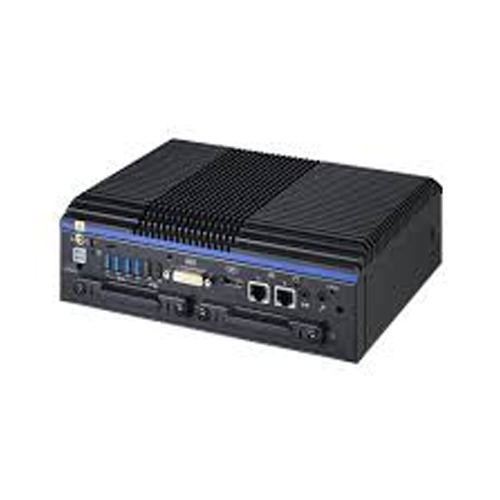
Fanless Industrial Pc for Smart Manufacturing
Smart Manufacturing
CONTEC Launches BX-M4600 Series - Fanless Industrial PC for Smart Manufacturing.
latest News
Subscribe to iNoW

For Industry News on WhatsApp, Give a Miss Call on: +91 84228 74016